Article
Field notes from the operating side
Why LPG? - A socioeconomic overview. (Series)
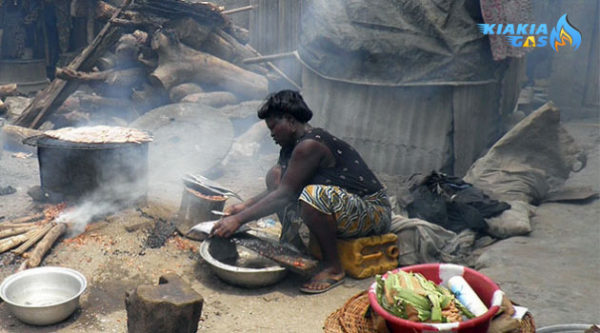
Around 3 billion people across the developing world still rely on solid fuels – firewood, traditional biomass or coal – for cooking on local stoves or open fires.
Approximately 95,000 women die annually in Nigeria from Indoor Air Pollution.
Contrary to common logic, cooking with traditional fuels is not only more expensive, but is dirtier and more dangerous. The socioeconomic cost is enormous: exposure to indoor air pollution from cooking causes the premature deaths of an estimated 4 million people annually from lung cancer, cardiovascular disease, pneumonia and chronic obstructive pulmonary disease, as well as ill-health and the loss of productivity among millions more. It also entails a waste of productive time and energy, as traditional fuels usually have to be collected and transported to the home. Moreover, cooking with biomass is slow. Use of biomass and traditional fuels (firewood, coal, etc) also contributes to degradation of the environment. The demand for firewood encourages deforestation, the use of animal waste degrades soil quality and, to the extent that it is used unsustainably, burning biomass contributes to global warming and to local and regional air pollution.
Switching to LP Gas, which is particularly well-suited to domestic cooking, would improve greatly the quality of lives, especially in Nigeria where dirty fuels are predominantly used, and bring far-reaching social, economic and environmental benefits. In an extensive study, carried out by the World Health Organization (WHO) in 2006, in a scenario in which 50% of the people using solid fuels worldwide switch to using LP Gas, total economic benefits amount to roughly US$ 90 billion per year.
Coal-based stoves, when efficiency is as good as that of an LP Gas stove, gives off around 50% more CO2 than LPG stoves.
In these series, we will explore certain impacts of switching to LPG through societal and economic factors.
More from Insights
Related notes