Article
Field notes from the operating side

Kogi, a state in the central region of Nigeria with Lokoja, which was the first administrative capital of modern-day Nigeria as its capital city.
There are 21 local government areas with three main ethnic groups: Igala, Ebira, and Okun.
The total population figure of Kogi state from the National population census 2006 shows a total human population of 3,278,487 with 641, 556 households.
Dividing the human population by the number of regular households, it shows that the average family size per house hold is 5.
3,278,487people/ 641, 556 households = 5 people per house hold.
Table 1: The Energy Mix of Kogi State
S/N
Regular Households Energy Mix
Population Census
(2006-03-21) : 3,314,043
Population Projection
(2016-03-21): 4,473,500
01
Households using FIREWOOD
437, 952
591,235
02
Households using KEROSENE
160, 935
217,262
03
Households using COAL
9,609
12,972
04
Households using ANIMAL DUNG/ SAW DUST/ COCONUT HUSK
1, 694
2,287
05
Households using ELECTRICITY
13, 872
18,727
06
Households using SOLAR
355
479
07
Households using LPG
7,808
10,541
Total
641, 556
853,503
Assuming every other factor remains constant, we have estimated the households with the same 35% projected growth rate from 2006 to 2016 of population growth rate.
* Data source: https://www.citypopulation.de/php/nigeria-admin.php?adm1id=NGA023
From our retail experience, the average consumption of LPG for a family size of 6 in Nigeria is 20kg, so from the data in Kogi, the average family size in Kogi is 5 which translate to 16.6kg worth of cooking gas per house hold a month.
Annual Consumption: 16.6kg X 12months = 199.2kg
This research focuses on converting housholds that use Fire wood and Coal:
Energy Equivalence of 1kg of LPG to:
Firewood: 6.5 – 10.8 kg
Charcoal: 10.2 – 29.7 kg
*Source National Gas Policy
Taking the weighted average for the purpose of this research
Firewood: 8.65kg
Charcoal: 19.95kg
*This figure will be used to determine the amount of wood than be saved to positively impact on the environment as we go on.
The number of homes using firewood and coal is 447, 561 (2006 census) and 604,207 (2016 projections) which translates to
447,561 homes X 199.2kg= 89,154,151kg (89,154MT) worth of gas for domestic consumption alone
604,207 homes X 199.2kg= 120,358,034kg (120,358MT) worth of gas for domestic consumption alone.
A weighted average of the two consumption figures above was used to get the potential market size of Kogi state below:
89,154,151kg + 120,358,034kg = 209,512,185 / 2 = 104,756,093kg
The Potential market size of converting households using firewood and coal in Kogi state is 104,756,093kg of LPG (104,756MT)
Wealth and Job Creation Opportunities (Gaspreneurs: Gas entrepreneurs)
A total of 7.956 million Nigerians became unemployed between January 2016 and September 30, 2017, data from the National Bureau of Statistics shows because of the fall of oil prices and recession. LPG distribution and consumption creates a new window for gaspreneurs to make a living out of retailing, logistics and sales of LPG appliances.
The LPG industry will create 15,000 Jobs and 3,000 new businesses in Kogi state alone, write to data@kiakiagas.com to get the full report.
Required LPG cylinders to meet the demand of this market
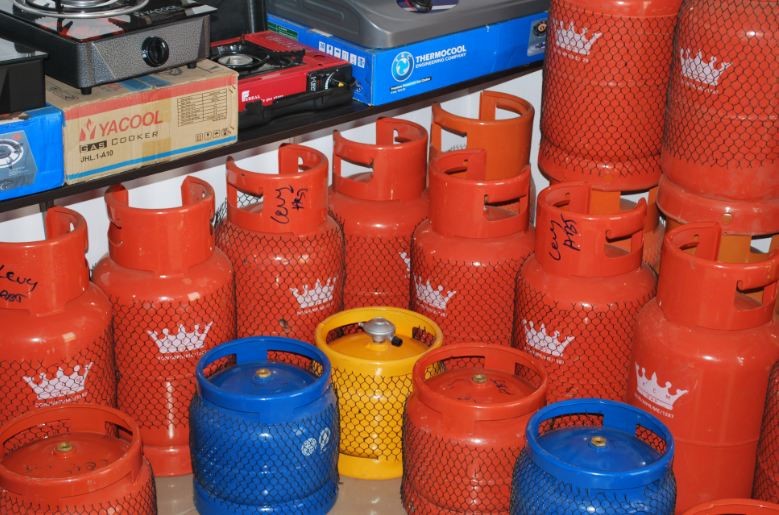
LPG cannot be consumed without cylinders; to meet the needs of this market, a minimum of 3 million units of cylinders for home consumption and retailer’s distribution is needed to fully address this market. Write data@kiakiagas.com to see full details on cylinder distribution and operational schemes to convert and take this market.
Current Distribution Infrastructure in Lokoja

There are 4 Major LPG plants in Lokoja with a total capacity of 4 major plants with a combined capacity of 115,000kg and 5 mini plants with a combined capacity 7,500kg and 50+ retailers in the capital. Write data@kiakiagas.com to get the entire distribution infrastructure of the Kogi state across all the Local Governments Areas.
Investment opportunities in converting Kogi state and Cost Structure
There is a massive opportunity to invest in Kogi state and the North Central geo-political zone to tap in into the market potential for LPG distribution. Our Gaspreneur Investment advisors are on hand to advice you on the best way to tap into a fast a growth market. write gaspreneur@kiakiagas.com or call +2348187784000. +2348085269328
Environmental Impact
The weighted average of homes using firewood and coal is 447, 561 (2006 census) and 604,207 (2016 projections) which translates to
447,561 + 604,207 households = 1,051,768/2 = 525,884 households
Households using Firewood: 513,263 (97.9%)
Households using Charcoal: 11,307 (2.1%)
We have established that the potential LPG consumption in this market is 104,756,093KG,
To fully understand the amount of wood that can be save when we switch Kogi state from Firewood and charcoal to wood:
We have established the conversion of 1 kg of LPG to
Firewood: 8.65kg
Charcoal: 19.95kg
Amount of wood that will be saved: 102,556,215kg of LPG (97.9%) X 8.65kg of firewood: 887,111,259.75kg of wood.
Households using Charcoal: 2,199,878 (2.1%) X19.95kg = 43,887,566.1kg of wood, since charcoal is made from wood and the tree trumps.
In total Kogi state will save 930,998,825.85kg whooping sum of wood, we are even shocked at this numbers, this will go a long way to reduce tension between the herdsmen and the farmers because there will be enough lush green vegetation for the herdsmen and farmers read our editorial to learn more http://www.kiakiagas.com/blog/editorial-how-lpg-can-solve-fulani-herdsmen-crisis-nigeria
In Conclusion:
Nigerians like to hold on to traditional beliefs which sometimes make the populace slow to change to a new way of life. Let’s face it, switching the entire nation from dirty fuels to LPG is an interesting challenge but will not come easy because it basically changes the very foundation on which some of these rural communities were built on. For example, most young males meet their brides on their way to fetch firewood in the early hours of the mornings etc young people have to be shown that they can also meet their brides and grooms on their way to the gas stations just like the way telecommunication changed letter writing to sms, whatsapp chats etc.
The benefits of making the switch to LPG are enormous.
- Business Creation
- Employment opportunities
- Environmental impact
- Eliminate premature deaths in the rural communities
- Lay grounds for the introduction of renewable forms of energy to provide power in their homes.
Kiakiagas Data services is a premium service for LPG business owners, investors, regulators stake holders to have required data information to help them make sound decisions before starting their LPG businesses and how to expand their businesses using data driven market dynamics. Write us data@kiakiagas.com; gaspreneur@kiakiagas.com; +2348187784000, +2348085269328.
Appendix
Table2: Kogi state LPG consumption analysis by LGA
S/N
LGAs
Population
census
2006-03-21
Population
projection
2016-03-21
Weighted average of the population
Percentage of the population per lga
Projected Annual lpg consumption per LGA (KG)
projected monthly consumption per LGA (KG)
1
217,219
293,200
255,210
6.55%
6,861,524
571,794
2
122,432
165,300
143,866
3.69%
3,289,788
274,149
3
266,176
359,300
312,738
8.03%
8,411,914
700,993
4
139,687
188,600
164,144
4.22%
4,420,707
368,392
5
260,968
352,300
306,634
7.87%
8,244,305
687,025
6
127,572
172,200
149,886
3.85%
4,033,110
336,093
7
79,755
107,700
93,728
2.41%
2,524,622
210,385
8
147,048
198,500
172,774
4.44%
4,651,171
387,598
9
118,593
160,100
139,347
3.58%
3,750,268
312,522
10
144,579
195,200
169,890
4.36%
4,567,366
380,614
11
115,100
155,400
135,250
3.47%
3,635,036
302,920
12
196,643
265,400
231,022
5.93%
6,212,036
517,670
13
43,760
59,100
51,430
1.32%
1,382,780
115,232
14
191,480
258,500
224,990
5.78%
6,054,902
504,575
15
39,807
53,700
46,754
1.20%
1,257,073
104,756
16
223,574
301,800
262,687
6.75%
7,071,036
589,253
17
325,623
439,500
382,562
9.83%
10,297,524
858,127
18
158,490
213,900
186,195
4.78%
5,007,341
417,278
19
107,968
145,700
126,834
3.26%
3,415,049
284,587
20
147,641
199,300
173,471
4.46%
4,672,122
389,344
21
139,928
188,900
164,414
4.22%
4,420,707
368,392
Total Population
3,314,043
4,473,500
3,893,822
100.0%
104,756,093KG
More from Insights
Related notes