Article
Field notes from the operating side
Peru, a country situated in South-America, consumed 1.63 million tonnes of Liquefied Petroleum Gas (LPG) in 2017. Peru has been one of the fastest growing economies, especially between 2002 and 2013, although Gross Domestic Product (GDP) growth slowed between 2014 and 2018. This decline was mainly due to the lower international commodity prices, especially for Peru’s leading export commodity – Copper.
Peru has a population of 32 million people, with a GDP of $222 billion, giving a per capita GDP of $6,900 based on World Bank Development Indicators (2018). This contrasts with Nigeria which has a population (200 million) 6 times that of Peru, but has a GDP of $397 billion and a GDP per capita of $2,000 – which is three times less than that of Peru. The World Bank classifies Peru as an upper middle income nation. It should be noted that Peru’s GDP per capita tripled between the year 2000 and 2018.
Peru is a country rich in hydrocarbons, with oil, natural gas and coal reserves. Peru has the fourth largest gas reserves in Central and South America, with 15 trillion cubic meters as at 2014. Peru has steadily increased its production of National Gas Liquids (NGLs) although it imports crude oil and refined products to meet local demand.
The LPG industry in Peru kicked off in the 1930s, and the situation of the cooking fuel market in Peru by year 2000 showed that 34% of the population was using kerosene or solid fuels without a chimney. As a result, a World Health Organization (WHO) report shows that about 1,500 deaths were estimated to be due to the use of dirty fuels. In this light, the Peruvian government, through the Ministry of Energy and Mining (MINEM), launched the National Family Kitchen Program (Cocina Peru). This program was aimed at converting a million families from firewood and kerosene to LPG. This article will discuss some specifics of the project and the event.
Cocina Peru
The MINEM created a plan to ensure universal access to energy based on the fact that access to energy is an essential pillar for addressing poverty, and improving education, health and productivity. The promotion of LPG for domestic use is one of four major components of this plan.
The Fondo de Inclusión Social Energético (FISE), which is the Social Inclusion Energy Fund, is the subsidy program undertaken by the Peruvian government with the aim of making clean energy (cooking and electricity) accessible to the poorest households. It should be noted that 82% of the rural households in Peru use solid fuels as their primary cooking fuel. Solid fuels, such as firewood, lead to household air pollution (HAP), of which 5,421 Peruvian deaths were attributed to in 2016. This places most of the Peruvian rural population at high risk.
The choice of LPG as the fuel households were to covert to was due to its feasibility for wide-spread nation-wide implementation. LPG was already commonly used in Peru, with a supply that was mostly produced locally.
Prior to the FISE, the MINEM had distributed LPG stove kits to poor households, but that program was discontinued. There are no subsidies for LPG stoves anymore in Peru. Being a subsidy program targeted at the poorest households, certain criteria were used to determine eligibility for the program. These criteria were:
1. Household income less than $5500/year (1.9 million naira).
2. Household does not have electricity, or consumes averagely less than 30 kWh.
3. Precarious housing (i.e. no running water, unreinforced adobe or thatch material, etc.)
4. Household is classified as falling in the category of extreme or non-extreme poor by the Sistema de Focalización de Hogares (SISFOH).
5. Household has an LPG stove.
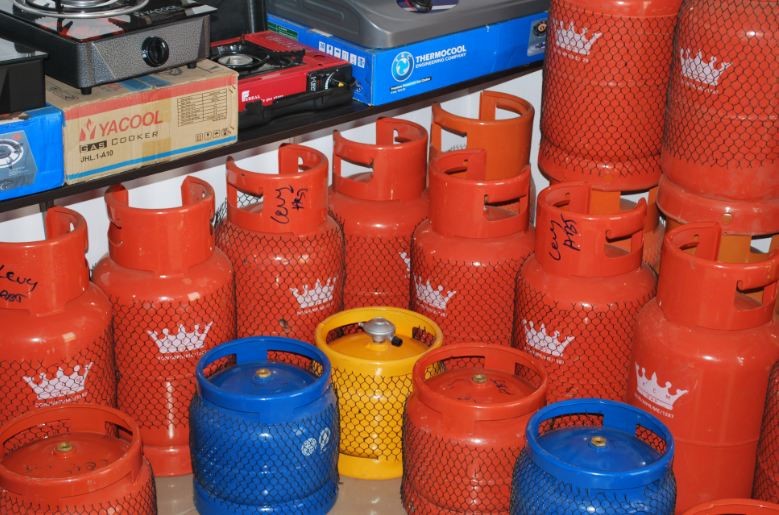
As seen in the case of other nations, such as Indonesia, the provision of LPG subsidies led to illegal diversion of the fuel to regions without the subsidy, thereby creating a shortage. This and other activities increase the costs of running subsidies. The Peruvian government used a system of transferring to the households eligible for the FISE program vouchers worth $5. These vouchers are then used to exchange an empty 10 kg cylinder for a full one, worth approximately $10. Peru operates the LPG cylinder recirculation system, where although the households buy cylinders, they exchange their own cylinders for another at the point of purchase.
The FISE is a collaboration between the Peruvian public and private sectors. The Supervisory Agency for Investment in Energy and Mining (OSINERGMIN) is currently the primary body responsible for the nation-wide administration of the program. Electricity distribution companies ((Empresas de Distribución Eléctrica, or EDEs) supervise, and operate the program at the regional level. These EDEs distribute the LPG vouchers to FISE households with or without electricity. The EDEs are also responsible for the publicity of the program.
The local LPG distributors (“agents”) are usually small, local vendors or shop owners recruited by the EDEs to distribute LPG directly to the beneficiaries of the FISE, redeeming the vouchers through a text message system. The local LPG agents need to meet a set of prerequisites established by OSINERGMIN, such as ventilation and storage safety, before they are licensed to operate their stores. The LPG agents are free to purchase LPG from any supplier they deem fit, and sell cylinders to households with or without FISE vouchers.
The FISE is funded by surcharges on other energy consumers, such as:
· A 2.5% surcharge on the monthly electrical bills of unregulated electricity consumers (e.g. large industrial facilities).
· $1 per barrel on sales of liquid hydrocarbon products and natural gas liquids.
· $0.055 per million BTU tax on natural gas consumers for transmission services.
This ensures a clear line from which the funds are made available to the program.
Effects of the FISE
The FISE program had high adoption from households, as 92.6% of the beneficiaries began using LPG due to the program. The number of program beneficiaries soared from 8,658 households to 1.6 million households between 2012 and 2017. A survey in Puno, showed that the average household exchanged vouchers 9 months in a year. It should be noted that the households sometimes combined two vouchers. This aligned with the fact that most households did not use LPG exclusively, as less than 5% of the respondents indicated exclusive use of LPG.
The LPG vendors accepting vouchers increased from 5 in 2012 to 4,587 in 2017. This gives a ratio of one agent per 348 households, although this is not evenly distributed around Peru, as seen in Figure 1. The vendors were either fixed (operating through a physically located store), or mobile (LPG delivery service for remote areas). The proliferation of LPG agents increased the accessibility of LPG to households interested in the FISE program, and provided a source of income for the LPG agents. The program is currently operating in 98.1% of districts in Peru.
Figure 1. The Distribution of FISE Beneficiaries and LPG Agents in Peru (2017)

Source: Pollard et al, An evaluation of the Fondo de Inclusión Social Energético program to promote access to liquefied petroleum gas in Peru.
The Puno community members described benefits such as how LPG allows them maintain clean hands and pots, as well as cook faster and more often. Some complained that the food tasted better with a fogón (firewood stove). Others were afraid of using LPG, some were unsure of how to use it. A major barrier to the adoption of the FISE by some households was the lack of prerequisite information determining eligibility. For example, some households did not know their SISFOH status, while others thought they needed to have electricity to participate.
Despite this and other challenges, 81% of respondents indicated satisfaction with the FISE program.
Conclusion
The Cocina Peru program can be reckoned to be achieving purpose, with room for improvement. The Peruvian government has shown frugality in their finances, as seen in their direction of the subsidy in such a way to minimize corruption seen in other subsidy regimes. Also, funds for the programme came from direct, measurable sources, and this provides a comfortable level of transparency. Furthermore, they used already existing infrastructure (and systems) to distribute LPG and the FISE vouchers; the EDEs already had a presence in local regions, and oftentimes small shop owners became LPG agents.
This system allowed for optimization of resources, and the FISE has shown to provide a good model for subsidies. It should also be noted that the Peruvian economic growth will reduce the number of households dependent on the program, but these households would have already become used to LPG, thereby making self-sponsored customers.
REFERENCES
Tyler, M. K. &. D., 2018. Accelerating The LPG Transition, Neuilly-sur-Seine: WLPGA.
US Energy Information Administration, 2015. Peru.
The Nigerian LPG Market is the next success story of the Global LPG industry, if you need a partner with a global perspective and local expertise in the Nigerian and African space, kindly book for a free session with our team of experts to help you http://www.kiakiagas.com/book-session
Or write us an email at advisory@kiakiagas.com or Whatsapp: +2348085269328
More from Insights
Related notes