KIAKIA GAS: YOUR ONE STOP LIQUEFIED PETROLEUM GAS (LPG) PROVIDER

Submitted by kiakiagas on

Launched in August 2015 Kiakia Gas Limited (RC:1226776) is a registered Liability company in Nigeria as a last mile LPG delivery service using technology to deliver LPG (cooking gas) to households in Nigeria, we have expanded our scope to include consulting & Analytics, smart-engineering & manufacturing and B2B bulk distribution. The importance of technology and governance policy in accelerating sustainable transitions cannot be overstated.

Renewable and low-carbon energy sources are part of the policy mix. Because the ongoing energy transition necessitates the construction of new infrastructure or the modification of existing infrastructure, the business model is crucial. Our model for determining the locational efficiency of gas plant set-up and distribution of LPG across the country is providing immerse leverage in this regard. Market Demand Modelling and Valuation We are the only end-to-end LPG Company that has been building capacity internally for the modelling and measurement of demand for LPG as well as understanding consumer behaviour across cities and on the national level in Nigeria. This modelling and valuation efforts are helping us define how to approach various market segments and market entry strategies. Our market analytics and intelligence for the LPG and energy market of Nigeria is opening new opportunities for the company, and for overall market development

Online Energy Outfit

Kiakiagas is the Nigeria’s first online energy outfit offering outstanding, quick & safe delivery of liquefied petroleum gas (LPG) and its related products to Nigerian homes and industries. The company has evolved into an energy solutions company creating a future in which gas will lead the transition of the African energy space from traditional forms of energy to renewable forms of energy making energy available to the last mile consumers from urban areas to off-grid areas.

Use of Information and Communication Technologies (ICT) as an essential tool for achieving the new Sustainable Development Goals by leveraging on ecommerce as a platform to buy cooking gas and related products to the door step of every Nigerian household and industry in a convenient manner, while also providing multiple payment options such as cash on delivery, POS, and payment by credit card. Like all other eCommerce platforms, users simply book for cooking gases by visiting the website and logging in, choosing a cylinder that suits their need, selecting a payment method, and then waiting for their items to be delivered at their doorstep. The platform also offer free delivery of cooking gas to every home within 45minutes.

Kiakia Gas has managed to turn the idea of buying cooking gas online in Nigeria into a mainstream culture by providing convenient booking platforms, excellent customer service, and the use of technology to ensure accurate quantity filling, safety and quality assurance of cylinders and accessories, as well as quick delivery service, resulting in a higher percentage of Nigerian homemakers and industries calling for the company to expand.

Cylinder Manufacturing

Early in 2021, as part of our strategic plan to expand the downstream LPG market, we started building the biggest cylinder production facility in Nigeria. This is our plan for easing the switch to LPG for 100,000 non-LPG users in Nigeria over the next five years.


Coastal Storage and Ship Loading/Offloading Infrastructure

By building a 13,00MT LPG coastal storage and ship loading/offloading infrastructure for Nigerian & West African markets, we intend to enhance our development of the gas market and value chain in Nigeria and West Africa. The Terminal is also planned to include a scalable Thermal IP, a 500MW power plant that will use local LPG production as a backup fuel source in addition to the plentiful natural gas supplies that surround the project location. LPG Industry Technology

Kiakiagas, which garnered more funding to help her realize her bold vision of becoming Nigeria's and Sub-Saharan Africa's leading cooking gas brand, was also recognized as a First of its Kind in the Ecommerce and Natural Gas Industries, respectively, by receiving an award at the FIRST OF ITS KIND AWARDS organized by TFK media Limited, continues to set the standard for other cooking gas dealers to follow.

Over a period of seven years, Kiakia gas has been able to distribute 300,000 metric tonnes (mt) of LPG nationwide at affordable price. The company has developed not only LPG feasibility study but also installation of LPG plants for over fifty companies in Nigeria. The company deals in LPG engineering, data report, consulting and offer courses relating to learning materials to improve knowledge on areas related to gas and engineering. The company procured best LPG plant products with higher quality from USA, Germany and UK.

The MISSION of the company is simple: To use gas to bridge the energy access between traditional forms of energy and renewable forms of energy.

The company has consistently planned, strategized, trained, researched and attended international and national conferences (see plate 2 &3 below) with the sole purpose of actualizing its mission of bridging the energy access between the conventional forms of energy and renewable forms of energy.

Kiakiagas developed a telemetry GSM tracking of gas usage based system which tracks consumers usage of gas, detects leakage and automatically orders .This device sends a high priority message to the customer and to us as a company to give notification of a leakage”.This is new, and high laudable. With millions of Nigerian homes depending on cooking gases, KiaKia gas has a chance to dominate in this uncharted space.

Most industrialized countries have built legal structures to strengthen the use of clean energy sources in accordance with sustainable development goals to ensure that the environment is protected from the use of filthy energy. The pursuit of sustainable energy and advancement of LPG development is central to the Kiakia gas not only in Nigeria but also in Africa. This explained the presence of the company experts in Germany for the production of LPG SMART METER to facilitate the consumption of LPG in African communities.

Smart meter has the potential to help businesses and communities in Nigeria and African to harmonize their pressing health, climate, clean cooking, and environmental goals, as they can now consume LPG as low as they want. This bridges the gap of inability of the low income households to use LPG due to high price per kilogram. It reduces distribution costs as several households can consume LPG from a large gas cylinder. Businesses that are concentrated in an industrial area will as well benefit from a large gas tank with the aid of smart meter. The result is increased LPG access, as well as less accumulation of gas cylinder in African communities and business environment.

We are aware that using technology to enable us to reach the one million households will be necessary. As a result, we are developing technologies leveraging Internet of Things (IoT) solutions that make it simple to order LPG through established retail operators in close proximity to the homes from anywhere in the country. Additionally, this technological solution would make it possible to provide real-time data on LPG consumption in homes.

You can also advance your company level by engaging your customers through a well-planned internet of things (IoTs) with the use of latest information and communication technology. Either you are coming into the LPG industry as a fresher or you are an existing company that aims to expand LPG business, we are ready to provide you with feasibility study that can lead you straight to LPG business success.

A feasibility study examines all of your project's pertinent aspects, including economic, technical, legal, and scheduling issues, to determine the project's chances of success. Several elements influence whether your project is practical, including the project's cost and return on investment, or whether the initiative earned sufficient money or sales from consumers. A feasibility study, on the other hand, isn't just for projects that want to measure and estimate financial gains. In other words, depending on the industry and the project's purpose, practicality can mean different things. A feasibility study, for example, could determine if a liquefied petroleum gas plant can generate enough funds through cooking gas sales and sales of gas equipment to increase the return on investment (ROI). A feasibility study determines if a proposal or project is feasible. A feasibility study examines a project's viability to see if it has a chance of succeeding. The research will also look for any challenges and problems that may occur as a result of the project's implementation.

In order to determine how and where a cooking gas plant should be built, the DPR, as the federal government's regulatory authority, must be consulted, as well as an expert in the subject. The Kiakiagas Nigeria Limited, which has a solid reputation for establishing gas plants that include not only LPG but also CNG/LNG, auto gas, oxygen plants, and shipping, is the proper and finest option to consider. Our crew is up to the task, and we follow the DPR's instructions by using imported goods. Our staff has undergone extensive training to ensure that installations are carried out using the most up-to-date technology. We can also assist you in obtaining the appropriate permissions and ensuring that all gas pumps and dispensing systems are approved and tested extensively. KIAKIAGAS is a one-stop-shop for all things gas, from pipeline to pump. As an added bonus for convenience stores, KIAKIAGAS carries leading gas pump and dispense equipment manufacturers such as Casper.


KiakiaGas Limited is a leading Gas business in Lagos, Nigeria with expertise in LPG retailing, New Gas Market development, Building of Gas Plants and Gas strategy advisory. Supply by KiakiaGas provides LPG products and equipment for corporate and institutional clients for the project and operational needs. If you need a partner with hands-on local expertise in the Nigerian Gas space or any of our bespoke solutions/services, kindly visit www.kiakiagas.com to learn more.


Types of LPG - Propane and Butane - And Their Applications

Submitted by kiakiagas on

Propane and butane are both types of LPG gas, as you have certainly heard or been taught. But what does it actually imply, and what are the similarities and differences between the two? Let's first look into LPG and what it is before we proceed with it. A family of light hydrocarbon gases is referred to as liquefied petroleum gas (LPG), which is a common word. Butane and propane are the two most well-known gases in this class. People frequently mix up these two gases since they have similar properties and are employed for both industrial and household purposes. Both gases can be used as fuel for a variety of things, including heating, cooking, hot water, transportation, and refrigerants.

Propane is a flammable hydrocarbon gas that is liquefied through pressurization and is obtained from the processing of natural gas and the refining of oil. Although it is frequently used for cooking and heating, it has a wide range of domestic and industrial applications, including powering water heaters at home and the kitchens of restaurants.

Butane, a flammable hydrocarbon gas, is produced through the processing of oil and natural gas, respectively. Contrarily, butane is more frequently employed as a fuel, propellant, and refrigerant.


Since they are utilized in both industrial and domestic settings, the terms "propane" and "butane" are widely used nowadays. Car engines, stoves, ovens, heaters, and all other appliances run on propane or butane. Gases like propane and butane can be used to heat fuel. Due to their similarities, gas users mistakenly believe that butane and propane are one and the same substance. However, Kiakiagas brings to light certain similarities and variations between them that, depending on how they are used, could be advantageous or detrimental. Kiakiagas is a leading Gas business in Lagos, Nigeria with expertise in LPG retailing, New Gas Market development, Building of Gas Plants and Gas strategy advisory. It's crucial to understand the similarities between these two gases before going into detail about the differences. Petroleum is used to extract propane and butane, either as an oil or a natural gas. Many people in Africa, and especially Nigeria, is familiar with LPG as a fuel for a home cooking, fuelling or a campfire. However, some individuals are unaware of the numerous uses for LPG, propane, and butane, therefore it's important to consider their distinctions and comparative advantages. Both can be burned to create comparable outcomes, with carbon dioxide, water, carbon monoxide, and soot as byproducts, when used to fuel automobiles or heat stoves. But that is the extent of their commonalities. The two gases are distinct from one another in terms of molecular structure. With ten hydrogen atoms and four carbon atoms, butane is classified as a four-carbon alkane. In contrast, propane only has three carbon atoms and eight hydrogen atoms, making it a three-carbon alkane. The more widely used of the two in terms of utilization, propane is used to heat homes.


Application of the propane and Butane

Due to its high octane rating, propane is a fantastic fuel to use with internal combustion engines that use spark ignition. It poses no hazard to the land, surface water, or groundwater if it is spilled or released. A hydrocarbon gas with a high flammability is butane. It can be easily liquefied and has no color or smell. Typically, butane is used as a fuel for lighters and travel stoves. It is also utilized as an aerosol propellant, a heating fuel, a refrigerant, and in the production of many different goods. Additionally, liquefied petroleum gas contains butane (LPG). Chlorofluorocarbons (CFCs) have been replaced by hydrocarbons as the most widely utilized propellant in aerosols since 1987. Butane can be present in many aerosol products today. Kiakiagas is aware of the implications of the advent of ICT in addressing LPG users' needs. For simple supply and distribution of clean-burning LPG for your residential or commercial gas needs, there is almost certainly a Kiakiagas nearby. With the help of our automated tanker delivery system and industrial bulk delivery systems, Kiakiagas has mastered the delivery process.

Additionally, we purchase high-quality LPG appliances from renowned manufacturers like Rinnai, Bosch, Paloma, Cannon, and Dux. It's crucial to bring the appropriate outdoor equipment with you because Africa is a sizable continent and Nigeria in particular is a big country from the south to the north where the harsh weather of harmattan is felt most. Butane burns wonderfully well in warm weather for outdoor cookers. However, since propane has a much lower boiling point than air, it is preferable to use it when the temperature drops below freezing in high altitudes.


Propane and butane used as a fuel for motor vehicles is known as Automotive Gas (Autogas). Nuhu Yakubu (of the Nigeria LPG Association) compared the costs of LPG, diesel, and gasoline using a 25KVA generator set that could produce 37HP for an hour. It was found that butane is more economical than both gasoline and diesel. When used in place of gasoline, autogas saves 27 naira per litre. Nigeria used 21 billion liters of gasoline in 2019, therefore switching to Autogas would have saved 567 billion naira. As a by-product of the processing of crude oil and natural gas, propane is created. Its primary applications include powering farm and industrial machinery as well as heating homes and standalone heaters, providing hot water, cooking, refrigeration, and drying clothes. When creating plastics and other substances, the chemical industry also uses propane.

 Subsistence farming accounted for 70% of all farming in Africa, with little commercialization. The majority of farmers employ basic equipment, mostly hoes and cutlasses, which results in low productivity rates. The productivity of a maize farm in Africa is 1.5 tonnes per hectare on average, but Cinnamon Ridge Farms, for example, generates 22 tonnes per hectare thanks to effective mechanized techniques. In the United States of America, soy, maize, and other commodities are grown on the 2,000 hectare Cinnamon Ridge Farms farm. There are just 11 workers on the heavily mechanized farm, which has tractors, ploughs, and combine harvesters. Additionally, because of poor storage facilities, 45% of the food produced in Nigeria degrades. The initial cost of buying equipment and setting up the necessary infrastructure (such as grain dryers or tractors) to aid in production and storage may be too high for farmers to afford, but the cost of upkeep can be carried by farmers, especially if they use propane and butane as fuel.


Difference between Propane and Butane

Why is it important that they differ when they are so similar? Although propane and butane have many characteristics, there are a few distinctions that, depending on how you plan to use them, may be helpful or inconvenient.

The most significant variations between propane and butane are seen in the gases' boiling points. Butane has a greater boiling point than propane, which has a boiling point of -2°C. This implies that propane will continue to evaporate and transform into gas in colder climes, making it ideal for outdoor use during the chilly winters we have in Ontario. Propane exerts more pressure than butane at the same temperature when kept as a liquid in a tank. It is now more suited for use and storage outside.

Additionally, propane can be utilized as a fuel for portable warmers or lamps. In fact, if propane is combined with other gases like propylene, butylene, and butane, it can even be used as fuel for vehicles. Liquefied petroleum gas, or LPG, is the name used to describe the mixture of propane with these chemicals. To generate heat and electricity, LPG is kept in tanks and linked to stoves, heaters, and automobile engines. To give propane gas an aroma, ethanethiol, another chemical, may occasionally be combined with it. Propane leaks are difficult to find because the gas has no smell; however, by adding ethanethiol, leaks can be rapidly found by just following the aroma.

Butane is still used in many items as an alternate fuel source even if it is not as widely used as propane. Butane can be used as an aerosol spray propellant in addition to being a fuel for stoves and cigarette lighters. Butane is actually less expensive than propane in terms of price. However, because so few devices can be fitted with butane tanks, butane has a significant drawback as a fuel source. On the other hand, propane tanks are simple to incorporate into any appliance that needs fuel or heat. The fact that propane has a lower boiling point and can be kept under higher pressure in tanks gives it an additional benefit over butane. Because of this, propane is the best fuel to use while venturing into dangerous settings. For this reason, hikers and mountain climbers frequently carry propane tanks with them. They avoid using butane since it has a high melting point and struggles to adapt to subfreezing temperatures.

In summary:

Both butane and propane can be used as fuel for car engines and heating appliances.

·        Because both propane and butane are products of petroleum, they are comparable. Similar by-products of combustion include carbon dioxide, water, carbon monoxide, and soot.

·        Butane is less frequently utilized than propane. The majority of engines and heating appliances can be fitted with propane tanks.

·        Although butane is less expensive than propane, it is unlikely to work with ordinary engines or heating equipment.

·        In comparison to butane, propane has a lower boiling point. Furthermore, because it can be kept in high-pressure tanks, propane is the fuel of choice for people who wander into dangerous settings.


A feasibility study may unearth fresh ideas about propane and butane that totally alter the scope of your current project. It is important not to take the choice to perform a feasibility study carelessly. It is a process that takes some time. However, failing to undertake a feasibility study can be much more costly in terms of the poor decisions you may make as a result of failing to do so. Hiring an expert does not negate your responsibility for ensuring that the feasibility study is conducted properly. This has given us more reasons at Kiakiagas Nigeria Limited to engage you in the project and the evaluation process, understand the issues involved, question the basic assumptions used in the study, and challenge the conclusions of the study. If you are a busy person, a team from your organization can represent you. Your representatives serve as a link between the Kiakiagas and your organization, ensuring that the study moves forward in accordance with the project's goals. They will be fully carried along to ensure that they have a solid understanding of the project in order to accomplish these jobs effectively.


KiakiaGas Limited is a leading Gas business in Lagos, Nigeria with expertise in LPG retailing, New Gas Market development, Building of Gas Plants and Gas strategy advisory. Supply by KiakiaGas provides LPG and LNG products equipment for corporate and institutional clients for the project and operational needs. If you need a partner with hands-on local expertise in the Nigerian Gas space or any of our bespoke solutions/services, kindly visit hello@kiakiagas.com to learn more.to learn more.


WEEK 106: LPG Insider Report

Submitted by kiakiagas on

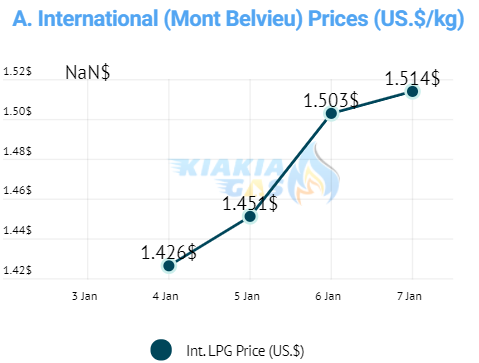
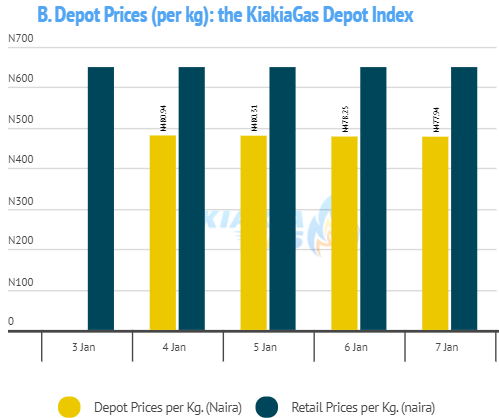
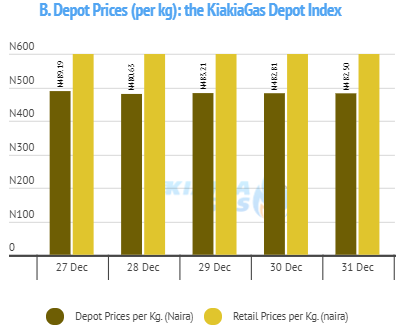
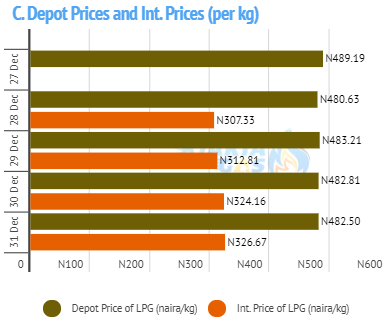
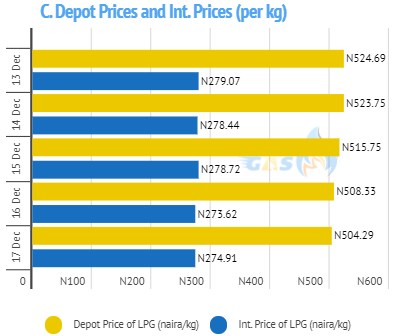
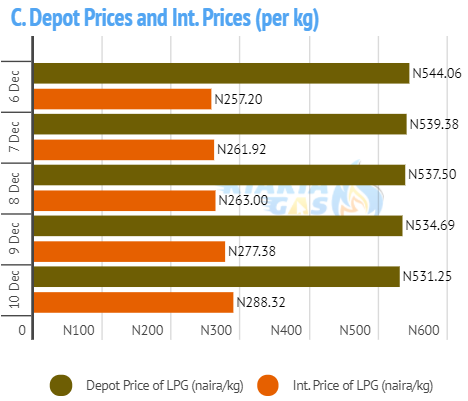
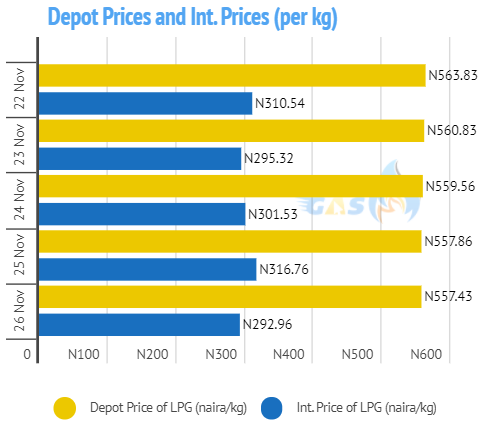
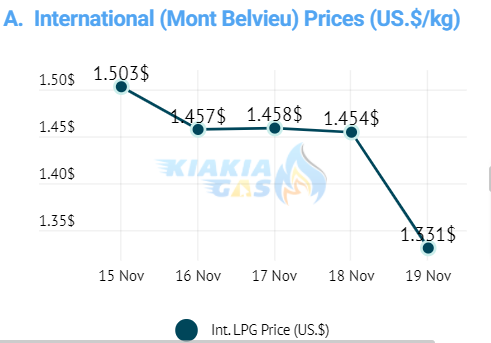
Prices on the international market for LPG rose continuously throughout the previous week while the domestic markets for LPG were decreasing in the immediately preceding week


  • The international prices of LPG reached their apex point at the end of the previous week despite increases from the beginning of the week.
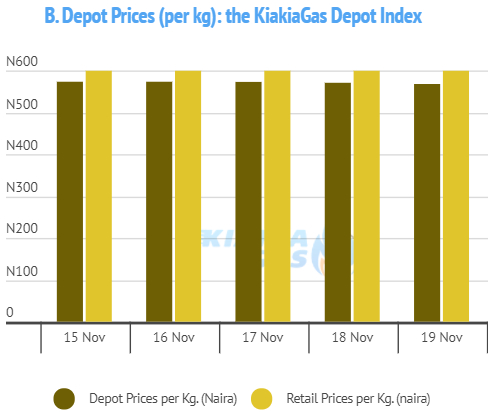
  • Depot prices were on the fallen note in the preceding week with a minimum of N477.94 per kg in the previous week.
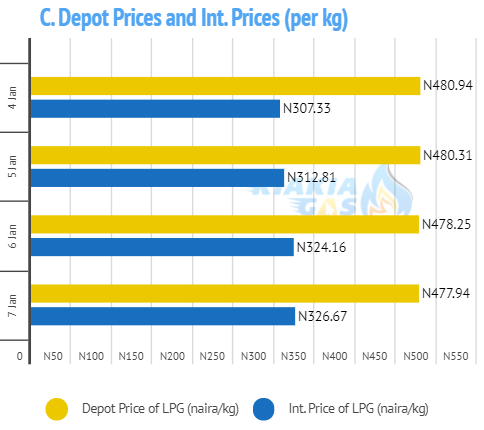
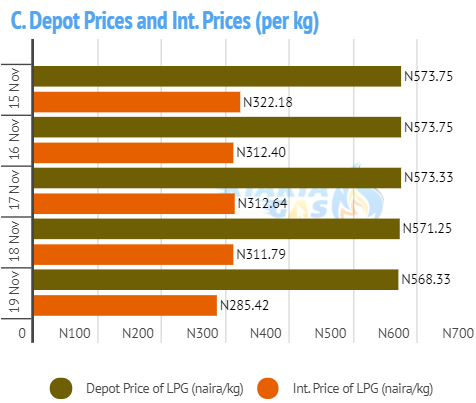
  • The market gaps between prices at the depot and those at the international level continued to narrow as more depots gained their strength to load LPG from the depot
  • In the week under review and the previous two weeks, price variations in LPG per kg remained within a narrow range.
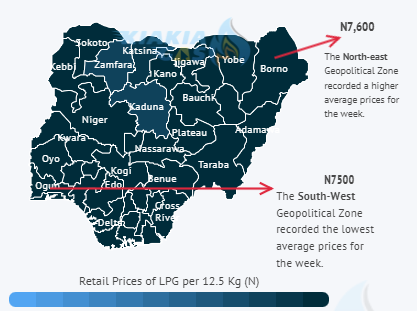
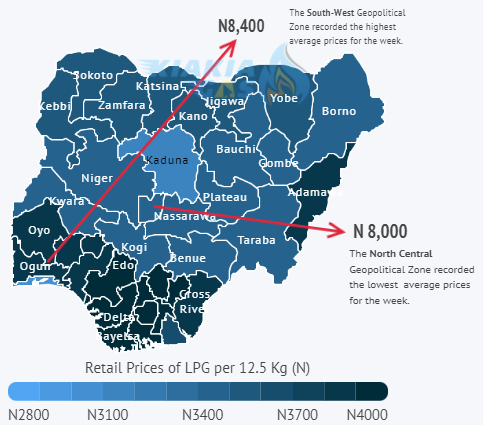
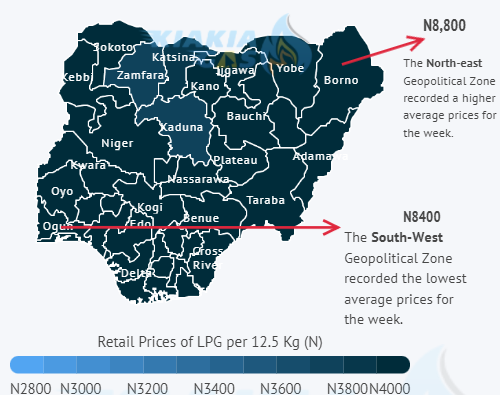
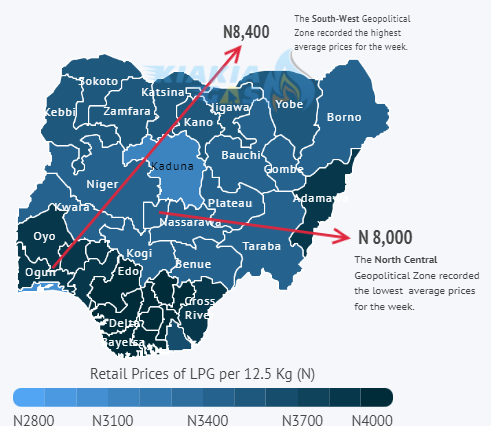
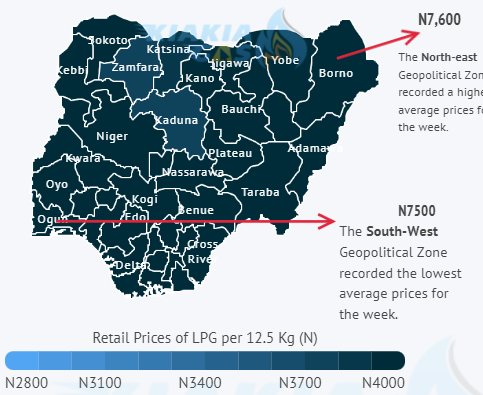
  • Within the Nigeria region, regional variations in LPG retail prices continue to exist.           The regional variation in LPG prices across Nigeria has been a recurring feature of the Nigerian LPG industry. The South West area has the lowest rates due to its closeness to the coastal region.        
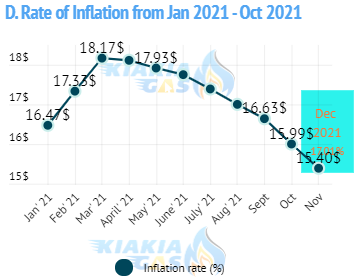
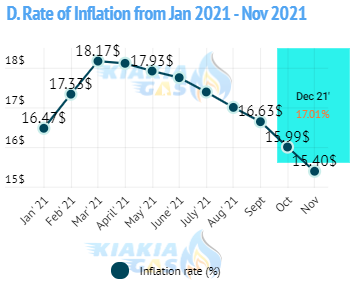
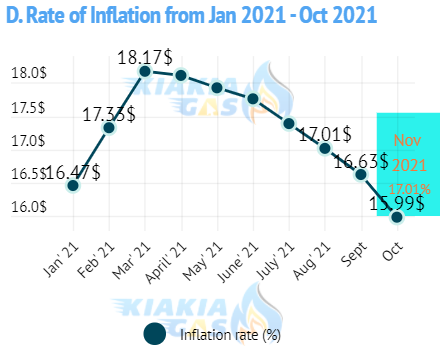
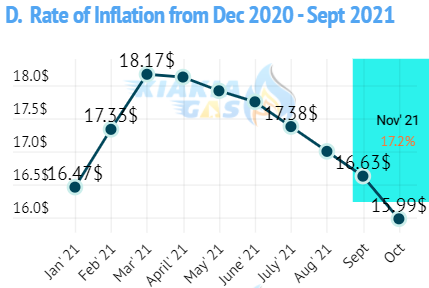
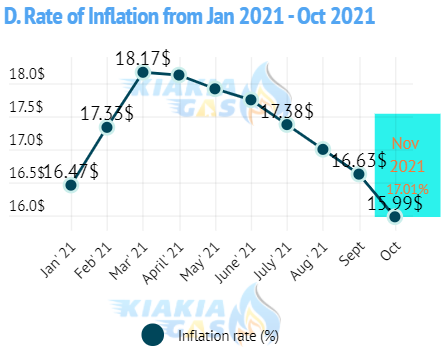
    • Inflation Rate and the LPG: Inflation has consistently fallen over the last eight months. It fell from 15.99% in October to 15.40% in November 2021, (See Illustration D). Coupled with the high prices of goods and services in the month of December 2021, the expected inflation rate is 17.01%. This is due to Xmas and New Year festive that are fast approaching. In April 2021, it fell from 18.12% to 17.93%. in May 2021 The composite food index reduced to 18.34% in October from 19.57% in September 2021, 20.57 per cent in January 2021, 20.30% in August 2021, and 15.48 per cent in July 2020, compared to 15.18 per cent in June 2020. For the month of May, a 15.4 per cent inflation rate is expected. The relaxation of the Covid-19 rule may have influenced the inflation rate trend.
     
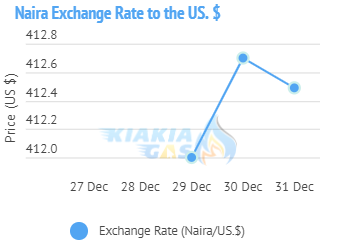
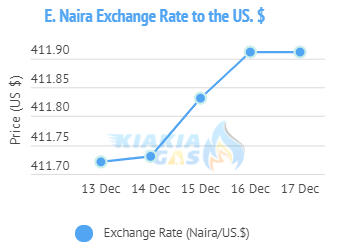
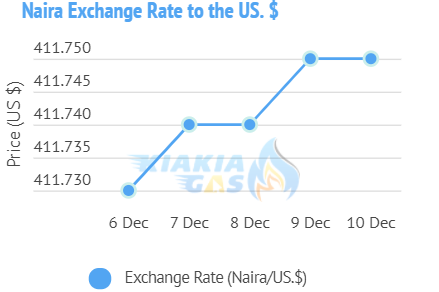
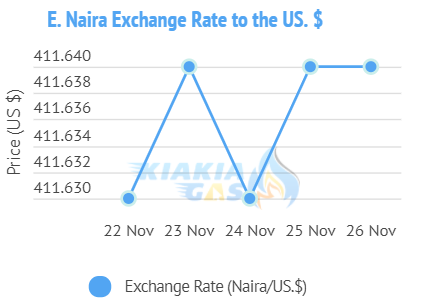
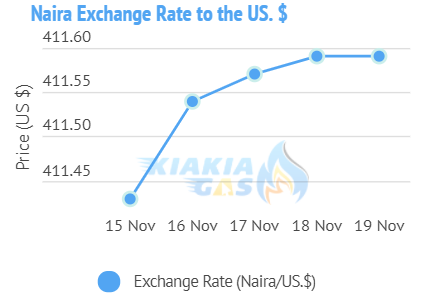
    • Exchange Rate and the LPG: In line with widening discrepancies in the parallel market, the Central Bank of Nigeria's (CBN) adjusted the exchange rate to fine-tune the forex market. (Figure E). Movement in the exchange rate along the same line was increasing and ranged from 414.26 to 414.89/US$1 in the previous week. One of the factors that influence the price of LPG on the international market is the exchange rate. Since more LPG is imported, a lower exchange rate has little impact on the selling price of LPG on the local market.
     
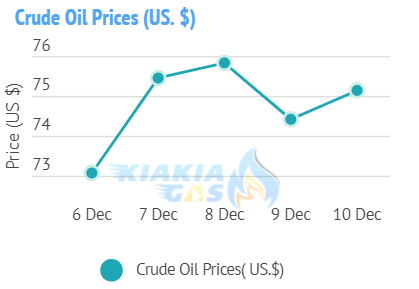
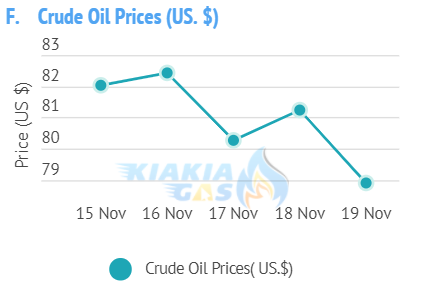
    • Crude oil price and the LPG: The price of LPG is positively related to the price of crude oil since it is sometimes a by-product of crude oil. The Prices of crude oil in the international market reached their highest point before the end of the week, however, they ended on a fallen note (Figure F). The cost of LPG increases as the price of crude oil falls on the international market. This suggests a low LPG market price.
     
    • Foreign Reserves: The Nigerian Gross Foreign Reserve dropped from $40.52 billion to $40.49 billion last week. Despite a rise in the reserves, the exchange rate was ranged from 411.63 to 410.64 in the previous week. This is positively correlated to the crude oil prices that experienced a sharp fall at the end of the week. A decrease in the reserve might be a result of the reduction in the prices of crude oil over the preceding week.
     
    • PMI: The CBN Purchasing Managers Index (PMI) recorded overall growth in employment, business and inventory in the month of December while ordering in the category of supply for power, gas, steam and air conditioning remained stagnant while business operation & inventory were static in the same month at 45.7 per cent.
               
    • Covid-19: Covid-19 causes the demand for goods and services to fall due to the full or partial lock-down effect. The implication of the Covid-19 contracts the LPG market
    • Omicron Variant: A new strain of COVID-19 recently detected in southern Africa as a “variant of concern” by the World Health Organization is also no doubt causing concern among the world leaders. The implication of this variant contracts the LPG market if not curtailed early.


  • Reducing the effect of the Covid-19 and the Omicron variant entails more campaigns and public awareness of the virus as people are easily carried away and relaxing. Vaccines for Covid-19 and Omicron variant should be distributed without much delay if available.
 

The prices in the weeks to come may rise due to pressure on the supply of butane coupled with the increase in the price of goods and services in the country


The Nigerian LPG market is the next success story of the Global LPG industry, if you need a partner with a global perspective and local expertise in the Nigerian and African space, kindly book a free session with our team of experts to help you http://www.kiakiagas.com/book-session or write us an email at advisory@kiakiagas.com or Whatsapp: +2348085269328


Week
106

WEEK 105: LPG Insider Report

Submitted by kiakiagas on

In the immediately preceding week, the international prices for LPG sloped upward while domestic prices for LPG continue to fall

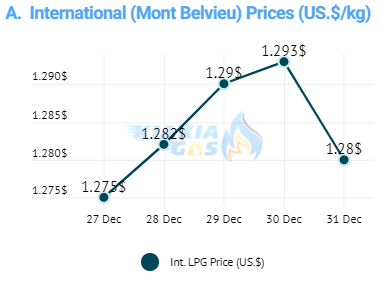
  • The international prices of LPG in the previous week continued to rise from the beginning and reached their maximum level towards the end of the week, however, it ended on a fallen note.
  • Depot prices continue to fall due to the federal government intervention to increase the local supply of LPG.
  • Due to the increase in the foreign markets price, the price gaps between prices at the depot level and those at the international level continue to be widened.
  • In the week under review, the price continues to decrease per kg of LPG and has been trending for the past few weeks.
  • Due to transportation costs and proximity to the coast, disparities in LPG retail pricing still exist across the country.           A daily feature of the Nigerian LPG market was regional variance in LPG prices across the country. Because of the in price speculation and living style, the LPG in South-West region has the highest price.      
    • Inflation Rate and the LPG: Over the last 8 months, the rate of inflation has been steadily decreasing. It fell from 15.99% in October 2021 to 15.40% in November. The anticipated inflation rate for the month of December 2021 is 16.80%. The monetary measure put in place by the monetary authorities contributes to the fall in the rate of inflation trend. The composite food index reduced to 20.3% in August 2021 from 21.03% in July. It was 22.95% in March 2021 to 22.72% in April 2021, 20.57% in January 2021, 19.56% in December 2020, 15.48% in July 2020 compared to 15.18% in June 2020.
     
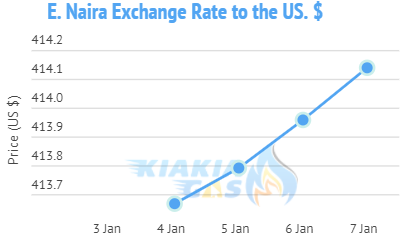
    • Exchange Rate and the LPG: The exchange rate continues to rise from the beginning to the end of the week. It ranged from 412.0 to 412.49 in the week due to the adjustment made by the CBN to stabilize the naira against the dollar. The exchange rate is one of the factors that influence LPG prices on the international market. A higher exchange rate would boost the price of LPG on the local market by a considerable amount. This means that the LPG market is in a state of flux, Figure E.
     
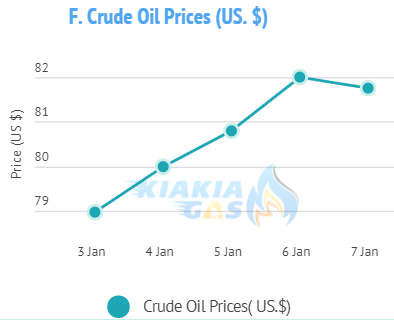
    • Crude oil price and the LPG: The relationship between LPG price and crude oil price remains positive, as a by-product of crude oil. Crude oil prices were at their lowest point at the end of the week after somewhat increases during the week. (Figure F). This shows that the price of crude oil has not been stable in the international market. This reflects variability in the market price for LPG.
     
    • Foreign Reserves: As in the previous week, the Nigerian Gross Foreign Reserve decreased slightly from $40.57 billion to $40.52 billion. This is due to the increase in supply of dollar from the reserve to stabilize the exchange rate.
     
    • PMI: The CBN Purchasing Managers Index (PMI) recorded overall growth in employment, business and inventory in the month of December while ordering in the category of supply for power, gas, steam and air conditioning remained stagnant while business operation & inventory were static in the same month at 45.7 per cent.        
  • Covid-19: Covid-19 causes demand for goods and services to fall due to the full or partial lock-down effect. The implication of the Covid-19 contracts to the LPG market
  • Omicron Variant: A new strain of COVID-19 recently detected in southern Africa as a “variant of concern” by the World Health Organization is also no doubt causing concern among the world leaders. The implication of this variant contracts the LPG market if not curtailed early.   Reducing the effect of the Covid-19 entails more campaigns and public awareness of the virus as people are easily carried away and relaxing. Vaccines for Covid-19 should be distributed without much delay if available.   The prices in the weeks to come may fall due to the increase in the local supply of LPG by the federal government


The Nigerian LPG market is the next success story of the Global LPG industry, if you need a partner with a global perspective and local expertise in the Nigerian and African space, kindly book a free session with our team of experts to help you http://www.kiakiagas.com/book-session or write us an email at advisory@kiakiagas.com or Whatsapp: +2348085269328  


Week
105

Week 103: LPG Insider Report

Submitted by kiakiagas on

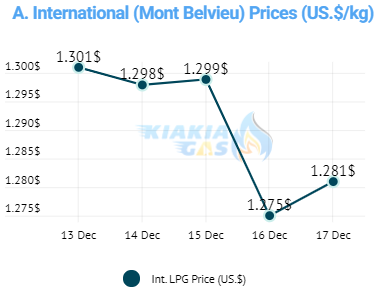
Prices on the international market for LPG fluctuated throughout the previous week while the domestic markets for LPG were decreasing in the immediately preceding week

  • The international prices of LPG reached their apex point towards the end of the previous week.
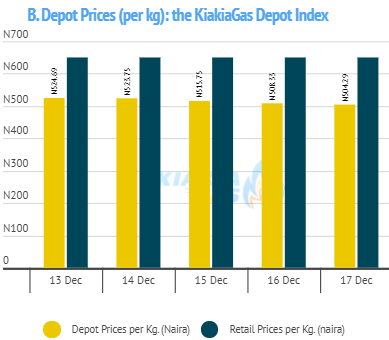
  • Depot prices were on the fallen note in the preceding week with a minimum of N552.50 per kg in the previous week.
  • The market gaps between prices at the depot and those at the international level continued to narrow as more depots gained their strength to load LPG from the depot
  • In the week under review and the previous two weeks, price variations in LPG per kg remained within a narrow range.
  • Within the Nigeria region, regional variations in LPG retail prices continue to exist.       The regional variation in LPG prices across Nigeria has been a recurring feature of the Nigerian LPG industry. The South West area has the lowest rates due to its closeness to the coastal region.        

    • Inflation Rate and the LPG: Inflation has consistently fallen over the last eight months. It fell from 15.99% in October to 15.40% in November 2021, (See Illustration D). Coupled with the high prices of goods and services in the month of December 2021, the expected inflation rate is 17.01%. This is due to Xmas and New Year festive that are fast approaching. In April 2021, it fell from 18.12% to 17.93%. in May 2021 The composite food index reduced to 18.34% in October from 19.57% in September 2021, 20.57 per cent in January 2021, 20.30% in August 2021, and 15.48 per cent in July 2020, compared to 15.18 per cent in June 2020. For the month of May, a 15.4 per cent inflation rate is expected. The relaxation of the Covid-19 rule may have influenced the inflation rate trend.
     
    • Exchange Rate and the LPG: In line with widening discrepancies in the parallel market, the Central Bank of Nigeria's (CBN) adjusted the exchange rate to fine-tune the forex market. (Figure E). Movement in the exchange rate along the same line experienced somewhat fluctuation and ranged from 411.72 to 411.91/US$1 in the previous week. One of the factors that influence the price of LPG on the international market is the exchange rate. Since more LPG is imported, a lower exchange rate has little impact on the selling price of LPG on the local market.
     
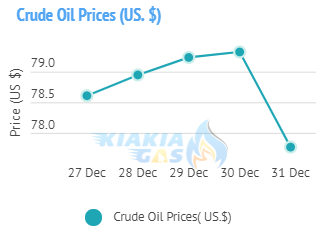
    • Crude oil price and the LPG: The price of LPG is positively related to the price of crude oil since it is sometimes a by-product of crude oil. The Prices of crude oil in the international market reached their highest point towards the end of the week, however, they ended on a fallen note (Figure F). The cost of LPG increases as the price of crude oil falls on the international market. This suggests a low LPG market price.
     
    • Foreign Reserves: The Nigerian Gross Foreign Reserve dropped from $41.40 billion to $41.30 billion last week. Despite a rise in the reserves, the exchange rate was ranged from 411.63 to 410.64 in the previous week. This is positively correlated to the crude oil prices that experienced a sharp fall at the end of the week. A decrease in the reserve might be a result of the reduction in the prices of crude oil over the preceding week.
     
    • PMI: The CBN Purchasing Managers Index (PMI) recorded overall growth in employment, business and inventory in the month of December while ordering in the category of supply for power, gas, steam and air conditioning remained stagnant while business operation & inventory were static in the same month at 45.7 per cent.            
      • Covid-19: Covid-19 causes the demand for goods and services to fall due to the full or partial lock-down effect. The implication of the Covid-19 contracts the LPG market
      • Omicron Variant: A new strain of COVID-19 recently detected in southern Africa as a “variant of concern” by the World Health Organization is also no doubt causing concern among the world leaders. The implication of this variant contracts the LPG market if not curtailed early.  
        • Reducing the effect of the Covid-19 and the Omicron variant entails more campaigns and public awareness of the virus as people are easily carried away and relaxing. Vaccines for Covid-19 and Omicron variant should be distributed without much delay if available.   The prices in the weeks to come may rise due to pressure on the US supply of butane coupled with the increase in the price of goods and services in the country    
        The Nigerian LPG market is the next success story of the Global LPG industry, if you need a partner with a global perspective and local expertise in the Nigerian and African space, kindly book a free session with our team of experts to help you http://www.kiakiagas.com/book-session or write us an email at advisory@kiakiagas.com or Whatsapp: +2348085269328


Week
103

Week 102: LPG Insider Report

Submitted by kiakiagas on

In the immediately preceding week, the international prices for LPG sloped upward while domestic prices for LPG were sloped downward

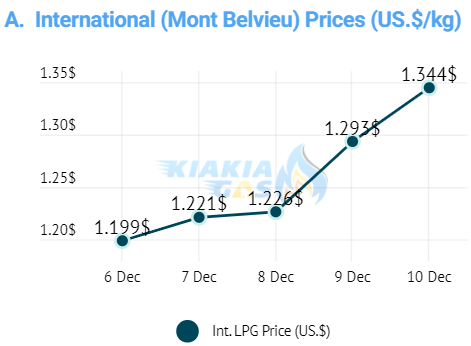
  • The international prices of LPG in the previous week continued to rise from the beginning till the end of the week.
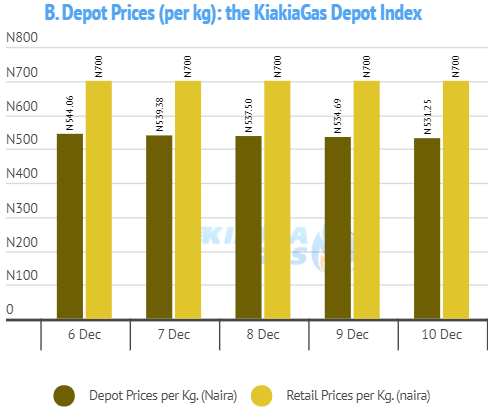
  • Depot prices were on a fallen note throughout the week.
  • Due to the increase in the foreign markets price, the price gaps between prices at the depot level and those at the international level became widened.
  • In the week under review, the price continues to increase per kg of LPG and has been trading for the past few weeks.
  • Due to transportation costs and proximity to the coast, disparities in LPG retail pricing still exist across the country.             A daily feature of the Nigerian LPG market was regional variance in LPG prices across the country. Because of the in price speculation and living style, the LPG in South-West region has the highest price.    
    • Inflation Rate and the LPG: Over the last 8 months, the rate of inflation has been steadily decreasing. It fell from 16.63% in September 2021 to 15.99% in October. The anticipated inflation rate for the month of September is 16.80%. The monetary measure put in place by the monetary authorities contributes to the fall in the rate of inflation trend. The composite food index reduced to 20.3% in August 2021 from 21.03% in July. It was 22.95% in March 2021 to 22.72% in April 2021, 20.57% in January 2021, 19.56% in December 2020, 15.48% in July 2020 compared to 15.18% in June 2020.
     
    • Exchange Rate and the LPG: The exchange rate continues to rise from the beginning tohe end of the week. It rose from 411.73 to 411..75 in the week due to the adjustment made by the CBN to stabilize the naira against the dollar. The exchange rate is one of the factors that influence LPG prices on the international market. A higher exchange rate would boost the price of LPG on the local market by a considerable amount. This means that the LPG market is in a state of flux, Figure E.
     
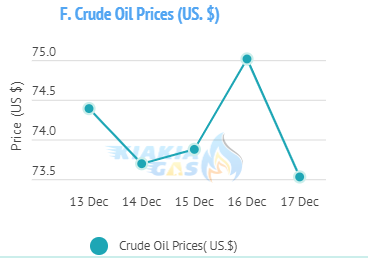
    • Crude oil price and the LPG: The relationship between LPG price and crude oil price remains positive, as a by-product of crude oil. Crude oil prices were at their highest point in the middle of the week despite a fall towards the end of the week. (Figure F). This shows that the price of crude oil has not been stable in the international market. This reflects variability in the market price for LPG.
     
    • Foreign Reserves: As in the previous week, the Nigerian Gross Foreign Reserve decreased slightly from $41.08 billion to $40.90 billion. This is due to the increase in supply of dollar from the reserve to stabilize exchange rate.
     
    • PMI: The CBN Purchasing Managers Index (PMI) recorded overall growth in employment, business and inventory in the month of December while ordering in the category of supply for power, gas, steam and air conditioning remained stagnant while business operation & inventory were static in the same month at 45.7 per cent.      


  • Covid-19: Covid-19 causes demand for goods and services to fall due to the full or partial lock-down effect. The implication of the Covid-19 contracts to the LPG market
  • Omicron Variant: A new strain of COVID-19 recently detected in southern Africa as a “variant of concern” by the World Health Organization is also no doubt causing concern among the world leaders. The implication of this variant contracts the LPG market if not curtailed early.
  • Inflation Rate and the LPG: Over the last 8 months, the rate of inflation has been steadily decreasing. It fell from 16.63% in September 2021 to 15.99% in October. The anticipated inflation rate for the month of September is 16.80%. The monetary measure put in place by the monetary authorities contributes to the fall in the rate of inflation trend. The composite food index reduced to 20.3% in August 2021 from 21.03% in July. It was 22.95% in March 2021 to 22.72% in April 2021, 20.57% in January 2021, 19.56% in December 2020, 15.48% in July 2020 compared to 15.18% in June 2020.
 
  • Exchange Rate and the LPG: The exchange rate continues to rise from the beginning tohe end of the week. It rose from 411.73 to 411..75 in the week due to the adjustment made by the CBN to stabilize the naira against the dollar. The exchange rate is one of the factors that influence LPG prices on the international market. A higher exchange rate would boost the price of LPG on the local market by a considerable amount. This means that the LPG market is in a state of flux, Figure E.
 
  • Crude oil price and the LPG: The relationship between LPG price and crude oil price remains positive, as a by-product of crude oil. Crude oil prices were at their highest point in the middle of the week despite a fall towards the end of the week. (Figure F). This shows that the price of crude oil has not been stable in the international market. This reflects variability in the market price for LPG.
 
  • Foreign Reserves: As in the previous week, the Nigerian Gross Foreign Reserve decreased slightly from $41.08 billion to $40.90 billion. This is due to the increase in supply of dollar from the reserve to stabilize exchange rate.
 
  • PMI: The CBN Purchasing Managers Index (PMI) recorded overall growth in employment, business and inventory in the month of December while ordering in the category of supply for power, gas, steam and air conditioning remained stagnant while business operation & inventory were static in the same month at 45.7 per cent.

Reducing the effect of the Covid-19, entails more campaign and public awareness of the virus as people are easily carried away and relaxing. Vaccines for Covid-19 should be distributed without much delay if available.


The prices in the weeks to come may rise due to the effect of an increase in the LPG price level from depot even though the month-on-month rate of inflation is reducing.


The Nigerian LPG market is the next success story of the Global LPG industry, if you need a partner with a global perspective and local expertise in the Nigerian and African space, kindly book a free session with our team of experts to help you http://www.kiakiagas.com/book-session or write us an email at advisory@kiakiagas.com or Whatsapp: +2348085269328


Week
102

Week 100: LPG Insider Report

Submitted by kiakiagas on

Prices on the international market for LPG fluctuated throughout the previous week while the domestic markets for LPG were decreasing in the immediately preceding week

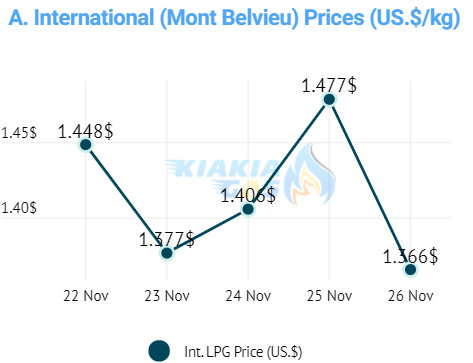
  • The international prices of LPG reached their apex point towards the end of the previous week.
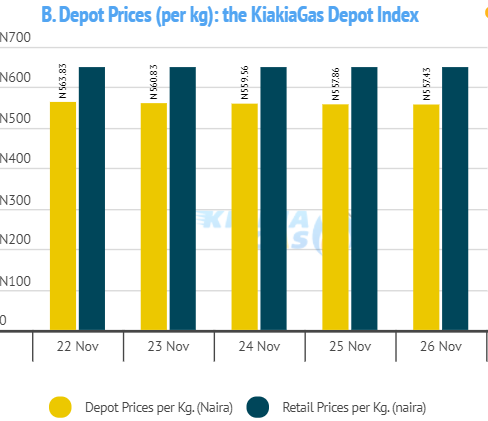
  • Depot prices were on the fallen note in the preceding week with a minimum of N552.50 per kg in the previous week.
  • The market gaps between prices at the depot and those at the international level continued to narrow as more depots gained their strength to load LPG from the depot
  • In the week under review and the previous two weeks, price variations in LPG per kg remained within a narrow range.
  • Within the Nigeria region, regional variations in LPG retail prices continue to exist.         The regional variation in LPG prices across Nigeria has been a recurring feature of the Nigerian LPG industry. The South West area has the lowest rates due to its closeness to the coastal region.      
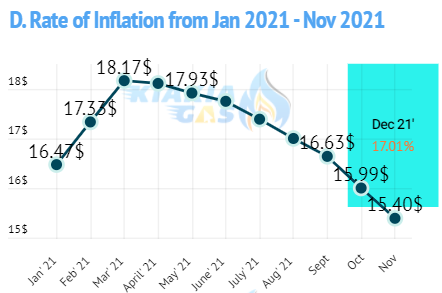
    • Inflation Rate and the LPG: Inflation has consistently fallen over the last seven months. It fell from 16.63% in September to 15.99% in October 2021, (See Illustration D). Coupled with the high prices of goods and services in the month of November 2021, the expected inflation rate is 17.2%. In April 2021, it fell from 18.12% to 17.93%. in May 2021 The composite food index reduced to 18.34% in October from 19.57% in September 2021, 20.57 per cent in January 2021, 20.30% in August 2021, and 15.48 per cent in July 2020, compared to 15.18 per cent in June 2020. For the month of May, a 15.4 per cent inflation rate is expected. The relaxation of the Covid-19 rule may have influenced the inflation rate trend
     
    • Exchange Rate and the LPG: In line with widening discrepancies in the parallel market, the Central Bank of Nigeria's (CBN) adjusted the exchange rate to fine-tune the forex market. (Figure E). Movement in the exchange rate along the same line experienced somewhat fluctuation and ranged from 411.63 to 411.64/US$1 in the previous week. One of the factors that influence the price of LPG on the international market is the exchange rate. Since more LPG is imported, a lower exchange rate has little impact on the selling price of LPG on the local market.
     
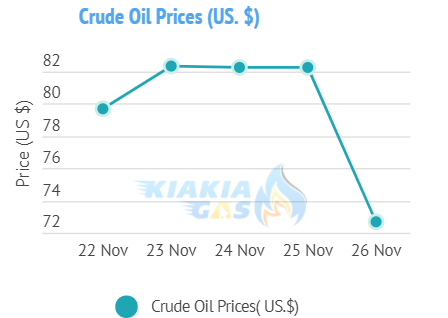
    • Crude oil price and the LPG: The price of LPG is positively related to the price of crude oil since it is sometimes a by-product of crude oil. The Prices of crude oil in the international market were stable in the middle of the week. however, there was a sharp decrease at the end of the previous week (Figure F). The cost of LPG increases as the price of crude oil falls on the international market. This suggests a low LPG market price.
     
    • Foreign Reserves: The Nigerian Gross Foreign Reserve dropped from $41.40 billion to $41.30 billion last week. Despite a rise in the reserves, the exchange rate was ranged from 411.63 to 410.64 in the previous week. This is positively correlated to the crude oil prices that experienced a sharp fall at the end of the week. A decrease in the reserve might be a result of the reduction in the prices of crude oil over the preceding week.
     
    • PMI: The CBN Purchasing Managers Index (PMI) recorded overall growth in employment, business and inventory in the month of December while ordering in the category of supply for power, gas, steam and air conditioning remained stagnant while business operation & inventory were static in the same month at 45.7 per cent.        
      • Covid-19: Covid-19 causes the demand for goods and services to fall due to the full or partial lock-down effect. The implication of the Covid-19 contracts the LPG market    
      • Omicron Variant: A new strain of COVID-19 recently detected in southern Africa as a “variant of concern” by the World Health Organization is also no doubt causing concern among the world leaders. The implication of this variant contracts the LPG market if not curtailed early.
       
  • Reducing the effect of the Covid-19 and the Omicron variant entails more campaigns and public awareness of the virus as people are easily carried away and relaxing. Vaccines for Covid-19 and Omicron variant should be distributed without much delay if available.  

The prices in the weeks to come may rise due to pressure on the US supply of butane coupled with the increase in the price of goods and services in the country.


The Nigerian LPG market is the next success story of the Global LPG industry, if you need a partner with a global perspective and local expertise in the Nigerian and African space, kindly book a free session with our team of experts to help you http://www.kiakiagas.com/book-session or write us an email at advisory@kiakiagas.com or Whatsapp: +2348085269328

 
Week
100

Week 98: Natural Gas Report

Submitted by kiakiagas on

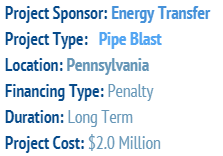
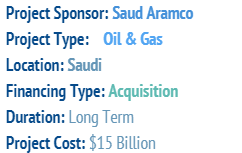
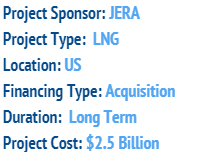
In the face of persistent underperformance this year, the federal government announced that it was rebuilding the upstream industry in order to increase crude oil production by 100% to 3.0 million barrels per day, up from an average of 1.5 million this year. Despite missing the planned reserve deadline of December 2020, the government expressed its commitment to achieving 40 billion barrels of oil reserves. Chief Executive, Nigerian Upstream Petroleum Regulatory Commission, Engr. Gbenga Komolafe said the targets were hampered by a number of issues, including oil theft, insecurity, and ageing facilities while speaking at the Nigerian Association of Petroleum Explorationists (NAPE) International Conference and Exhibition in Lagos.   It was reported by Reuters that Electric grids should enhance cold weather restrictions and communicate with the natural gas industry, according to US power reliability authorities, to avoid a repeat of the February freeze that left millions in Texas without power for days. This year has seen multiple extreme weather events in the United States, including a February cold and record-breaking heat in the Pacific Northwest this summer. On Tuesday, the Federal Energy Regulatory Commission (FERC) and the North American Electric Reliability Corporation (NERC) released their final assessment on the February freeze, which was also known as Winter Storm Uri.   Reuters reported based on the outcomes of pipeline capacity auctions that Ukraine's state-run gas transmission system operator said on Wednesday that there was no indication that Russian energy giant Gazprom planned to send additional gas to the European Union next year. According to Makogon Kyiv, is using electricity as a weapon against Europe. Moscow denies this and has stated numerous times that it is meeting its gas deal requirements. "Gazprom does not aim to boost gas supply to the EU in December or the first quarter of 2022, based on auction results," the operator's head Sergiy Makogon wrote on Facebook.   The Pennsylvania Public Utility Commission (PUC) accepted a roughly $2 million settlement with a subsidiary of Energy Transfer LP for a pipeline explosion and fire in Western Pennsylvania in 2018. On Sept. 10, 2018, a section of the 24-inch (61-centimeter) Revolution pipe failed after heavy rains created a landslide in Beaver County's Center Township. According to the PUC, the fire destroyed a nearby residence, damaged electricity lines, and burned many acres of surrounding woodland. A $1 million civil penalty is included in the agreement, as well as around $975,000 in additional safety-related measures, such as improved pipeline start-up procedures. According to local media, the 40.5-mile (65-kilometer) pipeline was being put into service at the time of the event.     Reliance Industries Ltd (RELI.NS) of India said on Friday that it had chosen to reconsider Saudi Aramco's (2222.SE) proposed $15 billion investment in Reliance's oil-to-chemicals (O2C) business. The sale of a 20% share in the unit was planned for 2019, but was postponed owing to the pandemic, which caused oil prices and demand to plummet last year. Meanwhile, earlier this year, Reliance announced plans to invest 600 billion rupees ($8.08 billion) in Jamnagar to develop four "giga factories" to make solar cells and modules, energy storage batteries, fuel cells, and green hydrogen. A large portion of the oil-to-chemicals assets are located in western India. "In light of the new circumstances, Reliance and Saudi Aramco have mutually concluded that it would be beneficial for both parties to re-evaluate the proposed investment in O2C business," Reliance stated on Friday.   GIP, a major independent infrastructure investor, has agreed to sell its 25.7 percent stake in Freeport LNG Development, L.P. (Freeport) to JERA Americas Inc. for US$2.5 billion, subject to customary purchase price adjustments. Global Infrastructure Partners II, GIP's second flagship fund, purchased the stake in 2015. JERA Americas Inc. is a subsidiary of JERA Co., Inc. (JERA), the world's largest LNG importer, based in the United States. JERA owns 25% of Freeport LNG Train 1 and acquires and transports 2.32 million tpy of LNG for usage in Japan and other LNG-importing nations through its subsidiaries. The acquisition is subject to usual regulatory clearances and closing conditions before it may be completed.     The Nigerian Upstream Petroleum Regulatory Commission (NUPRC) has announced that all approved Field Development Plans (FDPs) will now include full gas utilization and monetization programs, in order to ensure that the country benefits from the recently concluded United Nations Conference of Parties (COP 26). Upstream investors have previously focused primarily on oil exploration and production, with little or no plans for gas development. The development has resulted in the gas sector's slow growth and retardation, with more oil companies burning gas rather than monetizing it, and the same can be said for the development of that key business capable of turning the country's fortunes around.     The Nigerian LPG market is the next success story of the Global LPG industry, if you need a partner with a global perspective and local expertise in the Nigerian and African space, kindly book a free session with our team of experts to help you http://www.kiakiagas.com/book-session or write us an email at advisory@kiakiagas.com or Whatsapp: +2348085269328


Week
98

Week 99: LPG Insider Report

Submitted by kiakiagas on


In the immediately preceding week, there were reductions in the prices of the foreign market while domestic prices for LPG were stable

  • The international prices of LPG in the previous week continued to fluctuate at decreasing rate from the beginning till the end of the week.
  • Depot prices were stable at the middle of the week. however, they were on a fallen note at the end of the week.
  • Despite a somewhat higher price in foreign markets price, the price gaps between prices at the depot level and those at the international level have remained consistent.
  • In the week under review, the price continues to increase per kg of LPG and has been trading for the past 8 weeks.
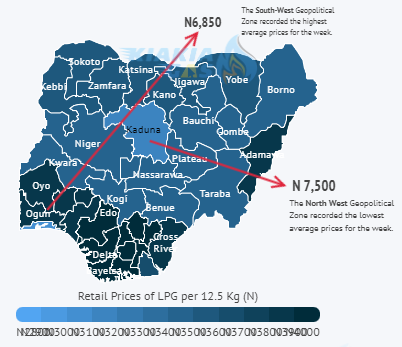
  • Due to transportation costs and proximity to the coast, disparities in LPG retail pricing still exist across the country.         A daily feature of the Nigerian LPG market was regional variance in LPG prices across the country. Because of the in price speculation and living style, the LPG in South-West region has the highest price.      
    • Inflation Rate and the LPG: Over the last 8 months, the rate of inflation has been steadily decreasing. It fell from 16.63% in September 2021 to 15.99% in October. The anticipated inflation rate for the month of September is 16.80%. The monetary measure put in place by the monetary authorities contributes to the fall in the rate of inflation trend. The composite food index reduced to 20.3% in August 2021 from 21.03% in July. It was 22.95% in March 2021 to 22.72% in April 2021, 20.57% in January 2021, 19.56% in December 2020, 15.48% in July 2020 compared to 15.18% in June 2020.
     
    • Exchange Rate and the LPG: The exchange rate continues to rise from the tbeginning tohe end of the week. It rose from 411.43 to 411..59 in the week due to the adjustment made by the CBN to stabilize the naira against the dollar. The exchange rate is one of the factors that influence LPG prices on the international market. A higher exchange rate would boost the price of LPG on the local market by a considerable amount. This means that the LPG market is in a state of flux, Figure E.
     
    • Crude oil price and the LPG: The relationship between LPG price and crude oil price remains positive, as a by-product of crude oil. Crude oil prices fluctuated at decreasing rate during the week. (Figure F). This shows that the price of crude oil has not been stable in the international market. This reflects variability in the market price for LPG.
     
    • Foreign Reserves: As in the previous week, the Nigerian Gross Foreign Reserve decreased slightly from $41.507 billion to $41.405 billion. This is due to an decrease in the price of oil.
     
    • PMI: The CBN Purchasing Managers Index (PMI) recorded overall growth in employment, business and inventory in the month of December while ordering in the category of supply for power, gas, steam and air conditioning remained stagnant while business operation & inventory were static in the same month at 45.7 per cent.         Covid-19: Covid-19 causes demand for goods and services to fall due to the full or partial lock-down effect. The implication of the Covid-19 contracts to the LPG market   Reducing the effect of the Covid-19, entails more campaign and public awareness of the virus as people are easily carried away and relaxing. Vaccines for Covid-19 should be distributed without much delay if available.     The prices in the weeks to come may rise due to the effect of an increase in the LPG price level from depot even though the month-on-month rate of inflation is reducing.     The Nigerian LPG market is the next success story of the Global LPG industry, if you need a partner with a global perspective and local expertise in the Nigerian and African space, kindly book a free session with our team of experts to help you http://www.kiakiagas.com/book-session or write us an email at advisory@kiakiagas.com or Whatsapp: +2348085269328



Week
99
Subscribe to gas