EFFECTIVE TIPS ON HOW TO SAVE YOUR COOKING GAS
Submitted by kiakiagas on


It is well known that the cost of food has climbed significantly in recent months along with the price of cooking gas, making life difficult for a large number of people. For the typical Nigerian household, cooking gas has turned into a luxury good. Bravo if you still have the means to fill yours to the brim! You don't come across people who can easily and comfortably fill up their gas cylinders every day. Every residence is frantically looking for ways to adapt to this change and extend the gas supply. On a more positive side, we have developed useful advice that will lessen how frequently you visit the petrol station. We have heard the word "savings" so frequently that we are accustomed to it. Many things can be saved, but we have no idea how to do it with LPG. Everyone encounters this question on a daily basis. Is there a way to conserve LPG for cooking? There is, and it's not particularly complicated. Your cooking style only needs a few little tweaks here and there to work. To learn some crucial advice on how to conserve household LPG, scroll down.

A typical LPG cooking system consists of an LPG-filled steel cylinder, a pressure controller, a tube connecting the cylinder to the pressure controller and the burner, and the burner itself. You could be willing to go days without a phone or internet connection. Mobile phones and internet cafés more than compensate, but not being able to prepare a meal for yourself (and your family) feels like a major financial drain, not to mention unhealthy. LPG is preferred by Africans because it is clean, simple to use, rapid, and cost-effective. Individuals can get LPG at subsidised prices from the government. LPG is simple to use, with on/off activation as soon as you rotate the knob. Cooking with fake LPG equipment may not only irritate you but also cause a waste of gas. What's more!! Untimely gas equipment replacement can be inconvenient and even turn you off to the gas equipment. This is true if you have not yet had the opportunity to purchase gas LPG equipment from Kiakiagas, an LPG and gas equipment firm linked with international gas equipment manufacturers. Casper is one of the linked American companies. Kiakiagas also offers better advice on how to control your gas equipment when you cook as you can regulate the flames as per requirements. With Kiakiagas, yes, the intensity of flame is totally in your hands and it is noticeable in the form of cerulean flames. Kiakiagas LPG equipment can cook quicker than any other available alternatives as it has huge calorific value.
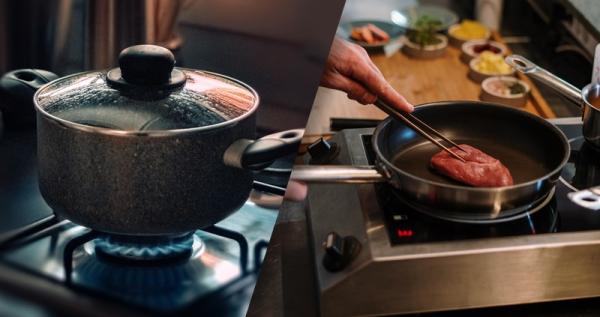


Cooking with LPG is not a hot and humid experience, as stoves produce far less heat than other cooking gases; as a result, we recommend not overheating your kitchen. LPG emits the least amount of greenhouse gases of any existing fossil fuel. It has significantly less nitrogen, sulphur, and other particle chemicals that are harmful to the environment. Because an LPG cylinder doesn't take up much space in the kitchen, it's easy to keep one on hand. It's not like traditional cooking techniques such as wood, charcoal, or kerosene oil, which produce dense puffs of smoke, soot, and residue.

The usable energy value of one kilogramme of LPG is 20.7 MJ/kg. Air-dried firewood has an energy level of roughly 16 MJ/kg, while charcoal has a content of 27 - 33 MJ/kg. To supply the same amount of useable cooking energy as 1 kg of LPG, between 7.3 and 29.7kg of woodfuel would be required, depending on the type of woodfuel, charcoal generation, and cook stove. Because LPG is heavier than air (for example, propane is 1.5 times heavier than air), it can accumulate above ground. This could result in LPG 'lakes,' which could produce explosions. To aid detect leaks and so limit the risk of explosion, a foul-smelling odorant is added.
 

EFFECTIVE TIPS ON HOW TO SAVE YOUR COOKING GAS

There are a few things you can do to extend the life of your cooking gas given the current rise in gas prices. By carrying them out, you will finally reduce your monthly gas costs and generate significant savings. Below are the effective tips on how to save your cooking gas:

Prior to cooking, have all of your items ready to go. Before you turn on the stove, make sure everything is chopped, skinned, thawed, seasoned, marinated, and basted. In this manner, you can finish preparing the various parts of your dinner without consuming any gas. Particularly large drains can result from boiling water. Before adding anything to their boiling water, many people frequently wait an excessively long time.

Turn down the heat as much as you can. When they need to heat anything up, some cooks have a nasty tendency of turning the burner all the way up. Instead, make an effort to just use as much heat as is required to fully reheat or cook your food. When cooking gas is burned, a flame is created, and the flame generates heat energy. The heat generated by the flame increases as more gas is burned, and vice versa. A cooking pot's temperature rises as a result of its contents absorbing the heat, which cooks the meal. The speed of cooking increases with the temperature in a cooking pot. It is important to keep in mind that once a liquid in a cooking pot reaches its boiling point, additional heating and gas combustion will not raise the temperature of the contents of the pot or cause the contents to cook more quickly until all the liquid has evaporated. Therefore, the key is to keep the heat at the lowest level necessary to keep the water boiling. Anything above the bare minimum needed temperature will be useless. For instance, water boils at 212 °F (100 °C). The cooktop won't get any hotter once it reaches boiling if you keep it running at full blast; instead, you'll burn up more gas. Always adhere to the directions to the letter while preparing food from a recipe. Most recipes state how much heat to use.

A complete flame-covering pot or pan should be used.  It indicates an overheated stove if you can see the flames licking the pan's sides. Some gas cookers contain many burners of various diameters for a reason. Use the largest burner when cooking with a large pot, and the smallest burner when cooking with a tiny pot. In this manner, the amount of gas burned will match the burner's size. The use of tiny pots on a large burner is a waste of cooking gas. Once the flames are contained to the pan's bottom surface, reduce the temperature. Otherwise, their heat will radiate outside the container. Use only flat-bottomed cookware for the best results. With these components, the entire heating surface will always be in close proximity to the flames. Choose a burner that is smaller than the pot or pan you are using if your stove has many burners of various sizes to make sure it isn't emitting too much heat.

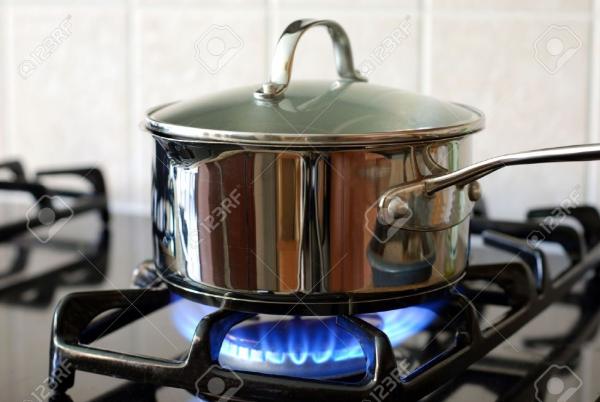
To make sure your stove's burners are operating correctly, keep them clean. Make sure your burners are off and cool to the touch before cleaning them. After that, take off the safety grates and use a moist paper towel to clear any remaining residue. Finally, use soapy water to thoroughly scrub the area surrounding the burners to remove all residue. Your gas stove's flames should have a vivid blue color as they burn. Flames that are yellow or orange may indicate incomplete combustion, which indicates that the gas in the lines isn't being utilized to its fullest extent. If cleaning the burners doesn't fix the issue we, at Kiakiagas, are at your service just give us a call to come take a look at it and replace it if necessary.

Look for any possible leaks. Pay particular attention to any odd odors or light hissing noises coming from the area near your stove. These signs of a leak may be present. Even while you are not cooking, you will be losing gas if your stove has a damaged gas line. The simplest approach to check for a leak on your own is to pull out the stove sufficiently to reach the gas line, then use a cotton swab to clean the fittings with soapy water. A leak has been discovered if one of them starts to bubble. Leaks should be repaired right away because they might seriously jeopardize public safety. Regularly inspect and service the regulator as well as check the pipes or hoses for blockages and leaks to ensure safety and maximize your cooking gas. Always make sure to turn off the regulator after cooking to prevent waste.

Purchase dependable cookware. Due to their high conductivity, materials like copper, stainless steel, and are able to heat up more quickly and disperse heat more uniformly. Similar to cast iron, ceramic cookware does an excellent job of holding heat for a longer period of time, so you won't need to keep the stove on to simmer sauces or keep prepared meals warm. Cookware made of stainless steel or ceramic is typically more expensive, but when you factor in how much money you'll save each month, it virtually pays for itself. In contrast to conventional cooking pots, which only heat food to about 100 degrees Celsius, pressure cookers heat food to about 125 degrees Celsius, which helps the food cook more quickly and cut down on cooking time and gas usage.

Keep your cooking utensils in good shape. Take care when handling your pots and pans to avoid dings, dents, and scratches. While rough surfaces struggle to absorb heat and may even reject it, smooth surfaces do so with ease. Working with battered cookware also carries the risk that over time, chemical seasoning ingredients may start to flake off and enter your meal, introducing potentially dangerous substances. In nonstick pans, always use plastic utensils, and make careful to clean them with soft sponges as opposed to steel wool or other abrasives. While cooking, covering the pan prevents steam from escaping and speeds up the cooking process. Additionally, because the heat energy is utilized more effectively, cooking time is decreased.

When you can, cover your pots and pans. Open cookware allows for the rapid loss of heat. By capturing that heat, you may drastically reduce the amount of time you spend cooking while also preventing the kitchen from turning uncomfortable hot as you prepare dinner. Remember that vapor contains heat as well. You definitely used too much water in the beginning if your cuisine requires letting merely to reach the proper consistency. Additionally, foods are less prone to become overly dry when covered while simmering.

Do not overcook your food. When a dish or ingredient is done cooking, switch off the heat source and place the item aside to cool. This is based on a straightforward principle: the longer the food stays on the stove, the more gas you'll need. Set a timer and watch your meal carefully as it cooks so you can turn off the heat as soon as it's finished. More practical alternatives to using the stove to keep food warm include transferring it to a cooking bag or just covering it with a lid.


Now that you've effectively learned how to save your cooking gas in everyday life, consider making it a practical habit whenever you wan to use LPG. Don’t forget to purchase your LPG from a reputable supplier like Kiakiagas Nigeria Limited to receive the most cost savings.


KiakiaGas Limited is a leading Gas business in Lagos, Nigeria with expertise in carrying out feasibility study/Business plan on all forms of gas, including oxygen and other non-natural gas and LPG retailing, New Gas Market development, Building of Gas Plants and Gas strategy advisory. Supply by KiakiaGas provides LPG and Non LPG Gasses products and equipment for corporate and institutional clients for the project and operational needs. If you need a partner with hands-on local expertise in the Nigerian Gas space or any of our bespoke solutions/services, kindly mail hello@kiakiagas.com  to learn more.to learn more.
 

KIAKIA GAS: YOUR ONE STOP LIQUEFIED PETROLEUM GAS (LPG) PROVIDER

Submitted by kiakiagas on

Launched in August 2015 Kiakia Gas Limited (RC:1226776) is a registered Liability company in Nigeria as a last mile LPG delivery service using technology to deliver LPG (cooking gas) to households in Nigeria, we have expanded our scope to include consulting & Analytics, smart-engineering & manufacturing and B2B bulk distribution. The importance of technology and governance policy in accelerating sustainable transitions cannot be overstated.

Renewable and low-carbon energy sources are part of the policy mix. Because the ongoing energy transition necessitates the construction of new infrastructure or the modification of existing infrastructure, the business model is crucial. Our model for determining the locational efficiency of gas plant set-up and distribution of LPG across the country is providing immerse leverage in this regard. Market Demand Modelling and Valuation We are the only end-to-end LPG Company that has been building capacity internally for the modelling and measurement of demand for LPG as well as understanding consumer behaviour across cities and on the national level in Nigeria. This modelling and valuation efforts are helping us define how to approach various market segments and market entry strategies. Our market analytics and intelligence for the LPG and energy market of Nigeria is opening new opportunities for the company, and for overall market development

Online Energy Outfit

Kiakiagas is the Nigeria’s first online energy outfit offering outstanding, quick & safe delivery of liquefied petroleum gas (LPG) and its related products to Nigerian homes and industries. The company has evolved into an energy solutions company creating a future in which gas will lead the transition of the African energy space from traditional forms of energy to renewable forms of energy making energy available to the last mile consumers from urban areas to off-grid areas.

Use of Information and Communication Technologies (ICT) as an essential tool for achieving the new Sustainable Development Goals by leveraging on ecommerce as a platform to buy cooking gas and related products to the door step of every Nigerian household and industry in a convenient manner, while also providing multiple payment options such as cash on delivery, POS, and payment by credit card. Like all other eCommerce platforms, users simply book for cooking gases by visiting the website and logging in, choosing a cylinder that suits their need, selecting a payment method, and then waiting for their items to be delivered at their doorstep. The platform also offer free delivery of cooking gas to every home within 45minutes.

Kiakia Gas has managed to turn the idea of buying cooking gas online in Nigeria into a mainstream culture by providing convenient booking platforms, excellent customer service, and the use of technology to ensure accurate quantity filling, safety and quality assurance of cylinders and accessories, as well as quick delivery service, resulting in a higher percentage of Nigerian homemakers and industries calling for the company to expand.

Cylinder Manufacturing

Early in 2021, as part of our strategic plan to expand the downstream LPG market, we started building the biggest cylinder production facility in Nigeria. This is our plan for easing the switch to LPG for 100,000 non-LPG users in Nigeria over the next five years.


Coastal Storage and Ship Loading/Offloading Infrastructure

By building a 13,00MT LPG coastal storage and ship loading/offloading infrastructure for Nigerian & West African markets, we intend to enhance our development of the gas market and value chain in Nigeria and West Africa. The Terminal is also planned to include a scalable Thermal IP, a 500MW power plant that will use local LPG production as a backup fuel source in addition to the plentiful natural gas supplies that surround the project location. LPG Industry Technology

Kiakiagas, which garnered more funding to help her realize her bold vision of becoming Nigeria's and Sub-Saharan Africa's leading cooking gas brand, was also recognized as a First of its Kind in the Ecommerce and Natural Gas Industries, respectively, by receiving an award at the FIRST OF ITS KIND AWARDS organized by TFK media Limited, continues to set the standard for other cooking gas dealers to follow.

Over a period of seven years, Kiakia gas has been able to distribute 300,000 metric tonnes (mt) of LPG nationwide at affordable price. The company has developed not only LPG feasibility study but also installation of LPG plants for over fifty companies in Nigeria. The company deals in LPG engineering, data report, consulting and offer courses relating to learning materials to improve knowledge on areas related to gas and engineering. The company procured best LPG plant products with higher quality from USA, Germany and UK.

The MISSION of the company is simple: To use gas to bridge the energy access between traditional forms of energy and renewable forms of energy.

The company has consistently planned, strategized, trained, researched and attended international and national conferences (see plate 2 &3 below) with the sole purpose of actualizing its mission of bridging the energy access between the conventional forms of energy and renewable forms of energy.

Kiakiagas developed a telemetry GSM tracking of gas usage based system which tracks consumers usage of gas, detects leakage and automatically orders .This device sends a high priority message to the customer and to us as a company to give notification of a leakage”.This is new, and high laudable. With millions of Nigerian homes depending on cooking gases, KiaKia gas has a chance to dominate in this uncharted space.

Most industrialized countries have built legal structures to strengthen the use of clean energy sources in accordance with sustainable development goals to ensure that the environment is protected from the use of filthy energy. The pursuit of sustainable energy and advancement of LPG development is central to the Kiakia gas not only in Nigeria but also in Africa. This explained the presence of the company experts in Germany for the production of LPG SMART METER to facilitate the consumption of LPG in African communities.

Smart meter has the potential to help businesses and communities in Nigeria and African to harmonize their pressing health, climate, clean cooking, and environmental goals, as they can now consume LPG as low as they want. This bridges the gap of inability of the low income households to use LPG due to high price per kilogram. It reduces distribution costs as several households can consume LPG from a large gas cylinder. Businesses that are concentrated in an industrial area will as well benefit from a large gas tank with the aid of smart meter. The result is increased LPG access, as well as less accumulation of gas cylinder in African communities and business environment.

We are aware that using technology to enable us to reach the one million households will be necessary. As a result, we are developing technologies leveraging Internet of Things (IoT) solutions that make it simple to order LPG through established retail operators in close proximity to the homes from anywhere in the country. Additionally, this technological solution would make it possible to provide real-time data on LPG consumption in homes.

You can also advance your company level by engaging your customers through a well-planned internet of things (IoTs) with the use of latest information and communication technology. Either you are coming into the LPG industry as a fresher or you are an existing company that aims to expand LPG business, we are ready to provide you with feasibility study that can lead you straight to LPG business success.

A feasibility study examines all of your project's pertinent aspects, including economic, technical, legal, and scheduling issues, to determine the project's chances of success. Several elements influence whether your project is practical, including the project's cost and return on investment, or whether the initiative earned sufficient money or sales from consumers. A feasibility study, on the other hand, isn't just for projects that want to measure and estimate financial gains. In other words, depending on the industry and the project's purpose, practicality can mean different things. A feasibility study, for example, could determine if a liquefied petroleum gas plant can generate enough funds through cooking gas sales and sales of gas equipment to increase the return on investment (ROI). A feasibility study determines if a proposal or project is feasible. A feasibility study examines a project's viability to see if it has a chance of succeeding. The research will also look for any challenges and problems that may occur as a result of the project's implementation.

In order to determine how and where a cooking gas plant should be built, the DPR, as the federal government's regulatory authority, must be consulted, as well as an expert in the subject. The Kiakiagas Nigeria Limited, which has a solid reputation for establishing gas plants that include not only LPG but also CNG/LNG, auto gas, oxygen plants, and shipping, is the proper and finest option to consider. Our crew is up to the task, and we follow the DPR's instructions by using imported goods. Our staff has undergone extensive training to ensure that installations are carried out using the most up-to-date technology. We can also assist you in obtaining the appropriate permissions and ensuring that all gas pumps and dispensing systems are approved and tested extensively. KIAKIAGAS is a one-stop-shop for all things gas, from pipeline to pump. As an added bonus for convenience stores, KIAKIAGAS carries leading gas pump and dispense equipment manufacturers such as Casper.


KiakiaGas Limited is a leading Gas business in Lagos, Nigeria with expertise in LPG retailing, New Gas Market development, Building of Gas Plants and Gas strategy advisory. Supply by KiakiaGas provides LPG products and equipment for corporate and institutional clients for the project and operational needs. If you need a partner with hands-on local expertise in the Nigerian Gas space or any of our bespoke solutions/services, kindly visit www.kiakiagas.com to learn more.


How Russia-Ukraine War Affects Nigeria's LPG Trade

Submitted by kiakiagas on


On February 24, 2022, Russia attacked Ukraine in a number of different ways. The European Union is frantically looking for other energy sources to replace Russia's fossil fuels as a result of the invasion. LPG price, a composite function of the oil price, have skyrocketed as a result of Russia's invasion of Ukraine, which has also adversely affected other industries such as maritime, aviation, tourism, and sports. Energy-related payments are now exempt from financial sanctions placed on Russia by the US, EU, UK, and other countries, which should allow for the continuation of payments under current contracts. Nevertheless, many global trading firms are avoiding doing new business with Russia. Because insurers are either refusing to cover ships or demanding exorbitant premiums, charterers may decide not to remove LPG cargoes from the region, which may lead them to look for alternative sources of supply. Making payments for port fees, insurance, etc. will be challenging for Russian businesses without access to the global banking system. Following the invasion, there have been reports of shelling on several cargo ships in the Black Sea.

Nigeria-Ukraine-Russia Trade Relationship

Nigeria imported $156 million worth of goods from Ukraine in 2020, according to the United Nations COMTRADE, while the country's top exports to Nigeria were iron and steel ($125 million), sugars and sugar confections ($8.1 million), and pharmaceuticals ($7.6 million). But since the 1960s, Russia and Nigeria have had diplomatic ties that are reciprocal. Because Russia is an oil-producing country as well, it is reported that Russian trade volume with Nigeria was $600 million in September 2021. 

Russia-Ukraine War Effects on the Nigeria's LPG Trade

The invasion of Ukraine by the Russia has consequently caused global changes in crude oil prices, which have a direct impact on fuel prices. As a result, the higher crude oil prices are, the more likely it is that gas prices will increase. The effect of the Russian - Ukraine conflict on Nigeria's LPG trade is looked into in further detail by Kiakiagas (KKG) Nigeria. 


There has been an increase in energy prices and subsidies for Nigeria, which is unquestionably Africa's largest and most populous country, with a population of 213 million and an estimated GDP of 45 trillion naira (115 billion USD) as of the third quarter of 2021. This increase is also related to the ongoing Russia-Ukraine war. With the second-biggest proven oil reserves on the continent and the seventh-largest oil exporter in the globe in 2020, the nation is Africa's largest producer of crude oil. Oil worth $30 billion was exported, or about 4.68% of the total.

In contrast to previous years when the Liquefied Petroleum Gas (LPG) was perceived as the privilege of the wealthy, LPG as a clean energy has progressively gained popularity among Nigerians with low incomes during the past seven years. There is no way that the rising cost of diesel plus the fact that gas is transported by truck, which needs diesel to move, won't have an impact on the price. If Nigeria was generating enough LPG, the rise in LPG prices would have been beneficial for the country. Because it would be more expensive to import, an increase in the price of LPG also entails an increase in the cost of cooking gas in Nigeria. Everyone in the globe is negatively impacted by this pressure, but Nigeria is particularly negatively affected because it lowers their level of living and their purchasing power. Market participants have expressed some worry about how the Russian invasion of Ukraine will affect the LPG market.


Prices have unquestionably increased because the subsequent petroleum products that emerge from the refinery similarly increase in price when crude prices do. Nigeria therefore makes more money from exporting crude, but because it depends completely on crude, the country also loses money from importing, perhaps much more so. Consumers must spend up to N9,400 to refill a 12.5 kg cooking gas cylinder, up from the N7,500 they had spent in the previous eight months. For instance, the cost to refill a 12.5 kilogram cooking gas cylinder has increased from N7,500 to N9,500 in some districts of northern, southeast, and southern Nigeria. Many Nigerian households and businesses are being forced by the circumstances to look for alternative sources of fuel for cooking. In February 2022, the Nigerian LPGas market's consumption volume continued to decline. Year to Date (YTD) volume was 163 Kilotonnes (kT) at the end of February 2022, down 19% from the same time last year.

The two nations that supply Nigeria with the majority of its refined oil import a sizable amount of their crude from Russia, just like the majority of Europe. As a result, Nigeria's supply of refined petroleum was temporarily disrupted. Nigeria's ability to produce oil has been jeopardized over time because of its inability to locally refine crude oil for domestic use. By 2030, the nation wants to cut greenhouse gas (GHG) emissions by at least 47%. One of the nation's nationally determined contributions (NDCs) under the Paris Agreement is to cut fugitive emissions from oil and gas production by 60% by 2031. 


Due to the current economic uncertainty, investors would adopt a cautious stance, which will significantly restrict access to loans from the foreign debt market. Due to increasing interest rates in advanced countries, the nation also runs the possibility of having to pay more to service its debt. There have also been substantial macroeconomic effects, such as a widened budget deficit, rising debt levels, an increase in debt service obligations, and an expansion of the money supply that has both prompted the local currency's devaluation and intensified inflationary pressures. More importantly, the price of bread, confectioneries, and wheat could increase as well, which could spark a conflict and have negative effects on the on the volume of LPG purchased to cook these food items.


Due to the violence in the region, oil supplies would be disrupted, production would be reduced, and prices would rise. Russia is recognized to be the second-largest producer of oil in the world. Nigeria is not an exception; the impact of the rising oil price, which is already over $100 per barrel, is already being felt globally. LPG would experience dramatic price hikes, and gas would also experience the same destiny. Additionally, if these expenses increased, there would be significant inflationary effects on all facets of the economy.

As it gets ready for future Russian supply cuts, the European Union is looking to Nigeria for additional gas supplies. There is potential to more than treble the 14% of gas that the EU currently imports from Nigeria. Gas producer Nigeria LNG Ltd.'s terminal at Bonny Island is only working at 60% capacity due to theft and pipeline damage, which is stifling Nigeria's gas supply. Nigeria is reopening the Trans Niger pipeline to increase gas supplies to Europe while also enhancing security in the Niger Delta. The largest African suppliers of liquefied petroleum gas to Europe are Nigeria and Algeria. Italy, through its Premier Mario Draghi, reached an agreement with Algeria over a Mediterranean pipeline to increase its imports of gas.

Way Forward

It is terrible that Nigeria, the country with the greatest proven oil reserves in Africa, imports fuel and, most recently, fuel tainted with adulterants. It is also necessary for Nigerian political leaders to begin investing in their own infrastructure. Nigeria needs to make better use of its gas resources. To combat its problems with epileptic power supply, the nation should develop it as a source of domestic energy production if it is unable to provide its neighbors. We hope Nigeria takes note of the Russian-Ukrainian situation and strives to compete on the world gas markets. Nigeria may increase its gas exports to Europe and attempt to take some of the market share that Russia is currently giving up as a result of sanctions. Therefore, there may be a chance for Nigeria. Building gas pipe infrastructures is crucial if Nigeria wishes to export gas, one method of export gas transportation.


KiakiaGas Limited is a leading Gas business in Lagos, Nigeria with expertise in commercial gas pump and dispenses equipment, LPG retailing, New Gas Market development, Building of Gas Plants and Gas strategy advisory. Supply by KiakiaGas provides LPG products and equipment for corporate and institutional clients for the project and operational needs. If you need a partner with hands-on local expertise in the Nigerian Gas space or any of our bespoke solutions/services, kindly Mail hello@kiakiagas.com to learn more.to learn more.


Natural Gas Production Capacity and Its Effect on Nigerian Economy

Submitted by kiakiagas on

Introduction


Natural gas is an energy source often used in the manufacture of plastics and other commercially essential organic chemicals as a heating fuel, cooking gas, fuel for automobiles, fuel for electricity generation, and petrochemical feedstock. Hydrocarbon gases (methane, ethane, propane, butane, pentane and heavier hydrocarbons), non-hydrocarbon gases (carbon dioxide, hydrogen sulfide, nitrogen and water vapour) and occasionally mercury are the components of natural gas. During the discovery of crude oil, natural gas is not directly searched for, and it is only as an ‘accident’ that it is discovered either alone or with crude oil. Natural gas is found either as associated gas, or non-associated gas or as condensate, deep underground formations. During the production of crude oil, the associated gas is generated through separators. Before it can be used, natural gas needs processing. In the British thermal unit (Btu), the amount of energy obtained when a unit volume of natural gas is burned is determined and called the Heating Value.


Capacity to Produce Natural Gas


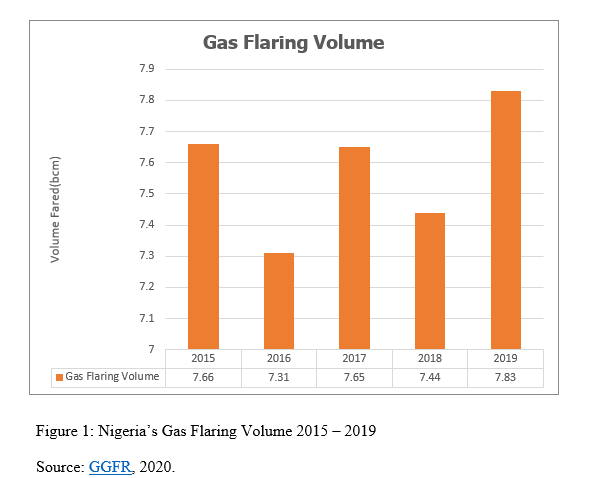
Nigeria is a growing economy that depends on both crude oil and natural gas from the domestic and international market. According to the EIA (2020), Nigeria had an estimated 200.4 trillion cubic feet (Tcf) of proven natural gas reserves, the largest natural gas reserves in Africa. EIA (2020) also asserted that the current annual gas production of Nigeria is about 1.6 Tcf of dry natural gas in 2019. Comprehensive and integrated gas utilization Master plan/programmes have been embarked upon, in which natural gas developments is being given priority. A large amount of the total natural gas output of Nigeria is either re-injected or flared. Some of Nigeria's oil fields lack infrastructure, known as associated gas, to collect the natural gas produced with oil. According to the most recent data by the World Bank’s Global Gas Flaring Reduction Partnership (GGFR, 2020), Nigeria flared about 37.89 billion cubic feet (Bcf) of natural gas from 2015 – 2019, making Nigeria the seventh-largest natural gas flaring country in terms of annual natural gas flaring volume (see fig 1).


This volume of flared gas is not unconnected to the inadequate storage system and processing facilities, low domestic and industrial utilization of gas; lack of natural gas transmission, distribution systems, and irregular pricing policy. As a result of this less attention is given to the natural gas flared without imagining its contribution to the Nigeria economy. This could have resulted in creating new industries; capturing economic value and generating as much revenue from gas as from oil. The expected result could also increase export earnings from LNG, coupled with adequate domestic power supply, will strongly support and broaden economic expansion and urbanization. Consequently, this will increase the income-generating capacity of Nigerians and lift the general wellbeing of Nigerians. It will further reinforce the Government's efforts towards integrating the Host communities into the mainstream of national development and growth. ​


Potentials of Natural Gas to Boost Economy


The country aims to improve the Nigerian economy by leveraging the full potential of the natural gas it provides. These include Liquefied Natural Gas (NLNG), the Gas-To - Liquid Project, the Liquid Natural Gas Project, the Gas Injection Project and the Gas Pipeline Project. All these ventures have the potential to contribute to the economy of the country. For many industries to drive heavy-duty machinery, heat for domestic use, and feedstock for petrochemical industries, natural gas is an important energy source for power plants to produce electricity. When combusted, it is cleaner, releasing little or no harmful environmental by-products and adding the least amount of Green House Gas (GHG).

Natural gas in Nigeria has the potential to boost the economy and the well-being of its people. It can be used to generate electricity to power companies and lighten houses. Two main turbines that produce electricity through a rotating shaft are gas turbines and steam turbines. Both turbines utilize natural gas as the primary fuel for energy input to the turbine. While gas turbine utilizes the heat energy generated from the combustion of the gas to drive the turbine shaft, the steam turbine utilizes the heat energy to generate super dry steam, which drives the turbine shaft. Thus, generate electricity to put machines and electrical appliances into use.

Improved employment of Nigerians by the natural gas industry is guaranteed in a country where the rate of unemployment is 12.84%. The industry also has the capacity to create employment in ancillary firms which are dependent on the industry. With the natural gas endowment, Nigerians can be employed in exchange for wages and salaries. The employees will increase their demand for consumer goods and this will trigger the manufacturing sector to produce and supply more of the product to the market. In trying to maximize profit, the industries in the manufacturing sector will be cost-effective by opting for low and efficient inputs. Factors inputs will then be allocated efficiently in order to maximize output and revenue. Natural gas as low cost, effective and clean energy will lead to the use of energy to power machines in the industries. This will generate more revenue for oil and gas industry and policies will be put in place to devise means of saving and storing the natural gas. A resource allowed to flare would now be sold to generate more revenue. The oil & gas and manufacturing sectors will be motivated to save excess of the revenue that is generated. This will in turn aid the financial institution to spread and render financial aid for short term to other sectors of the economy.


Demand is already high, companies and industries will generate revenue within a short period of time. This will enable them to pay both the principal and interest attached to the financial institutions. The purchasing manager of the manufacturing sector which has hit sixth-month slow growth will pick and this signals a rise in the gross domestic product with a moderately monitored rate of inflation. Natural gas is an apt product when it comes to low volume of emission from transportation. Compressed natural gas is presently used as fuel for vehicles. The Compressed Natural Gas (CNG) is not only cheap and clean to use compared to petrol but Nigeria economic growth can as well be boosted via sales of the natural gas to the gas processing company.


The contribution of Nigeria's oil and gas sector to the Gross Domestic Product (GDP) is nearly nine per cent in the second quarter of 2020. Between April and June 2020, the oil and gas industry contributed up to 8.93 per cent of the total real GDP, a slight decrease compared to the same period of 2019. As stated the sector accounts for about 9% of Nigeria’s GDP and 91 per cent of Nigeria's export value was generated by mineral fuels, oils, and distillation products' sector in 2018, accounting for approximately 58 billion U.S. dollars. The oil and gas sector in Nigeria has the potential to contribute much more to Nigeria’s GDP than it currently does. The Federal Government of Nigeria must not be complacent because the sector generated nearly all of the Federal Government’s revenue through royalty payments and taxes. With increased in-country petroleum refining capacity, the petroleum sector will be more connected to the wider economy, resulting in a greater contribution to the country’s GDP.


Conclusion


The capacity of Nigeria to produce natural gas, her gas reserve and the volume that the country flared for four years, the consequence of which is the pollution of the air, water, and soil, had been discussed. The article also showed various plans to boost the production of natural gas and how the product can enhance the Nigerian economy. Coupled with the fact that in December 2019, Nigeria Liquefied Natural Gas (NLNG) added about 365 Bcf to increase the total capacity of the facility to 1.6 Tcf, NLNG should not relent in its effort to meet its plan by 2024 to be operated by Shell (25.6%), and the other shareholders are Nigeria National Petroleum Corporation (NNPC) (49%), Total (15%), and Eni (10.4%). A lot of investment opportunities abound in the natural gas sector and attention is focused on this vital sector so as to actualize Government's aspirations of natural gas export, transportation, industrial and home use.

NLNG TRAIN 7 PROJECT

Submitted by kiakiagas on

13th May, 2020: The Nigeria LNG Limited (NLNG) signed the  engineering, procurement and construction (EPC) contracts for the Train 7 project. 

This contract was signed with the SDC JV consortium, led by Saipem, alongside Chiyoda and Daewoo. The signing of the contract marks the commencement of the detailed design and construction phase of the project.


The train 7 project is expected to deliver 8 million tonnes of LNG per annum, raising the annual NLNG production capacity to 30 million tonnes LNG per annum. That’s a 35% increase from current capacity and will ensure Nigeria remains the 5th largest LNG exporter globally.

NLNG currently produces 22 million tonnes of LNG and 5 million tonnes of NGLs per year.

The GMD of NNPC, Mele Kyari, stated that the executed project will provide $20 billion in net revenue for Nigeria.


The  $4 billion facility in Bonny Island will contain:

  •  a liquefaction unit

  • An 84,300 cubic metres storage tank

  • A 36,000 cubic metres condensate tank

  • 3 gas turbine generators


The project, worth over $4 billion, experienced delays since the global economic meltdown. The commencement of this phase reassures investors that Nigeria is still a viable investment destination.

The NLNG is a joint-venture between the NNPC, Shell, Total and Eni.

https://youtu.be/z8epJIQPDQs   KiakiaGas Limited is a leading Gas business in Lagos,Nigeria with expertise in LPG retailing, New Gas Market development, Building of Gas Plants and Gas strategy advisory
If you need a partner with hands-on local expertise in the Nigerian Gas space or any of our bespoke solutions/services, write us at gaspreneur@kiakiagas.com or call/Whatsapp: +2348085269328 

WEEKLY LPG INSIDER REPORT

Submitted by kiakiagas on

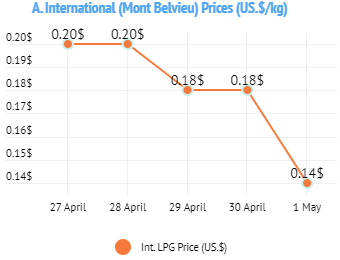
"Prices are experiencing a massive drop in the international market for LPG in the immediately preceding week. This might not be unrelated to the COVID-19 induced lockdown."


  • International prices of LPG maintained a consistent decline through the week under review.
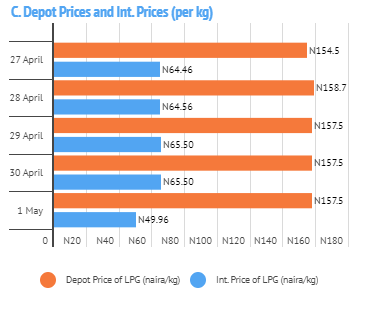
  • we find a growing divergence between depot prices and the Mont Belvieu LPG prices. Even with the sharp decline in international prices of LPG, depot prices have remained high at over two times that of international prices.
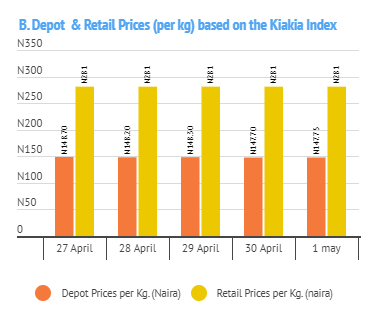
  • Retail prices versus depot prices have not changed much in the week under review.
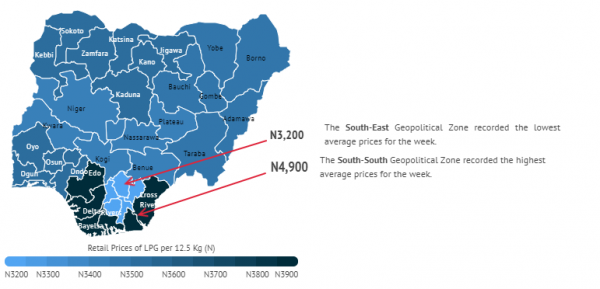
  • Regional disparities in the retail prices of LPG within the country continue to persist.


Regional disparity in the prices of LPG across the country has been a regular feature of the Nigerian LPG market. Though the South-south geopolitical zone hosts the great majority of depots in the country due to its proximity to the ocean, prices have been highest in the region.


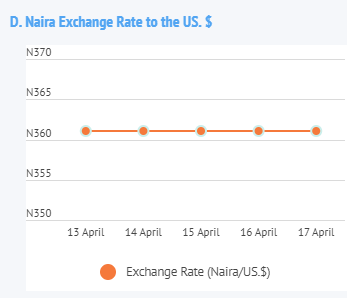
  • The exchange value of the naira remained stable though out the week as prices start to experience a rise after two weeks of mainly downward trend. (Figure D).
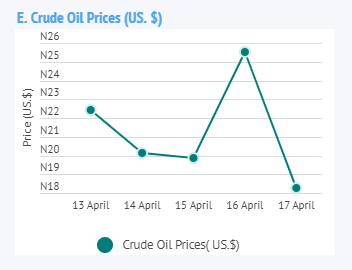
  • The gross foreign reserves of Nigeria is continuing a downward trend, however at lower rate. We consider that this may be related to the recent rise in the price crude oil in the international market.
  • As noted last week, the composite Purchasing Managers’ Index (PMI) for the month March 2020 stood at 49.2 points, indicating contraction in Non-manufacturing PMI for the first time after thirty-four consecutive months of expansion.
  • For the gas market, managers report declining inventory, new orders and employment. 

    • The price Of oil in the international market (Figure E)

Price of LPG in the domestic market may rise in line with recent rises in international prices of crude oil and the recent easing of the lockdown across major countries of the world.
  • We expect a continuous stabilization of the exchange value of the naira as market players adjuster to the new rates.


Subscribe to NLNG