How to Access the CBN N10 Billion Intervention Fund for Manufacturers, Processors, Wholesale Distributors of CNG and LPG

Submitted by kiakiagas on


One of the functions of the Apex bank is to ensure the growth of the Nigerian economy through the productive sectors of the economy. This is done by providing financial assistance and technical aid, also to play advisory role and monitoring role to ensure that fund disbursed targets the specified sectors for economic development in Nigeria. In pursuance of this, and in line with the National Gas Expansion Programme (NGEP), the central bank of Nigeria plans to disburse N10 billion to facilitate the production and distribution of CNG for transportation and LPG for domestic use and lighting of factories that rely on gas for product and services processing. This disbursement targets the Aggregators, manufacturers, processors, wholesale distributors and related activities that shall be funded under the Power and Airline Intervention Fund (PAIF). The initiative is to be implemented in collaboration with the Ministry of Petroleum Resources (MPR). The operational modalities for the intervention of the fund facility include:

  1. The Stated Objectives

The objectives of the CBN N10 Billion intervention fund for manufacturers, processors, wholesale distributors of CNG and LPG include:

  1. Better access to financing for investment in the domestic gas value chain in the private sector;
  2. Stimulate investment in infrastructure development aimed at maximizing domestic gas supplies for economic development;
  3. Facilitate the rapid adoption of CNG as the preferred fuel for transport and power generation, as well as LPG as the preferred fuel for domestic cooking, transport and captive power
  4. Ensure speedy growth of the gas-based and petrochemical industries (fertilizers, methanol, etc.) to support large industries such as agriculture, textiles and related industries;
  5. Offer incentives for increased investment from the private sector in the domestic gas market;
  6. Improve jobs across the nation.
  1. Eligible activities

The eligible activities under the CBN N10 Billion intervention fund for manufacturers, processors, wholesale distributors of CNG and LPG include:

  1. Setting up of gas processing plants and small-scale petrochemical plants;
  2. Setting up of gas cylinder manufacturing plants;
  3. Setting up of L-CNG regasification modular systems;
  4. Setting up of auto gas conversion kits or components manufacturing plants
  5. Establishing of CNG primary and secondary compression stations;
  6. Formation and manufacturing of LPG retail skid tanks and refilling equipment;
  7. Development/enhancement of auto gas transportation systems, conversion and distribution infrastructure,
  8. Enhancement of domestic cylinder production and distribution by cylinder manufacturing plants and LPG wholesale outlets;
  9. Establishing/expanding LPG sales, domestic cylinder injection and trade micro-distribution outlets and service centers;
  10. Any other mid to downstream gas value chain related activity recommended by the Ministry of Petroleum Resources (MPR).
  1. Funding:   The Power and Airline Intervention Fund (PAIF).will fund aggregators, manufacturers, processors, wholesale distributors, and related operations
  1. Loan type and limit
  1. The term loan shall be assessed on the basis of the activity and shall not exceed N10 billion per obligator.
  2. Working capital shall amount to a maximum of N500 million per obligator


  1. Interest rate: The interest rate under the intervention shall not exceed 5.0% p.a. Until 28 February 2021, (all inclusive) interest in the facility shall subsequently be reversed to 9% p.a. (all inclusive) effective March 1st, 2021.


  1. Loan tenor and moratorium
  1. Term loans have a maximum duration of 10 years (not exceeding 31 December 2030), depending on the complexity of the project. The tenor of each project is calculated in relation to its cash flow and the lifetime of the underlying collateral.
  2. Term loans shall be issued with a moratorium of not more than two years on principal repayment only.
  3. Working capital facility, subject to prior approval, of one (1) year with a maximum roll-over of not more than twice.
  1. Repayment:  The monthly interest in the facility will be amortized and passed monthly to CBN via the Deposit Money Banks.
  2. Participating banks (pbs): Under this facility, all deposit money banks and the NMFB will count as PBs.
  3. Transaction dynamics for the facility
  1. Eligible applicants or sponsors must submit applications to the CBN through any Participating Banks (PBs);
  2. Due diligence on the application will be carried out by the PB on the basis of business and credit considerations.;
  3. Each application must be accompanied by documentation, including relevant endorsements and permits from the Ministry of Petroleum Resources (MPR) for the project, as may be required by the PB under PAIF;
  4. Upon approval by the applicable Credit Committee, the PB shall transmit the authorised application to the CBN in the sense of the intervention;
  5. In order to ensure compliance with the requirements, the Central Bank of Nigeria shall conduct an internal review of the application. All applications meeting the prescribed criteria under the intervention shall be processed and the status of the application shall be reported to the PB. ***However, it should be noted that CBN reserves the right to reject any application from any lending bank that does not meet the requirements of this Guidelines. ***
  6. Upon approval, the CBN shall, in compliance with the mutually agreed disbursement schedule linked to particular milestones, release the approved amount to the PB;
  7. The PB shall disburse the authorised amount to the enterprise within 5 working days,
  1. Collateral requirements: As acceptable by the PB under the PAIF, the collateral acceptable for projects to be funded under the intervention shall be as acceptable.
  1. Verification/monitoring of projects:      Periodic monitoring of projects financed under the Scheme shall be conducted jointly by the PB, MPR and CBN
  1. Management of facility:  The Development Finance Department of the Central Bank of Nigeria shall be responsible for the management of the intervention facility.
  1. Responsibilities of Stakeholders

For the effective implementation of the intervention facility, the responsibilities of the stakeholders shall include:

  1. Central Bank of Nigeria
  1. Offer the funding for the intervention facility;
  2. Issue funds to the DMBs and NMFB for payout to approved financing requests;
  3. Carry out periodic verification and monitoring of projects financed;
  4. Provide periodic reports to the CBN Management on the performance of the intervention;
  5. Ensure compliance with the provisions of the Guidelines;
  6. Review the Guidelines as may be necessary from time to time
  1. Participating Banks (PBs)
  1. Appraise and approve requests under the Facility based on normal business consideration and due diligence
  2. Forward such approved requests to CBN for verification and final approval;
  3. Monitor financed projects and render periodic returns as may be specified by the CBN from time to time;
  4. Ensure repayments of facilities by obligors; and
  5. Comply with the Guidelines of the Facility.
  1. Ministry of Petroleum Resources (MPR)
  1. Receive and endorse project proposals for financing under the intervention;
  2. Ensure first class independent diligence is undertaken to ascertain the economic impact and commercial viability of proposed projects;
  3. Partner the CBN and Participating Bank in monitoring the project till full repayment;
  4. Comply with the provisions of the Guidelines.
  1. Beneficiaries
  1. Adhere strictly to the terms and conditions of the Facility;
  2. Ensure prudent utilization of facility for the purpose for which it was granted;
  3. Keep up-to-date records of the enterprise’s activities under the intervention
  4. Allow access to the project and records by the CBN and PB;
  5. Repay the facility in accordance with the approved repayment schedule;
  6. Comply with the provisions of the Guidelines.


  1. Discontinuation of the credit facility

The PB shall return the fund to the CBN within 3 working days, including details of the credit facility, if a loan is repaid or the facility is otherwise discontinued.

  1. Infractions: Sanctions on infractions shall be applicable as determined by the CBN.
     
  2. Amendments: The Guidelines shall be subject to review from time to time as may be deemed necessary by the CBN.
  3. Enquiries and returns

All enquiries and returns should be addressed to:

The Director,

Development Finance Department,

Central Bank of Nigeria,

Corporate Headquarters Central Business District, Abuja.

Conclusion

The Nigeria government and the Central Bank of Nigeria aim to complement the effort of stakeholders in the purchasing, distribution and sales of CNG and LPG in Nigeria and set up framework for the implementation of the intervention facility. Accessing the CBN N10 Billion Intervention Fund for Manufacturers, Processors, Wholesale Distributors of CNG and LPG requires the gas business owners to have what it takes to be entitled to the fund. The fund will increase the financial capacity of the gas plants in the country. It is therefore a necessity for the financial agency that are responsible for the registering and disbursement of the fund to ensure that gas producers are well qualified to obtain the fund and regularly monitored the channel of the fund.

The framework for accessing the fund is downloadable here.


KiakiaGas Limited is a leading Gas business in Lagos,Nigeria with expertise in LPG retailing, New Gas Market development, Building of Gas Plants and Gas strategy advisory. If you need a partner with a global perspective and local expertise in the Nigerian and African space, kindly book for a free session with our team of experts to help you http://www.kiakiagas.com/book-session or write us an email at advisory@kiakiagas.com or Whatsapp: +2348085269328


WEEKLY NATURAL GAS REVIEW

Submitted by kiakiagas on

Reuters reports that Net4Gas, a Czech gas pipeline operator has shelved its earlier planned new interconnections with Poland and Austria. The firms made this confirmation earlier in the week.   The firm which ships mostly Russian gas, reveiwed its 2021-2030 development plan to exclude its Czech-Polish pipeline project STORK II which earlier planned as a boost for cross-border capacity with Poland from 2023. In place of the suspended project, a smaller potential interconnection raising capacity is scheduled to come online from 2027/2028.   Other projects suspended include the connector to Austria called BACI which was initially scheduled to commnce in 2024 but may, now be replaced by a smaller, similar project from 2026.  


P&GJ reports that natural gas utility companies in North American have been spending nearly US.$4 million a day on programs focused on helping residential, commercial and industrial customers us fuel more efficiently.

  The spending on fuel efficiency by natural gas utility over the years have helped customers save an estimated 259 trillion Btus of energy and offset more than 13.5 million metric tons of carbon dioxide emissions from 2012 to 2018 – the equivalent to removing 2.9 million cars off the road for a year.       Nigeria's federal government has reconstituted its representatives on the Boards of Nigeria LNG Limited (NLNG) and Bonny Gas Transport Limited (BGT).   Most of the persons currently on the board were appointed sine 2005. The Minister of State for Petroleum Resources, Timipre Sylva,sadi the change was necessary to inject fresh ideas into the governance of the company.     U.S. natural gas production is experiencing a rise occasioned by the resumption of operations by the TC Energy Corp’s Mountaineer Xpress pipeline in West Virginia after weeks of unplanned work. This information was made public by the company and confirmed by data from Refinitiv, and reported by Reuters.   Data from Pipeline operations in the U.S. showed that natural gas output rose to 88.2 billion cubic feet per day (bcfd) on Sunday, from a low level of 87.0 bcfd that was recorded last week. The initial fall in output is due mostly to the Mountaineer shutdown.   The operator of the Mountainee which is also a unit of the TC Energy, Columbia Gas Transmission (TCO), recently brought the 2.6-bcfd pipe back to service over the weekend after lifting a force majeure on July 11 that it imposed on July 7 due to unplanned maintenance



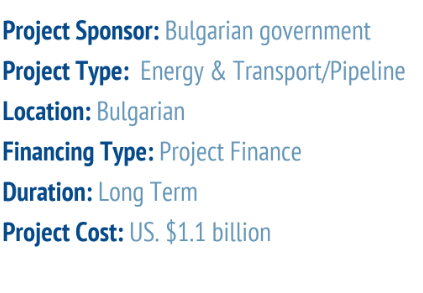
Bulgaria's state-owned gas company, Bulgartransgaz, recently announced it has received offers from 10 financial institutions to lend it 542 million euros ($613.38 million) in six-year term loans to facilitate the financing of an extension of Russia’s TurkStream gas pipeline. The total sum of the project is 1.1 billion Euro ($1.24 billion) . Advance payments have to be made to the Saudi-led group Arkad, the contractor for the 474 km (295-mile) pipeline extension dubbed Balkan Stream and to a Bulgarian-led group that will install compressor stations for the gas link.

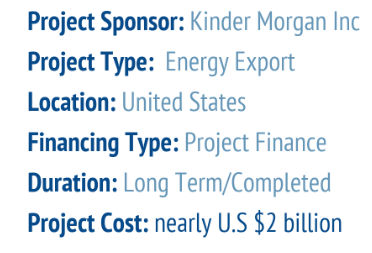
After years of project work, Kinder Morgan Inc has now approached U.S. energy regulators on Monday for permission to start operating its seventh liquefaction train Elba Island LNG export plant in Georgia. The project costes nearly $2 billion. The Train 8 would was schedule to commence actual operations on July 13, according to a filing with the U.S. Federal Energy Regulatory Commission (FERC).

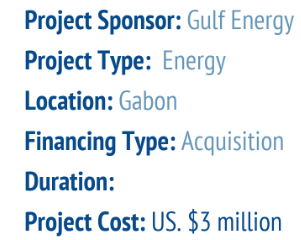
Energy Egypt reports that AIM-listed SDX Energy, the MENA-focused oil and gas company, has relinquished of its currently held 50% working interest in the North West Gemsa licence, situated in the Eastern Desert of Egypt. The acquirer, Gulf Energy, a private Egyptian oil and gas company, also made a US$3.0 million payment in consideration for the Company’s interest, of which US$1.4 million has been used to discharge the Company’s remaining liabilities on the licence.


Egypt’s President Abdel Fattah el Sisi is leading a policy to ensure that all new cars sold brought into Egypt to run on compressed natural gas (CNG) as a pre-requisite for being issued a licence as part of moves to encourage consumption of cleaner energy and help reduce fuel costs.


WEEKLY LPG INSIDER REPORT

Submitted by kiakiagas on

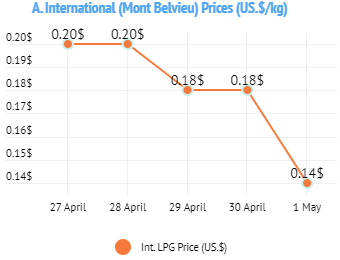
"Prices are experiencing a massive drop in the international market for LPG in the immediately preceding week. This might not be unrelated to the COVID-19 induced lockdown."


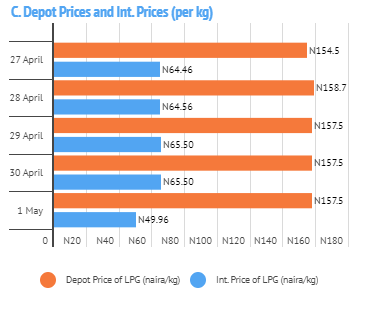
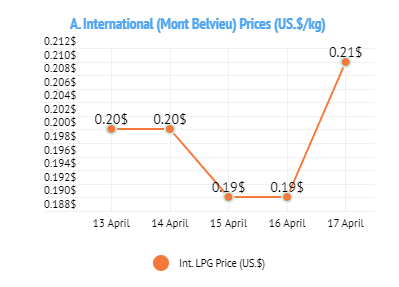
  • International prices of LPG maintained a consistent decline through the week under review.
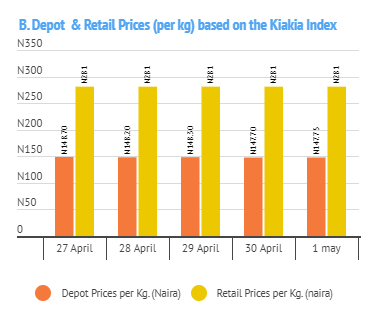
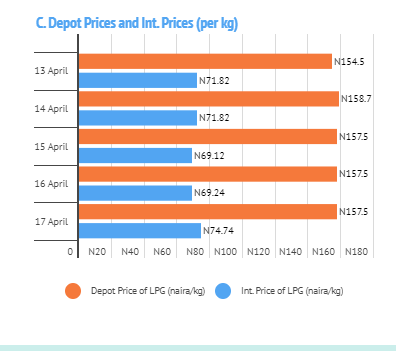
  • we find a growing divergence between depot prices and the Mont Belvieu LPG prices. Even with the sharp decline in international prices of LPG, depot prices have remained high at over two times that of international prices.
  • Retail prices versus depot prices have not changed much in the week under review.
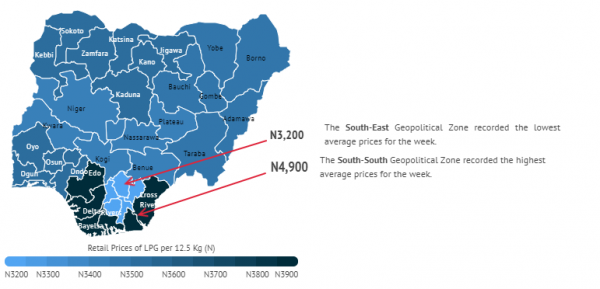
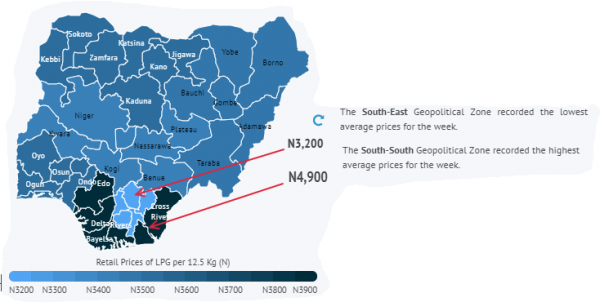
  • Regional disparities in the retail prices of LPG within the country continue to persist.


Regional disparity in the prices of LPG across the country has been a regular feature of the Nigerian LPG market. Though the South-south geopolitical zone hosts the great majority of depots in the country due to its proximity to the ocean, prices have been highest in the region.
   

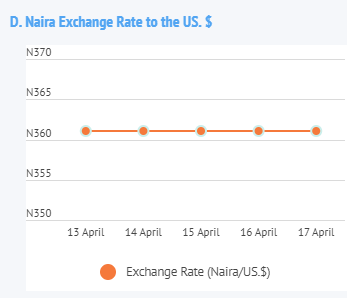
  • The exchange value of the naira remained stable though out the week as prices start to experience a rise after two weeks of mainly downward trend. (Figure D).
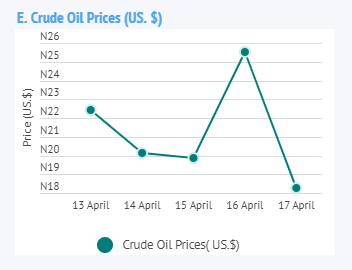
  • The gross foreign reserves of Nigeria is continuing a downward trend, however at lower rate. We consider that this may be related to the recent rise in the price crude oil in the international market.
  • As noted last week, the composite Purchasing Managers’ Index (PMI) for the month March 2020 stood at 49.2 points, indicating contraction in Non-manufacturing PMI for the first time after thirty-four consecutive months of expansion.
  • For the gas market, managers report declining inventory, new orders and employment. 

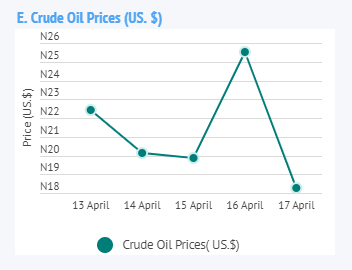
    • The price Of oil in the international market (Figure E)

Price of LPG in the domestic market may rise in line with recent rises in international prices of crude oil and the recent easing of the lockdown across major countries of the world.
  • We expect a continuous stabilization of the exchange value of the naira as market players adjuster to the new rates.


GLOBAL MARKET FOR GAS

Submitted by kiakiagas on

In 2018, the global gas market experienced a 4.8% growth in demand, with 70% of that growth coming from the United States and China. The growth in the global gas market can be attributed to increasing in conventional, as well as, relatively unconventional applications, such as Autogas (which experienced 40% increase in consumption in the 10 years). The gas market is connected to the oil market, but they do not necessarily follow the same trends as they have different market drivers; this is why the gas market experienced growth in demand while the oil market grew by 1%, between 2017 and 2018.


Where Does Natural Gas Come From?

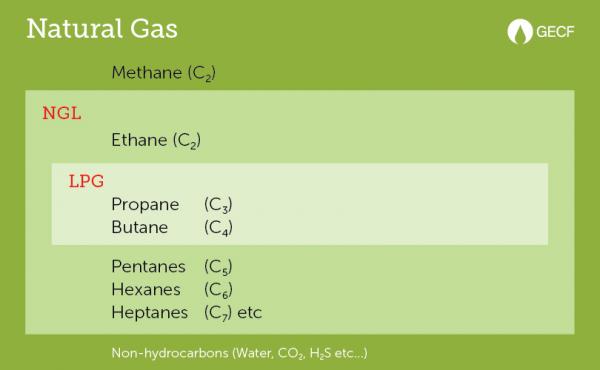
A good starting point to understand the gas market will be from its source. Hydrocarbons - crude oil and natural gas, are formed due to the pressurization of decayed organic matter over millions of years. This occurs in a naturally occurring underground reservoir. Each reservoir has a range of hydrocarbon products in it, from natural gas (methane to butane, with the presence pentane to heptane), to crude oil, as well as asphalt. The Gas to Oil Ratio (GOR) determines whether the gas is referred to as Associated Gas (i.e. gas from an oil well) or Non-Associated Gas (i.e. gas from a gas well). The GOR used by the United States Energy Information Agency is 6,000 cubic feet (cf) of gas to 1 barrel (b) of oil (6000 cf/b). Therefore a well whose GOR equal to or less than 6,000 cf/b is an oil well, gas produced from that well is referred to as Associated Gas. The major products from the separation of hydrocarbon gas are Natural Gas (methane and ethane) and Liquefied Petroleum Gas.  
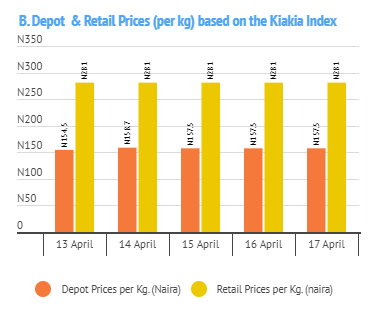
 

Figure 1. Natural Gas and its Products

Source: (GECF, 2016)


Gas Value Chain

Natural gas can be divided based on its constituents into different products, such as Natural Gas Liquids, Liquefied Petroleum Gas (LPG), Compressed Natural Gas, etc. These products might differ due to composition or physical state (e.g. liquid or gas).
There are different sectors in the petroleum industry which include:

  1. Upstream sector: this is where the exploration and production occurs
  2. Midstream sector: this is where the refining, or processing occurs.
  3. Downstream sector: this is where the product is connected to the end-user.


Natural gas is produced then separated into different products with different (sometimes overlapping) applications, hence their different value chains.

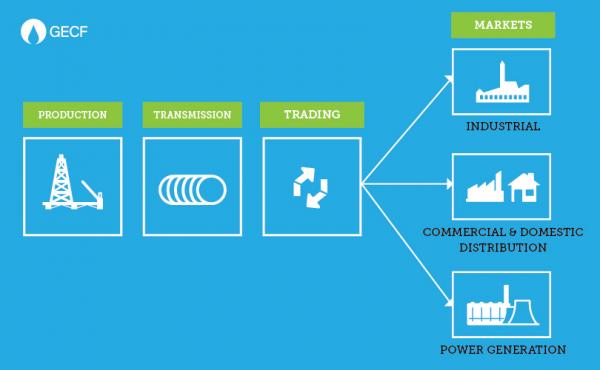
  1. Natural Gas (Sales Gas): this is the mixture of methane and ethane, used mostly by industries for different processes such as electricity production, or fertilizer production. It is transported via pipelines (quantity traded is known by measuring the flow rate of the gas at the exchange of ownership). Pipelines are channelled to the end-users which are industrial or commercial entities.


Figure 2. Natural Gas Value Chain


Source: (GECF, 2016)


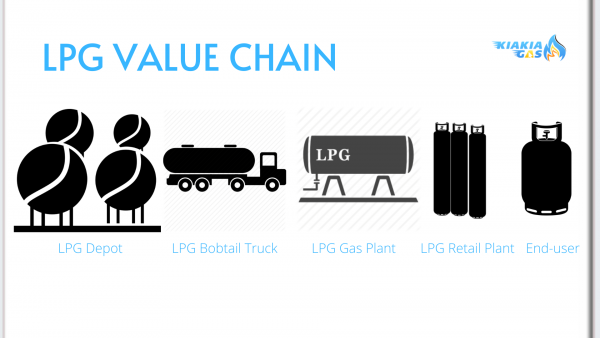
  1. Liquefied Petroleum Gas: this composes of pentane and butane, used mostly for cooking, and is finding increasing application in the automobile industry as Autogas. LPG is transported via pipelines, ships and trucks, based on the sector (upstream, midstream or downstream). When imported, LPG comes through a depot which is then transported to various gas plants from which it is connected (sometimes through retailers) to the end-users in cylinders.

Figure 3. LPG Value Chain

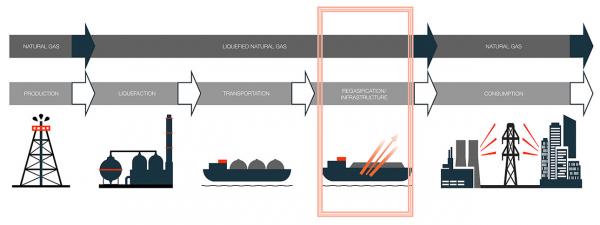
  1. Liquefied Natural Gas: natural gas is liquefied, after which it is stored then transported via land or ship (depending on the destination) to the end-users for power generation, transportation, etc. It is re-gasified before use.

Figure 4. LNG Value Chain


Source: (Hoegh LNG, 2020)


MAJOR PLAYERS IN THE GAS INDUSTRY

Oil and gas, as natural minerals, occur in different regions all over the world and are consumed in nations all over the world as well. The total recoverable (i.e. economically viable recovery) amount of oil and gas is referred to as oil and gas reserves, and they vary per country, with some countries having trillions of cubic meters of natural gas in their reserves and some countries having none. Two other factors measured are the annual production and annual consumption, which vary per country and also change with time due to economic reasons, or technology available, amongst other reasons. For instance, US crude oil production tripled between 2010 and 2020 due to the introduction of the hydraulic fracturing technology which made shale oil recoverable. Lastly, these activities are carried out by private companies and state-owned companies, sometimes in joint-ventures with each other. Certain companies have more presence globally than others (e.g. Shell operates in 70 companies globally) (Shell, 2020).

 

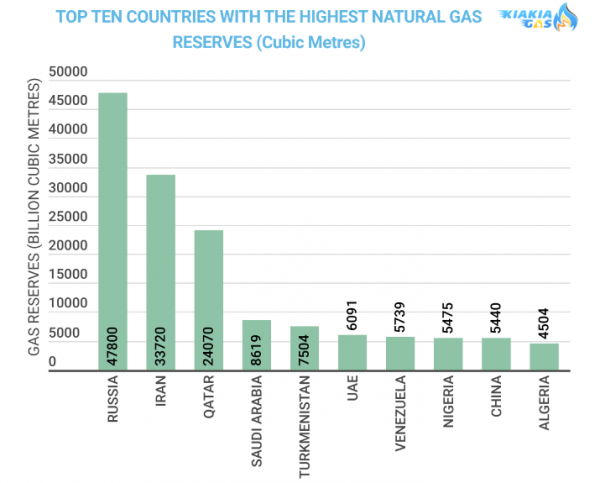
  1. Natural Gas Reserves: Reserves refer to the total quantity of oil and gas that can be recovered under current economic, technological and political conditions, in a country. Russia has the world’s largest gas reserves, boasting of 47.8 trillion m3 of natural gas. Russia is followed by Iran and Qatar in size of gas reserves, with 33.7 trillion m3 and 24 trillion m3 respectively. What countries do with their reserves depends on their governments. These top ten nations have a combined gas reserve size of 148 trillion m3 of natural gas.

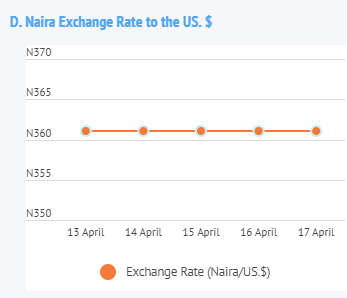
 

Figure 5. Top Ten Countries with the Highest Natural Gas Reserves

Source: (Central Intelligence Agency, 2020)


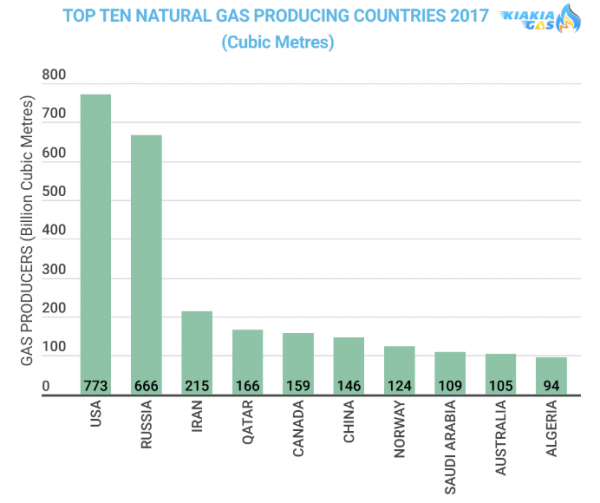
  1. Natural Gas Production: Natural gas production is based on how much Natural Gas is mined out oil and gas wells annually. Investments are needed to produce gas and can be hindered by political instability. This is why certain countries with large natural gas reserves but do not produce as much natural gas as those with smaller natural gas reserves. The USA produces the most amount of natural gas annually, producing 773 billion m3. The USA is followed by Russia and Iran, which produce 666 billion m3and 215 billion m3 respectively. It should be noted that the three countries with the highest also produce the most natural gas, although the USA produces the most. Total natural gas produced by the top ten producing countries was 2.55 trillion m3.


Figure 6. Top Ten Natural Gas Producing Countries 2017

Source: (Central Intelligence Agency, 2020)                 


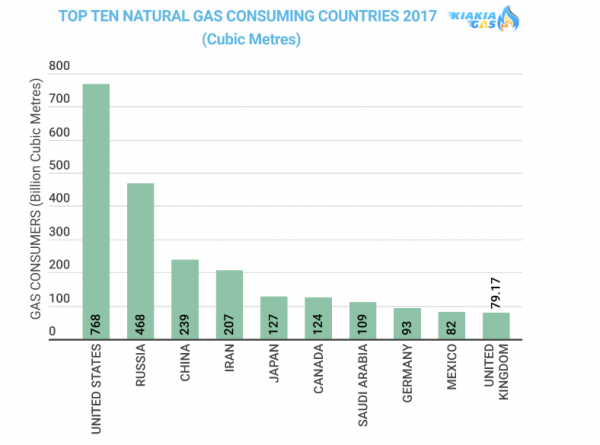
  1. Natural Gas Consumption: this refers to the amount of natural gas used in a country. After processing, it’s by-products are used for separate applications e.g. LPG is mainly used for cooking, sales gas is used for electricity, e.t.c. The consumption of natural gas depends on the demand for those applications that require natural gas products in those countries.

The USA is the top consumer of Natural Gas, consuming 768 billion m3 of the 773 billion m3 it producers; thereby producing more than it consumes. Russia and China are also top consumers, consuming 468 billion m3 and 239 billion m3 respectively. Russia consumes 200 billion m3 less than it produces, while China consumes 93 billion m3 more than it produces. Total natural gas consumed by the top ten consuming countries was 2.29 trillion m3.

Figure 7. Top Ten Natural Gas Consuming Countries 2017

Source: (Central Intelligence Agency, 2020)


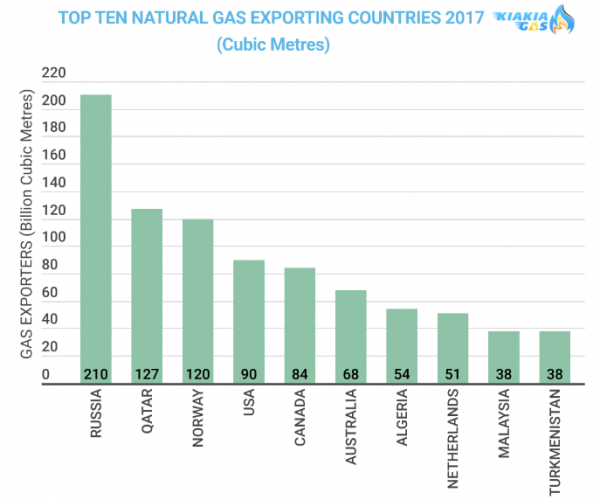
  1. Natural Gas Exports: exports refer to the amount of natural gas sold out of the country. Countries which export more than they import are referred to as net exporters. The various products can be exported through pipelines, ships, trucks. Russia exports the most natural gas, with Qatar and Norway following; they export 210 billion m3, 127 billion m3, and 120 billion m3 respectively.  The top ten exporters export a total of 880 billion m3. Analysing the top ten producers and exporters, only 34% of the natural gas produced is exported.

Figure 8. Top Ten Natural Gas Exporting Countries 2017

Source: (Central Intelligence Agency, 2020)


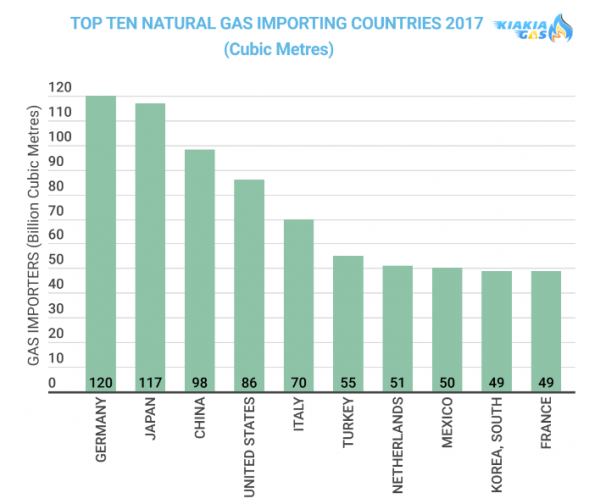
  1. Natural Gas Imports: this refers to the amount of gas brought into a country from another. A country which imports more than it exports is referred to as a net-importer. Germany imports the most natural gas, with Japan and China following; each has 120 billion m3, 117 m3, and 98 m3 respectively. The total amount of natural gas imported by the top ten importing countries is 743 billion m3.

Figure 9. Top Ten Natural Gas Importing Countries 2017

Source: (Central Intelligence Agency, 2020)


The Nigerian Context

Nigeria has the 8th largest natural gas reserves in the world and has the 18th highest production rate. Nigerian natural gas products are mainly exported because local consumption is less than half of total production. This is caused by mainly economic factors. The Nigerian gas market holds the potential for profitable investment as it has been gradually expanding, with local consumption increasing from  573 million scf/d in 2004 to about 839.70 million scf/d in 2016 (NNPC, 2020).


Table 1. Nigeria’s Gas Parameters 2017

Source: Compiled from Central Intelligence Agency Reports.


As the world sees development in technology and economies, gas production and consumption will increase. Natural gas is also a (relatively) clean fuel source, helping with public perception.  The gas market shows potential to expand and accommodate more investors and customers, the future of the gas market is bright.


KiakiaGas Limited is a leading Gas business in Lagos,Nigeria with expertise in LPG retailing, New Gas Market development, Building of Gas Plants and Gas strategy advisory
If you need a partner with hands-on local expertise in the Nigerian Gas space or any of our bespoke solutions/services, write us at gaspreneur@kiakiagas.com or call/Whatsapp: +2348085269328


Bibliography

Auto-Gas.Net, 2017. Why AutoGas. [Online]
Available at: https://auto-gas.net/why-autogas/autogas-is-growing/
[Accessed 23 April 2020].

Central Intelligence Agency, 2020. COUNTRY COMPARISON :: NATURAL GAS - CONSUMPTION. [Online]
Available at: https://www.cia.gov/library/publications/resources/the-world-factbook/fields/270rank.html
[Accessed 23 April 2020].

Central Intelligence Agency, 2020. COUNTRY COMPARISON :: NATURAL GAS - EXPORTS. [Online]
Available at: https://www.cia.gov/library/publications/resources/the-world-factbook/fields/271rank.html
[Accessed 23 April 2020].

Central Intelligence Agency, 2020. COUNTRY COMPARISON :: NATURAL GAS - IMPORTS. [Online]
Available at: cia.gov/library/publications/resources/the-world-factbook/fields/272rank.html
[Accessed 23 April 2020].

Central Intelligence Agency, 2020. COUNTRY COMPARISON :: NATURAL GAS - PRODUCTION. [Online]
Available at: https://www.cia.gov/library/publications/resources/the-world-factbook/fields/269rank.html
[Accessed 23 April 2020].

Central Intelligence Agency, 2020. COUNTRY COMPARISON :: NATURAL GAS - PROVED RESERVES. [Online]
Available at: https://www.cia.gov/library/publications/resources/the-world-factbook/fields/273rank.html
[Accessed 23 April 2020].

Emily Geary, J. P., 2019. Associated gas contributes to growth in U.S. natural gas production. [Online]
Available at: https://www.eia.gov/todayinenergy/detail.php?id=41873
[Accessed 23 April 2020].

GECF, 2016. Gas Value Chain. [Online]
Available at: https://www.gecf.org/gas-data/gas-value-chain.aspx
[Accessed 23 April 2020].

Hoegh LNG, 2020. Our Business. [Online]
Available at: https://www.hoeghlng.com/our-business/default.aspx
[Accessed 24 April 2020].

Maverick, J. B., 2020. How has fracking decreased U.S. dependence on foreign oil?. [Online]
Available at: https://www.investopedia.com/ask/answers/012915/how-has-fracking-helped-us-decrease-dependence-foreign-oil.asp
[Accessed 23 April 2020].

NNPC, 2020. ​​Nigeria Gas. [Online]
Available at: https://www.nnpcgroup.com/Investor-Relations/Pages/Nigeria-Gas.aspx
[Accessed 24 April 2020].

Shell, 2020. About Us. [Online]
Available at: https://www.shell.us/about-us.html
[Accessed 23 April 2020].


WEEKLY LPG INSIDER REPORT

Submitted by kiakiagas on

Prices remained largely stable in the domestics market and only slightly less stable in the international market for LPG in the immediately preceding week


    • International prices of LPG initially plummeted and then started to rise towards the end of the week under review. Notwithstanding, prices remained largely stable.
    • We find only a slight rise in depot price in response to the rise in prices internationally which only began to be evident towards the end of the week.
    • Prices per kg of LPG at the depots in Nigeria were well over double the prices at the international market.
    • Regional disparities in the retail prices of LPG within the country continue to persist.


    Regional disparity in the prices of LPG across the country has been a regular feature of the Nigerian LPG market. Though the South-south geopolitical zone hosts the great majority of depots in the country due to its proximity to the ocean, prices have been highest in the region.


        • The stability in the exchange value of the naira to the US. $ was reflected in the stability of LPG prices domestically throughout the week (Figure D).
        • The gross foreign reserves of Nigeria is continuing a downward trend. It dropped by 0.40% through the week.
        • As noted last wee, the composite Purchasing Managers’ Index (PMI) for the month March 2020 stood at 49.2 points, indicating contraction in Non-manufacturing PMI for the first time after thirty-four consecutive months of expansion.
        • For the gas market, managers report declining inventory, new orders and employment.
        • The price Of oil in the international market (Figure E)


        •  
          • Price of LPG in the domestic market may rise in response to recent rises in international prices.
          • We expect a continuous stabilization of the exchange value of the naira as market players adjuster to the new rates.


Subscribe to CNG