Share On:

TOWARDS A GREEN FUTURE

The per capita energy consumption of a country is a measure of how developed that country is. In 2017, the global energy consumption per capita was 1.9 tonnes of energy (toe). Upon closer examination, various regions have different energy consumption values. Developed regions such as North America (5.4 toe/capita), and Oceania (4.1 toe/capita) have relatively high per capita energy consumption. Developing regions such as Asia – excluding China – with 0.8 toe/capita, and Africa with 0.7 toe/capita, have relatively low energy consumption,. These differences show that there is need to bridge the energy gap urgently. Bridging this gap is so imperative that it made the list to become Goal 7 of the United Nations Sustainable Development Goals (UN-SDGs).
 
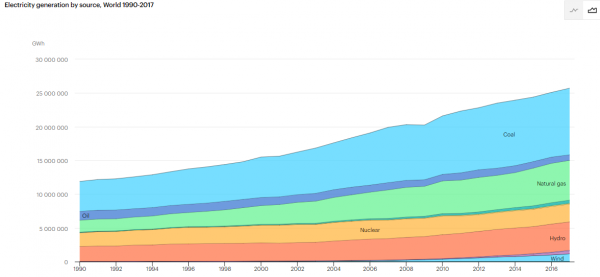
Success is replicable; hence one would expect developing nations to take a cue from how developed nations built their economies, with respect to energy supply, and do likewise (albeit through a method that fits their individual environments). Data from the International Energy Agency (IEA) shows that the most used fuel for electricity generation has been coal, followed by natural gas. The availability of these resources and the need to use them as fuels has encouraged developing nations to tow that path.
 
Figure 1. World Electricity Generation By Source
Source: IEA, Electricity Generation by Source
 
Currently, over 60% of global electricity is produced from (the combustion of) hydrocarbons, which all release various quantities of carbon dioxide – an environmentally harmful substance- when burnt. The more carbon dioxide and other green house gases are released into the atmosphere, the worse the climate change; hence it is necessary to understand and mitigate the effects of a damaged eco-system.
 
The Energy Trilemma
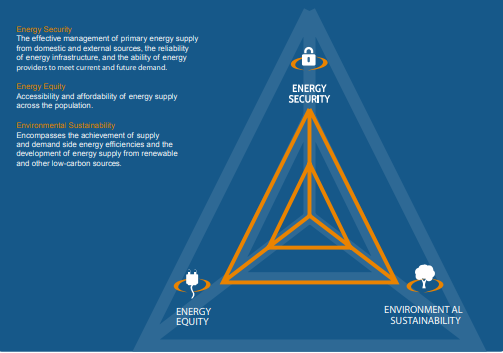
The energy trilemma is the challenge of creating a policy framework which will ensure that the population has access to affordable, secure, and sustainable energy. Each of these three (3) points is vital to the socio-economic development of a country. Whatever system is employed to provide electricity must meet these criteria. They will be discussed further in this article.
 
Figure 2. The Energy Trilemma
Source: World Energy Council.
 

Solutions, and Effects of Inaction
The problem being tackled is that of harmful substances being emitted into the atmosphere due to the currently prevalent methods of producing electricity. Electricity generations is not the only (major) source of greenhouse gas (GHG) emissions, but it is the main source according to IEA data. Transportation is the second major source of GHG emissions, but in a scenario where all cars are electric, the question remains: how will that electricity be produced?. This is why the source of electricity needs to be addressed.
A major solution is the switch to renewable energy. Renewable has been a major subject of research in the scientific field, especially in the 21st century as climate change has become more relevant. The United States Energy Information Administration (EIA) defines renewable energy as energy from sources that are naturally replenishing but flow-limited; renewable resources are virtually inexhaustible in duration but limited in the amount of energy that is available per unit of time. Renewable energy makes about 25% of the global electricity source mix, showing the world has not fully received this solution yet.
Renewable energy sources can be further divided into sources we can control (hydroelectric systems and biomass) and sources we cannot control (e.g. wind and solar).

  1. Solar: the sun gives off heat and light which are both useful on the earth.
  • The most popular method of converting solar energy into electricity is the Photo-voltaic (PV) cell method where silicon crystals generate electricity when light rays hit them. PV cells depend primarily on the availability of light; hence they would still produce electricity when the weather is cold and cloudy. PV arrays are usually fixed on rooftops or in desert areas to avoid encroaching on the available land. Energy produced from solar energy is dissipated as it fast as it is produced; hence it needs a storage component.
  • The other method of generating electricity through solar energy is through Concentrated Solar Power (CSP). Here mirrors are used to direct the sun’s rays to a central point which will transfer the heat to a water collection. The water is heated into steam which is directed to turn a turbine, thereby generating electricity. CSP depends on direct sun light; therefore it needs clear skies to operate. Heat in a CSP system can be retained for hours after the sun has set.
  1. Wind energy: energy can be harnessed from moving wind. Today, wind energy is mostly used for electricity generation by using wind turbines. Wind turbines work by capturing the air in motion through specially designed blades. The wind turns the blades, which turn a shaft in order to generate electricity. The higher the turbine blades are from ground level, the better they can harness wind as wind speeds increase with altitude. This is especially because of buildings which obstruct air flow to the turbine. Wind turbines are normally above 60 meters, with General Electric and Vattenfall’s Halide X reaching a height of 260 meters, and blade diameter of 220 meters. Offshore wind has more potential due to intensity of the wind at sea.
  2. Hydroelectric Power (HEP): also known as hydropower, is energy in moving water. The force of water flowing from streams and rivers has been used to produce mechanical energy for a long time now. Hydropower was one of the first sources of energy used for electricity generation. HEP systems can be set up on a small scale or  a large scale. HEP can be produced by storing water in a dam from where it is released through hydro turbines to generate electricity. Another method involves allowing the natural force of the river’s current apply pressure to the turbines. HEP systems are known to distort the natural flow of water.
  3. Biomass: this is the organic material derived from wood and plants. Burning biomass releases the energy stored in it as heat. Biomass is either burnt directly or converted into liquid biofuels (such as ethanol), or biogas, which will also be burnt to release energy. Examples of solid biomass include wood and garbage.
  4. Geothermal: this refers to heat within the earth. This heat can be channelled to the surface for different activities such as bathing, heating buildings, as well as electricity production.


Challenges with Renewable Energy
Renewable energy solves the GHG emissions problem to a great extent but they have some challenges of which we shall explore two. These challenges are particular to solar energy and wind. These are:
  1. Affordability.
  2. Reliability.
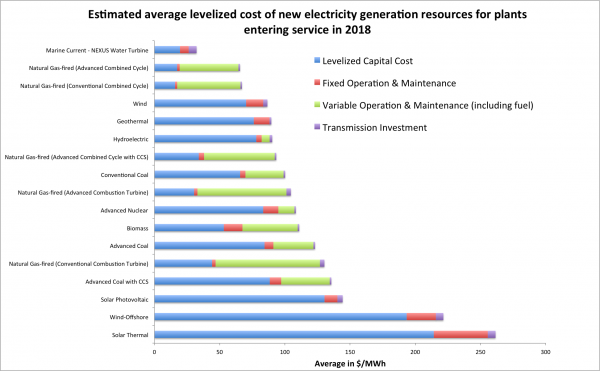
  1. Affordability: Electricity from renewable energy sources are generally more expensive than the non-renewable energy sources. The Levelized cost of Electricity (LCOE) analyses the capital and operating costs of an electricity generating source over a period of time. This measurement is not extensive but it gives a fair idea of which sources are relatively expensive.


Source:Michael Orlando. Global Energy Business
 
The three cheapest sources of electricity are mostly non-renewable). This is followed by wind, geothermal and hydro-electric sources of electricity. Solar energy was the highest recorded. Consider Sub-saharan Africa; which has a global Gross Domestic Product (GDP) per capita 7 times less than the global GDP per capita. The region has much solar energy potential but most individual households cannot afford setting up a solar energy system – most individual homes cannot afford stand alone renewable energy systems.

  1. Reliability: at night, solar energy systems are more or less useless. Stand-alone Solar PV systems use batteries to store energy, and CSP systems retain heat, but they are generally not so useful at night. They are also not so efficient in converting light and heat into electricity (e.g. the average commercial solar panel is 19% efficient). Wind strength and availability is unpredictable, which means it cannot be used for planning. Wind turbines also produce roughly 40% of their potential energy output.

These two challenges have wider consequences which have not been discussed here (e.g. sending electricity generated from solar and wind to the grid would reduce the cost burden but present the issue of load distribution in the grid).
 

The Buffer Solution
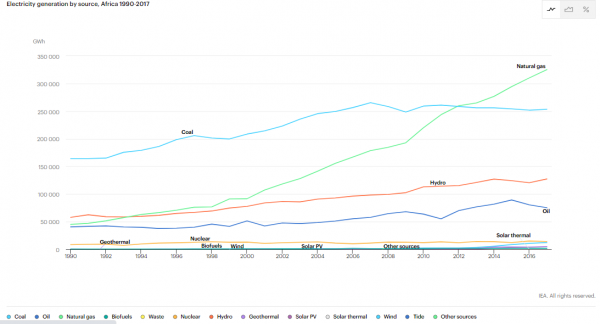
The world, especially Africa, cannot fully switch to (uncontrollable sources of) renewable energy yet because it’s currently too expensive and due to its unreliability, it does not always blend well in a grid. As technology improves, it is advisable to use a reliable, cheap source of energy – natural gas. Although natural gas releases GHG emissions, it is a lot less harmful than coal and oil. It therefore reduces total GHG emissions, while providing cheap and dependable electricity to the African population. Natural gas is increasing in utilization in Africa, and that is because it is the most practical source of electricity for the region. It is safe to say that as Africa and the world at large moves towards a green future, natural gas is the buffer energy solution till the challenges with renewable sources are resolved.
 
Figure 4. African Electricity Generation, By Source
Source: IEA, Electricity Generation by Source, Africa.
 
KiakiaGas Limited is a leading Gas business in Lagos,Nigeria with expertise in LPG retailing, New Gas Market development, Building of Gas Plants and Gas strategy advisory.
If you need a partner with hands-on local expertise in the Nigerian Gas space or any of our bespoke solutions/services, write us at gaspreneur@kiakiagas.com or call/Whatsapp: +2348085269328

Related Posts

Social Impact

How LPG is contributing to the growth of SMEs in Africas: Your One Stop LPG Provider

A crucial component of human life is energy. Reliable access to modern, reasonably priced energy is essential for a country's social and economic development. Traditional dirty-burning fuels used for cooking, such as coal, wood, and kerosene, produce large amounts of pollutants and carbon monoxide, which are the main contributors to indoor air pollution and its negative health impacts. Continual use of unclean fuels may result in early deaths, an increase in childhood and adult illnesses, associated environmental problems, and stress on the healthcare system, according to experts. Liquefied petroleum gas (LPG) was found in the search for cooking energy that would protect our environment from pollution. LPG is a type of energy that is used in cooking. It is produced by refining raw natural gas or crude oil that comes only from fossil fuel sources. It is kept and moved in LPG cylinders at a reasonable amount of pressure as a liquid. Propane and butane make up the majority of the gases created during the LPG production process. The first online energy company in Nigeria, Kiakiagas, provides excellent, prompt, and safe delivery of liquefied petroleum gas (LPG) and related products to Nigerian households and businesses. The company has developed into an energy solutions provider, paving the way for a future in which gas will drive the switchover of the African energy sector from fossil fuels to renewable sources, bringing electricity to consumers in the last mile from urban to off-grid areas.
Social Impact

HOW YOU CAN CONSERVE YOUR COOKING GAS AND MAKE IT LAST LONGER

Liquefied Petroleum Gas (LPG) is widely used for cooking around the world, but to a lesser level in most underdeveloped countries. LPG is a nonrenewable source of energy. However, when compared to cooking with hardwood or charcoal, it is commonly known that using LPG has few recorded negative health impacts. One of the main drivers of deforestation in Sub-Saharan Africa is the demand for firewood and charcoal as a source of cooking energy. Increasing the usage of LPG is one of the options for reducing the strain on forest resources. Cooking with biomass produces both greenhouse gas emissions and indoor pollution from black carbon. Kiakiagas has endeavor to reach different classes of people and orientate them on the benefit of LPG to their health. We also give information about how LPG is a more cost-effective, faster, and environmentally friendly cooking method than conventional methods. Following the increase in gas prices, many individuals were seeking for strategies to extend the life of their cooking gas. It's possible and easy to extend the life of your gas. Utilizing these suggestions will help you save a lot of money. Here, we come with a list on how you can conserve your cooking gas and make it last longer:
Social Impact

EFFECTIVE TIPS ON HOW TO SAVE YOUR COOKING GAS

It is well known that the cost of food has climbed significantly in recent months along with the price of cooking gas, making life difficult for a large number of people. For the typical Nigerian household, cooking gas has turned into a luxury good. Bravo if you still have the means to fill yours to the brim! You don't come across people who can easily and comfortably fill up their gas cylinders every day. Every residence is frantically looking for ways to adapt to this change and extend the gas supply. On a more positive side, we have developed useful advice that will lessen how frequently you visit the petrol station. We have heard the word "savings" so frequently that we are accustomed to it. Many things can be saved, but we have no idea how to do it with LPG. Everyone encounters this question on a daily basis. Is there a way to conserve LPG for cooking? There is, and it's not particularly complicated. Your cooking style only needs a few little tweaks here and there to work. To learn some crucial advice on how to conserve household LPG, scroll down.