Share On:

WEEKLY NATURAL GAS REVIEW


Reuters reports that Mountain Valley Pipeline is seeking federal regulatory approval to resume construction on the $5.4-$5.7 billion pipeline from West Virginia to Virginia by Sept. 25.

The Company said the approval will allow it to go ahead and complete several activities related to the project before winter, according to a filing with the U.S. Federal Energy Regulatory Commission (FERC) late on Tuesday.

Analysts at ClearView Energy Partners said on Wednesday they expect FERC will allow Mountain Valley to resume construction even though some environmental groups and others will oppose the return to work and the new Biological Opinion.

 

Reuters reports that the world's largest group of shipping insurers have decided not to insure vessels participating in the Russian-led Nord Stream 2 and TurkStream gas pipeline projects so as to avoid sanctions from the U.S.

This statement was made public by an associations which is a member of the International Group of P&I Clubs, with associations such as the Shipowners' Club and the London P&I Club. The statement said in a circular on Monday that it has no plans of providing "for any activity involving or related to the Nord Stream 2 or TurkStream construction projects".

It said members were "strongly urged to assess and mitigate the risks of entering into contracts on the Nord Stream 2 or TurkStream construction projects and exercise the fullest possible due diligence to avoid exposure to sanctions or enforcement actions".

 

China's gas demand growth is expected to cap at 4.2% in 2020, its lowest in 5 years, Reuters reports.

The coronavirus is said to have slowed demand and hampered the growth of demand due to the slowing level of economic activities.

Demand for natural gas slumped to 1.5% in the first half, according to the report by the oil and gas department at the National Energy Administration, forecasting total 2020 consumption of 320 billion cubic meters (bcm).

Forecast suggests that China's natural gas output this year would be at 189 bcm. It is also estimated that natural gas imports in 2020 were expected at 140 bcm -- 50 bcm from pipeline gas and 90 bcm from liquefied natural gas (LNG) shipments.
 

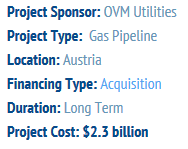
Reuters reports that Austrian utility giant, OMV, plans to to sell a majority of its stake in its gas pipeline subsidiary to ist rival Verbund,. The deal is hopoed will help OMV reduce debt and finance its acquisition of a leading plastics maker.

OMV had earlier in the year announced it will embark on divestments in the utility. The divestments were planned for up to $2.3 billion so as to enable it finance a multi-billion dollar deal to buy one of the world's leading polymer producers, Borealis.

The planned divestment will also culminate in a debt reduction of more than 570 million euros ($666.16 million), it said.

 

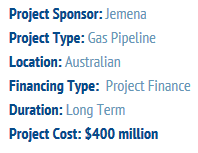
P&GJ reports that Australian pipeline company Jemena has announced plans to expand its 500-mile (800 kilometer) Eastern Gas Pipeline from Horsley Park in Sydney to the Hunter Valley.

“Jemena is looking to invest upwards of $400 million to extend the EGP north from Horsley Park into the Hunter Valley,” Tudor said.

Jemena’s Managing Director, Frank Tudor, declared that the proposal will ensure the connection of the Hunter Valley to existing domestic gas fields and emerging new sources of gas including a proposed LNG import terminal at Port Kembla and another proposed import terminal at Newcastle.

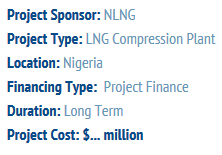
Nigeria LNG (NLNG) has selected Siemens Energy to provide a cryogenic boil-off gas (BOG) compression train for its Bonny Island plant.

The project is located in Finima, Nigeria, the Bonny Island plant has been in operation since 1999. Siemens’ partnership with NLNG and the Bonny Island project can be traced back over two decades to when the plant was first commissioned.

The order further establishes Siemens Energy’s leading role in LNG BOG compression. The company has a fleet of cryogenic BOG compressors that have accumulated more than 4.2 million hours in service.


Related Posts

Social Impact

How LPG is contributing to the growth of SMEs in Africas: Your One Stop LPG Provider

A crucial component of human life is energy. Reliable access to modern, reasonably priced energy is essential for a country's social and economic development. Traditional dirty-burning fuels used for cooking, such as coal, wood, and kerosene, produce large amounts of pollutants and carbon monoxide, which are the main contributors to indoor air pollution and its negative health impacts. Continual use of unclean fuels may result in early deaths, an increase in childhood and adult illnesses, associated environmental problems, and stress on the healthcare system, according to experts. Liquefied petroleum gas (LPG) was found in the search for cooking energy that would protect our environment from pollution. LPG is a type of energy that is used in cooking. It is produced by refining raw natural gas or crude oil that comes only from fossil fuel sources. It is kept and moved in LPG cylinders at a reasonable amount of pressure as a liquid. Propane and butane make up the majority of the gases created during the LPG production process. The first online energy company in Nigeria, Kiakiagas, provides excellent, prompt, and safe delivery of liquefied petroleum gas (LPG) and related products to Nigerian households and businesses. The company has developed into an energy solutions provider, paving the way for a future in which gas will drive the switchover of the African energy sector from fossil fuels to renewable sources, bringing electricity to consumers in the last mile from urban to off-grid areas.
Social Impact

HOW YOU CAN CONSERVE YOUR COOKING GAS AND MAKE IT LAST LONGER

Liquefied Petroleum Gas (LPG) is widely used for cooking around the world, but to a lesser level in most underdeveloped countries. LPG is a nonrenewable source of energy. However, when compared to cooking with hardwood or charcoal, it is commonly known that using LPG has few recorded negative health impacts. One of the main drivers of deforestation in Sub-Saharan Africa is the demand for firewood and charcoal as a source of cooking energy. Increasing the usage of LPG is one of the options for reducing the strain on forest resources. Cooking with biomass produces both greenhouse gas emissions and indoor pollution from black carbon. Kiakiagas has endeavor to reach different classes of people and orientate them on the benefit of LPG to their health. We also give information about how LPG is a more cost-effective, faster, and environmentally friendly cooking method than conventional methods. Following the increase in gas prices, many individuals were seeking for strategies to extend the life of their cooking gas. It's possible and easy to extend the life of your gas. Utilizing these suggestions will help you save a lot of money. Here, we come with a list on how you can conserve your cooking gas and make it last longer:
Social Impact

EFFECTIVE TIPS ON HOW TO SAVE YOUR COOKING GAS

It is well known that the cost of food has climbed significantly in recent months along with the price of cooking gas, making life difficult for a large number of people. For the typical Nigerian household, cooking gas has turned into a luxury good. Bravo if you still have the means to fill yours to the brim! You don't come across people who can easily and comfortably fill up their gas cylinders every day. Every residence is frantically looking for ways to adapt to this change and extend the gas supply. On a more positive side, we have developed useful advice that will lessen how frequently you visit the petrol station. We have heard the word "savings" so frequently that we are accustomed to it. Many things can be saved, but we have no idea how to do it with LPG. Everyone encounters this question on a daily basis. Is there a way to conserve LPG for cooking? There is, and it's not particularly complicated. Your cooking style only needs a few little tweaks here and there to work. To learn some crucial advice on how to conserve household LPG, scroll down.
