Share On:

WEEKLY NATURAL GAS REVIEW


Reuters on Tuesday reported that work has commenced on the southern portion of the China-Russia East natural gas pipeline. The purpose of the project is to enable the carrying of supplies from the Power of Siberia system in Russia.

China Oil & Gas Piping Network Corp (PipeChina) will start work from Yongqing in China's northern province of Hebei and end construction at Shanghai in eastern China. When completed, the full China-Russia East system will be a 5,111-km (3,176-mile) pipeline pumping natural gas from the Siberia region in Russia to China.

The project is planned for launch in 2025 when the southern part of the pipeline is expected to transmit 18.9 billion cubic metres (bcm) of natural gas to the Yangtze River delta region each year, the company stated.

 

The Oil and Gas Climate Initiative (OGCI) announced a U.S$1 million worth of technical and financial sponsorship commitment US-based Payne Institute for Public Policy (PIPP) at Colorado School of Mines, to develop a transparent web platform to support real-time mapping and tracking of global gas flaring data.

The initiative is been developed under the World Bank-led organization umbrella, Global Gas Flaring Reduction Partnership (GGFR). The programme will make publicly available, flaring volume data with an improvement in monitoring, visibility and transparency by 2022.

The funding partnership is part of the OGCI’s vision of ensuring Zero Routine Flaring by 2030.

P&GJ recently reported that U.S. natural gas consumption continued to rise through the pandemic days of April 2020 with a year-over-year increase even when total energy demand fell to a 30-year, as shown in a recent government statistics.

The U.S. Energy Information Administration’s (EIA) latest publication of the Monthly Energy Review, states that the United States consumed 6.5 quadrillion British thermal units of energy in April 2020, the lowest monthly energy consumption since September 1989. Compared to April 2019, Energy consumption in April 2020 was 14% lower, representing the largest year-over-year decrease in EIA’s monthly total energy consumption, a data series that dates back to 1973.


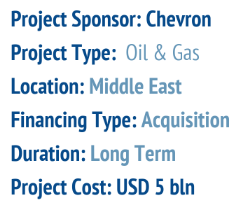
Chevron is expanding in the “prolific Eastern Med” stake with a plan to acquire $5bn stake in Noble Energy. The highlight of the deal is a 40% operator’s stake in the region’s largest gas field, Israel’s 23tcf Leviathan.

Just six months after dipping its toe into the East Mediterranean with its first Egypt block, US major Chevron has dived straight in with its $5bn takeover of compatriot Noble Energy.



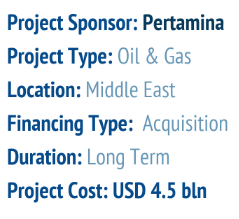
Pertamina plans to acquire energy assets in Africa and the Middle East owned by Occidental Petroleum.

Pertamina is currently in discussion on acquiring oil and gas stakes in countries including Ghana and the United Arab Emirates, according to the people. Pertamina is considering a purchase price of about $4.5 billion for the assets.

The Indonesian company has also expressed interest in buying some assets from Occidental in Algeria and Oman, though they may not be included in an initial deal, the people said.



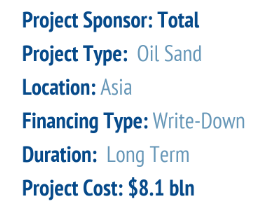
Bloomberg reports that Total plans to write down $8.1 billion after the push to curb carbon emissions and the coronavirus pandemic challenged assumptions about the long-term viability of some oil and gas assets.

A major part of the planned write-down relate to about $7 billion that applies to Canadian oil sands, which are costlier and more carbon intensive than conventional fields.

“Beyond 2030, given technological developments, particularly in the transportation sector, Total anticipates oil demand will have reached its peak and Brent prices should tend toward the long-term price of $50 a barrel,” the company said in a statement on Wednesday.


Related Posts

Social Impact

How LPG is contributing to the growth of SMEs in Africas: Your One Stop LPG Provider

A crucial component of human life is energy. Reliable access to modern, reasonably priced energy is essential for a country's social and economic development. Traditional dirty-burning fuels used for cooking, such as coal, wood, and kerosene, produce large amounts of pollutants and carbon monoxide, which are the main contributors to indoor air pollution and its negative health impacts. Continual use of unclean fuels may result in early deaths, an increase in childhood and adult illnesses, associated environmental problems, and stress on the healthcare system, according to experts. Liquefied petroleum gas (LPG) was found in the search for cooking energy that would protect our environment from pollution. LPG is a type of energy that is used in cooking. It is produced by refining raw natural gas or crude oil that comes only from fossil fuel sources. It is kept and moved in LPG cylinders at a reasonable amount of pressure as a liquid. Propane and butane make up the majority of the gases created during the LPG production process. The first online energy company in Nigeria, Kiakiagas, provides excellent, prompt, and safe delivery of liquefied petroleum gas (LPG) and related products to Nigerian households and businesses. The company has developed into an energy solutions provider, paving the way for a future in which gas will drive the switchover of the African energy sector from fossil fuels to renewable sources, bringing electricity to consumers in the last mile from urban to off-grid areas.
Social Impact

HOW YOU CAN CONSERVE YOUR COOKING GAS AND MAKE IT LAST LONGER

Liquefied Petroleum Gas (LPG) is widely used for cooking around the world, but to a lesser level in most underdeveloped countries. LPG is a nonrenewable source of energy. However, when compared to cooking with hardwood or charcoal, it is commonly known that using LPG has few recorded negative health impacts. One of the main drivers of deforestation in Sub-Saharan Africa is the demand for firewood and charcoal as a source of cooking energy. Increasing the usage of LPG is one of the options for reducing the strain on forest resources. Cooking with biomass produces both greenhouse gas emissions and indoor pollution from black carbon. Kiakiagas has endeavor to reach different classes of people and orientate them on the benefit of LPG to their health. We also give information about how LPG is a more cost-effective, faster, and environmentally friendly cooking method than conventional methods. Following the increase in gas prices, many individuals were seeking for strategies to extend the life of their cooking gas. It's possible and easy to extend the life of your gas. Utilizing these suggestions will help you save a lot of money. Here, we come with a list on how you can conserve your cooking gas and make it last longer:
Social Impact

EFFECTIVE TIPS ON HOW TO SAVE YOUR COOKING GAS

It is well known that the cost of food has climbed significantly in recent months along with the price of cooking gas, making life difficult for a large number of people. For the typical Nigerian household, cooking gas has turned into a luxury good. Bravo if you still have the means to fill yours to the brim! You don't come across people who can easily and comfortably fill up their gas cylinders every day. Every residence is frantically looking for ways to adapt to this change and extend the gas supply. On a more positive side, we have developed useful advice that will lessen how frequently you visit the petrol station. We have heard the word "savings" so frequently that we are accustomed to it. Many things can be saved, but we have no idea how to do it with LPG. Everyone encounters this question on a daily basis. Is there a way to conserve LPG for cooking? There is, and it's not particularly complicated. Your cooking style only needs a few little tweaks here and there to work. To learn some crucial advice on how to conserve household LPG, scroll down.
