The World Bank recently reported that global gas flare for 2020 reached a new peak since 2009. The report is based on satellite data and shows that 150 billion cubic meters, equivalent to the total annual gas consumption of Sub-Saharan Africa was flared in 2019. The figures had moved from 3% rising, from 145 billion cubic meters (bcm) in 2018 to 150 bcm in 2019 mainly due to increases in three countries: the United States (up by 23%), Venezuela (up by 16%), and Russia (up by 9%).
Russia, Iraq, the United States, and Iran have remained the the major contributors to the global gas flaring as they jointly accunt for about 45% of global gas flare for three years running (2017-2019).
The World Bank, through the Global Gas Flaring Reduction Partnership (GGFR), made up of governments, oil companies, and international institutions has been working to end routine gas flaring at oil production sites around the world.

There are plans on the way to decarbonize European gas-fired power plants by early 2021 in cooperation with General Electric in a partnership between German utility Uniper and GE.
“In a few years, Uniper’s European fleet will consist mainly of climate-friendly gas-fired power plants and CO2-free hydropower,” Uniper Chief Executive Andreas Schierenbeck said in a statement.
Across Europe, Uniper, which is majority-owned by Finland’s Fortum, operates gas-fired power plants of around 9 gigawatts, which is more than a quarter of its total generation capacity.
The agreement, was signed last month and follows a cooperation deal with Siemens which will look at using hydrogen at Uniper’s gas-fired power plants and produce the carbon-free gas with power from its wind turbines.

Following growing demand for Natural Gas and the need to further boost export, the Nigeria Liquefied Natural Gas Limited (NLNG) is contracting one of Japan’s leading banks and the core unit of Sumitomo Mitsui Financial Group – Sumitomo Mitsui Banking Corporation (SMBC) and Guaranty Trust Bank Plc, as financial advisers, for Train 7 project estimated at between $10 billion and $12 billion.
Till date, over 16 vessels have departed Onne Port carrying over 950,000 metric tons of liquefied natural gas (LNG) valued at N354 billion in the last few months to various destinations. It is the first batch of the 2020 exports by Nigeria as gas demand is on the increase in the ports of Spain, China, Portugal and Turkey. The country is also the fourth largest producer of LNG in the world.

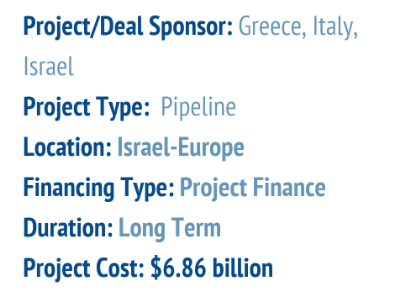
Reuters reports that the Israeli government has approved a long pending deal with European countries for the construction of a subsea pipeline to move natural gas from the eastern Mediterranean to Europe. The project, the Eastmed Pipeline, is coming to a conclusion several years after conversations began. The pipeline will transport gas from offshore Israel and Cyprus to Greece and on to Italy. A part of the deal that was signed in January, the Greek, Cypriot and Israeli ministers would still require the final approval in Israel.

Reuters reports that, Petrobras, Brazil's state-owned oil company, has recently conceded to sell its outstanding 10% stake in natural gas pipeline company TAG. The stake is to be sold to Engie Brasil and Canadian investment fund Caisse de Depot et Placement du Quebec (CDPQ). The sale is said to be worth 1 billion reais ($187.5 million), Engie's executive said, and follows the $8.6 billion sale last year by Petrobras of the other 90% of TAG to the same group.
In one of its public statements, Engie Brasil, the Brazilian subsidiary of France's Engie SA, said that the 1 billion reais was paid in full to Petrobras on 20th July 2020. .
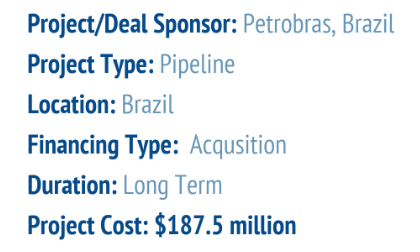

Reuters reports that, Petrobras, Brazil's state-owned oil company, has recently conceded to sell its outstanding 10% stake in natural gas pipeline company TAG. The stake is to be sold to Engie Brasil and Canadian investment fund Caisse de Depot et Placement du Quebec (CDPQ). The sale is said to be worth 1 billion reais ($187.5 million), Engie's executive said, and follows the $8.6 billion sale last year by Petrobras of the other 90% of TAG to the same group.
In one of its public statements, Engie Brasil, the Brazilian subsidiary of France's Engie SA, said that the 1 billion reais was paid in full to Petrobras on 20th July 2020. .
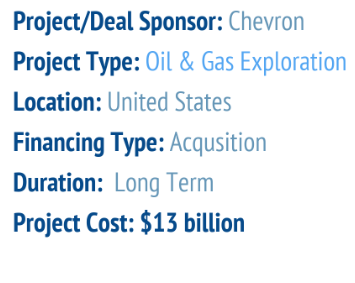

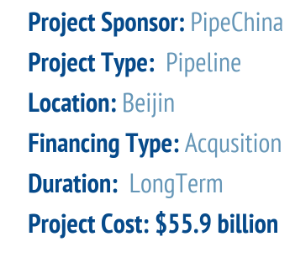
Reuters reports that China has taken a major step in the reform of its national oil and gas pipeline network. This major step is led by the newly established PipeChina which has agreed to buy pipelines and storage facilities valued at 391.4 billion yuan ($55.9 billion)
The deal will allow, PipeChina, previously, China Oil and Gas Pipeline Network, to take over oil and gas pipelines and storage facilities from state-owned energy giants PetroChina and Sinopec, in return for cash and equity in the pipeline company.