The Saudi Arabia LPG market has been experiencing major increases for over a decade. With their Energy comprising petroleum and natural gas production, consumption, exports and electricity production. Saudi Arabia has the largest proven reserves of natural gas in the Persian Gulf. Proven natural gas reserves are over 7 trillion cubic metres (250 trillion cubic feet). Global production in 2009 reached 29 billion barrels of oil and 3 trillion cubic metres (110 trillion cubic feet) of natural gas. Saudi Arabia produces approximately 10% of world LPG, or 22% of combined Middle East and Asian production. The combined LPG exports of Saudi Arabia, UAE, Kuwait, Iran and Qatar represent more than 40% of total world exports, and an even greater share of Asian LPG imports. Saudi( contract price) CP related pricing is so dominant in the market that the contract or selling price of other major sellers is strongly influenced by the Saudi price. The Saudi LPG market is continually going to experience growth because of the constant trending with other countries.
Saudi Arabia boasts of one of the largest companies in the world by revenue,This company, Saudi Aramco,is a Saudi Arabian multinational petroleum and natural gas company based in Dharhan,Saudi Arabia. Saudi Aramco according to Bloomberg is the most profitable company in the world. Furthermore, Saudi Aramco has both the world’s second-largest proven crude oil reserves and the largest daily oil production of all oil producing companies in the world. This has been the driving force of the Saudi Arabia LPG market and Saudi Aramco operates the world's largest single hydrocarbon network, the Master Gas System. Its 2013 crude oil production total was 3.4 billion barrels (540,000,000 m3), and it manages over one hundred oil and gas fields in Saudi Arabia, including 288.4 trillion standard cubic feet(scf) of natural gas reserves ,Saudi Aramco Operates the Ghawar fields ,the world largest onshore oil field, and the Safaniya field, the world’s largest offshore oil field. Saudi Arabia’s reserve strength and production capacity has made it an important source country for various types of hydrocarbon products.
Top Importers of Saudi Arabia’s Oil & Gas
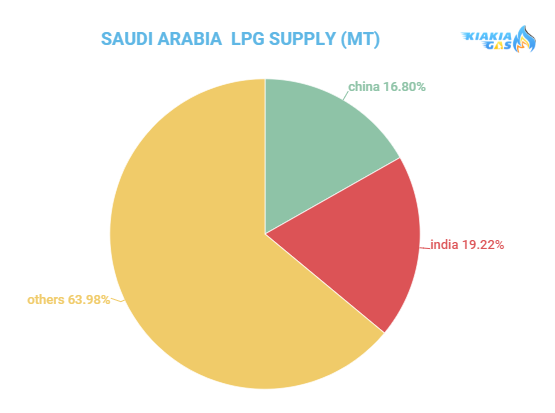
Figure 1: Saudi Arabia top suppliers of LPG
Source: S&P Global Platts
India: Saudi Arabia is a major supplier of oil and other products to India, Asia's third largest economy, which is currently under lockdown due to the coronavirus outbreak and is expected to see an uptick in LPG demand.
India imported 14.538 million mt of LPG in 2019, up 19.22% year-on-year as demand outpaces production growth.
Consumption for 2019 was 26.944 million mt, up 7.93% year-on-year, while production over the same period grew at a slower pace of 0.28% to 12.77 million mt.
The annual growth in India's 2019 LPG imports exceeded the industry's growth projection of 17% due to the country's general elections in 2019 which spurred substantial stockpiling ahead of the polls in April-May 2019.
Saudi Arabia plays an active role in energy diplomacy in India. Investment in energy infrastructure is an effective way for Saudi Arabia to infiltrate and influence India’s foreign policy decision-making process. Aramco, the world’s largest oil producer, is looking to invest in foreign refineries to meet demand for oil and increase its share of global markets. This is a strategy that will allow Saudi Arabia to expand its share of Asian markets and essentially leave its rivals in the dust. Saudi Arabia is not only competing with Iran politically but aiming to gain an edge over even-more-productive Iraq to become India’s largest oil importer.
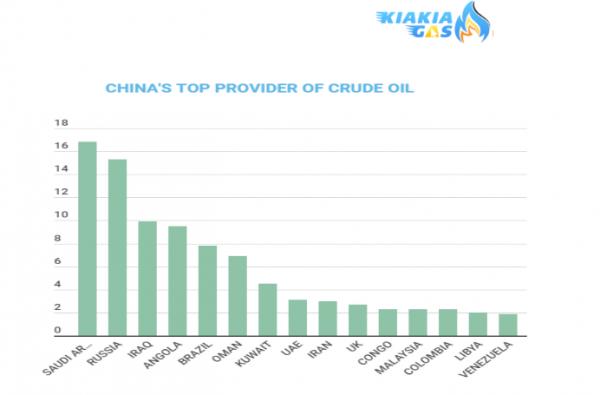
China: China stopped trading with the United States of America for LPG and went ahead to do business with Iran, Oman and other countries alike but China traded the most with Saudi Arabia Saudi Arabia.
Fig 2: China's top providers of cruise oil 2019
source:worldstopexports.com
Together, five of China’s leading crude petroleum suppliers (Saudi Arabia, Russia, Iraq, Angola plus Brazil) generate well over half (59.3%) of overall Chinese crude oil imports for 2019.
China’s top 10 crude petroleum providers supply approximately four-fifths (79.3%) of its imported crude oil.
With the current trade war with the US, Saudi Arabia has increased their level of supply to the Chinese market.
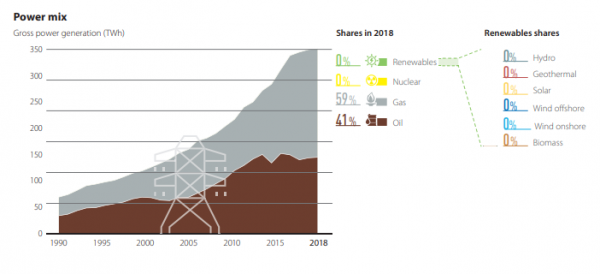
Fig 3: Saudi Arabia Power Mix
source:enerdata 2019
Saudi Arabia is producing some electricity from solar, but the amount is so small that is negligible in the power mix as nearly 100% of electricity is produced from fossil fuels. Gas Accounts for the largest share in the power mix (59%), followed by oil (41%).
A significant portion of the Saudi Aramco workforce consists of geophysicists and geologists. Saudi began Operations on exploring oil and Gas reservoirs in 1982. Majority of this process takes place at the EXPEC Advanced Research centre.
Saudi Arabia Refining:
Saudi Arabia Refining came to life when the Saudi government wished to have only one company dealing with oil production. As a result, the government issued a decree merging Saudi Aramco with Samarec which is the country’s oil refining company. Moving forward to the following year, a Saudi Aramco subsidiary acquired a 40% equity interest in petrol corporation which at the time was the largest crude oil refiner and marketer in the Philippines. Ever since, Saudi Aramco has taken sole responsibility of refining Oil and distributing it in the country.
Currently, Saudi Aramco ‘s refining capacity is 5.4 millions barrels per day and domestic joint ventures of 1,900 and wholly owned domestic operations: 1,000 Mbbl/d (160,000,000 m3/d).). Saudi Aramco's downstream operations are shifting emphasis to integrate refineries with petrochemical facilities. Their first venture into it is with Petron Rabign, which is a joint venture with Sumitomo Chemical Co. that began in 2005 on the coast of the Red Sea. In order to become a global leader in chemicals, Aramco will acquire 50% of Royal Dutch shell’s stake in their refiner in Saudi Arabia for $631 million.
Inside Saudi Arabia LPG Shipping:
Saudi Aramco has reportedly employed several tankers to ship crude oil, refined oil, and natural gas to various countries. Normally, it has it’s own subsidiary company which is named Vela International Marine which was merged with Bahri company, to handle shipping to North America, Europe, and Asia. This Company is said to be a stakeholder in the King Salman Global Maritime industries complex, a shipyard that will be the largest in the world when complete.
Saudi Aramco had an objective to expand its presence worldwide by including the three major global energy markets of Asia, Europe, and North America. In April 2019, Aramco signed a deal to acquire 13% stake in South Korean oil refiner Hyundai Oilbank for $1.24 billion.Similarly Aramco had in the same month had in the same month signed an agreement with Poland’s leading oil refiner PKN Orlen to supply it with Arabian Crude Oil. And for the future ,Aramco is planning to be a major producer of liquefied natural gas (LNG) in the world. It sold its first cargo of LNG from Singapore to an Indian buyer. The company is looking globally for potential joint ventures and partnerships to achieve its goal regarding the LNG market.
Reference:
CHINA DATA: March LPG imports fall 17% on year on lower demand, higher stocks
Iran and Saudi Arabia Compete for India's Energy Market
Libyan oil exports briefly pick up, NOC gears up for cautious return
Top 15 Crude Oil Suppliers to China 2019
Review of the appropriateness of the current LPG international benchmark in the setting of domestic LPG prices
"The Aramco Accounts: Inside the World's Most Profitable Company". Archived from the original on 13 April 2018.
"Saudi oil company named world's most profitable business"
The Nigerian LPG Market is the next success story of the Global LPG industry, if you need a partner with a global perspective and local expertise in the Nigerian and African space, kindly book for a free session with our team of experts to help you http://www.kiakiagas.com/book-session
Or write us an email at
advisory@kiakiagas.com or Whatsapp: +2348085269328