Nigeria LPG Importation in 2019: signs of growth & expansion
With Nigeria importing 76.78 million metric tonnes of Liquefied Petroleum Gas (LPG) in December 2019, there has been a significant increase with Nigeria LPG for the past decade. The Nigerian LPG market saw a rise from 70,000 MT per annum in 2001 to over 600,000 MT per annum in 2019. The increase was made possible due to the deregulation policy and several partnerships with the private sector.
Some of the activities of the private sector include the expansion in domestic coastal storage terminals focused on improving the capacity of the country meet local demand. There are also ongoing plans to further increase domestic storage capacity within the country. Other private sector activities include the explosion of the number of gas plants developed across the country to serve customers.
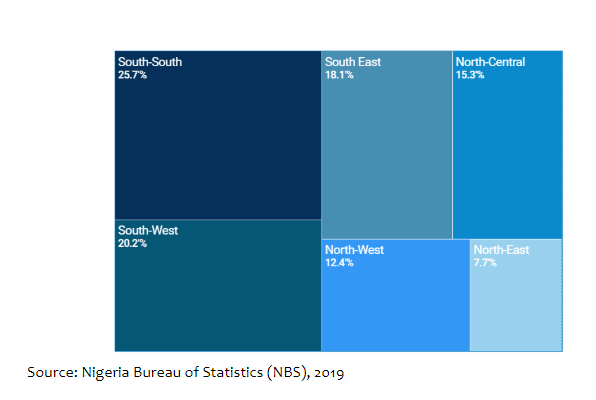
Similarly, domestic demand has also been rising in recent years. Much of the expansion in domestic demand have come from states in the southern part of the country. The three geopolitical zones in the south (South-east, South-south and the South-west) account for over 60% of total national consumption in 2019. The South-South geopolitical zone, accounting for 25.7% of total domestic consumption is the largest LPG market in Nigeria currently by size of consumption. This is followed by the South-west which accounts for 20.5% of total national consumption as at 2019. We reckon, among other factors, that the recent growth in demand in the south could be driven by availability of supplies through retail outlets and gas plants. Considering the population of many cities in the Northern part of the country, we envisage growth in demand in the years to come.
We find that the share of demand in the Nigeria market does not follow population size. While most geopolitical zones in the north have greater population relative to the geopolitical zones in the south, the share of LPG consumption in the south are generally much larger, and disproportionate with the population share. The Northcentral geopolitical zone, accounting for 15.3% of total national consumption remains the largest LPG market in the North. This is followed by the North-West geopolitical zone which 12.4% of the total national consumption for 2019. The North-east geopolitical zone accounts for the lowest consumption for LPG in the country. This phenomenon may not be unrelated to the security crises as well as poverty situation in the zone.
Figure 1: of LPG Consumption according to Geopolitical Zones in Nigerian
According to reports of the Nigerian Liquefied Petroleum Gas Association (NLPGA), annual consumption of LPG is expected to increase from the current 600,000 MT to 5,000,000 MT by 2029. This expectation is not unconnected to the growing awareness of the important of clean energy and the growing ease with which LPG has become available in the market. The expected growth in demand must be met by an equal growth in supply. A look at the trend in the volume of imported LPG into Nigeria in 2019 merits a cursory look.
Figure 2. Source of LPG in Nigerian LPG Market from Foreign Country
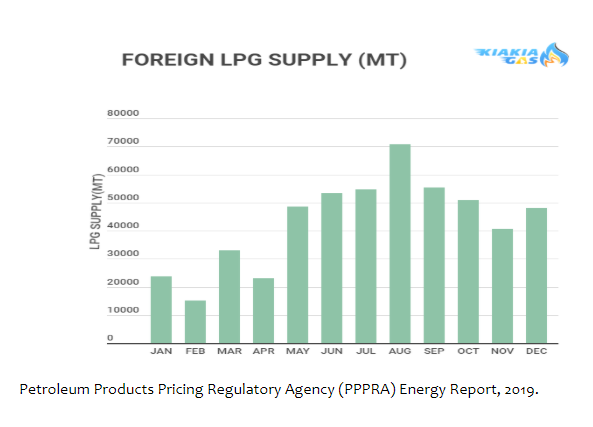
Petroleum Products Pricing Regulatory Agency (PPPRA) Energy Report, 2019.
From the graph above we could see that the volume of LPG imported into Nigeria fluctuated significantly particularly in the first quarter of 2019. August 2019 is the month with the largest import of LPG while February 2019 is the month with the lowest import volume. We also find that the period of lower imports corresponds to the winter season in parts of Europe and North America.
Figure 2: share of imported LPG according country of origin
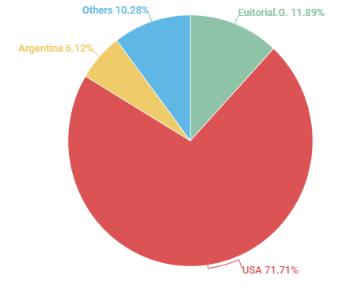
source: PPPRA 2019
Sources of Imported LPG
At least 75-80% of local LPG consumption is imported. Local production capacity, though sufficient to meet local demand, has been oriented more towards export than serving domestic LPG needs of the country. In the next two paragraphs, we explore the two leading sources of LPG imported into Nigeria: the Unites States of America (USA) and Equatorial Guinea.
United State of America:
The US supplied Nigeria about 70% of its domestic LPG imports in 2019. It is no surprise given the fact that they have been Nigeria foremost suppliers and the world’s 4th largest exporter of LPG. The US has a bi-lateral trade relationship with Nigeria, which is a factor in trade volumes. The US stands is also the highest exporter of LPG, with an on-going infrastructure expansion to meet the growing global demand. The United States became a net exporter of LPG in 2012 due to the increase in the production of natural gas, and the shale oil and gas boom. Exports to Nigeria makes up a negligible 0.4% of the total amount of LPG exported from the USA. This falls back to the market size of the Nigerian LPG market. Nigeria is 10 times more populated than Netherlands, yet the Netherlands imported 1.7 million tonnes of LPG from the United States in 2019, which is more than two times the total consumption of LPG in Nigeria for the same year.
Equatorial Guinea: Equatorial Guinea has a successful history of implementing large gas utilization projects. Equatorial Guinea has had a strong presence as a global exporter of LPG and oil in general with top priority in building a sustainable development of the entire value chain — linking upstream production with industry, electricity production and economic diversification. Their drive to monetize gas has been key to the development of industry, especially in the last two decades, with nearly 50% of the country’s annual hydrocarbons production comprised of dry gas, condensate and natural gas liquids. With the development of the Punta-Europa which was established as far back as 2001, which propelled them to the world map, has made it possible for them to process natural gas into a variety of products , including liquified petroleum gas, compressed natural gas, methanol and liquified natural gas. LNG from Europe is exported, making Guinea one of few countries in Africa which includes Nigeria to successfully export LNG.
Other Countries: Argentina, India and other countries account for the rest of the imported LPG into Nigeria. The share of imports from these countries are generally not very consistent and change significantly over the period of a year.
Conclusion
Nigeria has over the years been mostly importing the bulk of its domestic LPG consumption. Growth of domestic consumption have been led mainly by states in the south of the country. The rise in local demand has not be proportionate with population share across the country.
If the trends continue coupled with low domestic storage capacity, per capita consumption may remain very low when compared with other African countries with lower population figures. One possible solution should be for the government to revamp refineries for improved LPG production. Other will be to provide incentives for LPG retail, distribution and domestic storage capacity development within the country. On the demand side, it might be important to develop programmes that encourage households to transit to the use of LPG by providing them with incentives to like access to cylinders and cooking stove at subsidized rates or with some moratorium for payment. Such a programme portents great opportunity to grow domestic consumption of LPG as more than 20 million households still use dirty fuel aa their primary cooking energy.
Thank you.
The Nigerian LPG Market is the next success story of the Global LPG industry, if you need a partner with a global perspective and local expertise in the Nigerian and African space, kindly book for a free session with our team of experts to help you http://www.kiakiagas.com/book-session
Or write us an email at advisory@kiakiagas.com or Whatsapp: +4915210247560, +2348085269328