Short Dive Into the LPG Price Hike

Submitted by kiakiagas on

“People don dey reduce how much dem dey buy normally” said a gas retail shop operator in Lagos when asked about how the market had fared in recent times. He reported that this was due to the rising cost of LPG in the country. During the period between mid-2020 and October 2020, a 12.5 kg cylinder of Liquefied Petroleum Gas (LPG) could be refilled for 3,000 naira in some parts of Lagos. By December of 2020, that price had increased by 1,000 naira. According to the 2018 National Demographic and Health Survey(NDHS), the average Nigerian household size is 4.7 persons, which we would round up to 5 for the purpose of ease(since it’s not possible to have 0.7 person). Let us assume this family of 5 (2 parents and 3 children) uses only 12.5kg of gas in a month and earn a household income of 50,000 naira. This increase in LPG price would require that household to spend 8% of its income on LPG alone. Considering the fact that the average Nigerian household spends 56% of its income on food, we can say 64% of such a family’s income would be spent on food and its complementary cooking fuel, leaving just 36% (i.e. 18,000 naira) for other activities. This illustration shows why the hike in LPG price is undesirable for the average low income Nigerian household using LPG.


Why Does the Nigerian LPG Price have wings?
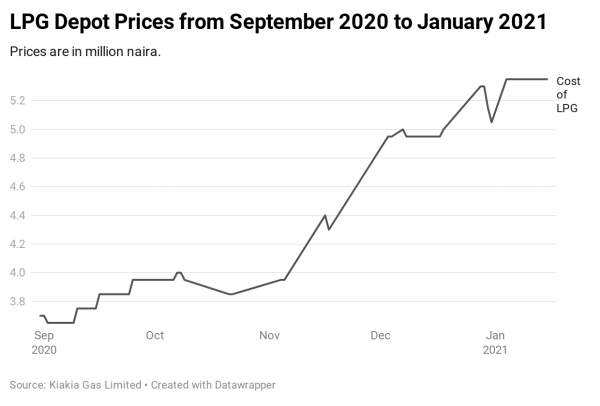
 

Taking a look at the Kiakia Gas Insider Report, one would see that cost of LPG at the depots in Nigeria grew from 3.7 million naira for 20 Metric Tons (MT) in September 2020 to over 5.35 million naira per 20 MT of the product in January 2021. There was a net rise between September 2020 and November 2020, but from November 2020, the price of LPG at the depot rose rapidly. In the space of three months, the cost of LPG from the depot increased by 1.5 times. And this cost is passed on to consumers such that a kilogram of LPG which cost 280 naira in November, and cost 350 naira  in January, 2021. This is an experience common to LPG users due to the deregulation of the LPG industry i.e. the government does not fix the price of LPG, leaving it to rise and fall based on market forces.

In understanding why the price of LPG rose, we need to understand some factors that determine the cost of LPG in Nigeria. Firstly, we shall look at the source of LPG in Nigeria. Nigeria is a country blessed with oil and gas resources. There has been the recent realization that Nigeria is a “gas country”, which means we have considerably more natural gas reserves than crude oil reserves in Nigeria. Nigeria has the 8th largest natural gas reserves globally – but we should note that we do not produce much from our gas field. Most of the natural gas in Nigeria is derived from Associated Gas (i.e. Gas derived alongside crude oil during crude oil extraction from oil wells). To this end, Nigeria is not yet living up to her potential as a gas country.

LPG is a mixture of propane and butane, and these two gases are extracted when drilling for oil or natural gas. Therefore, LPG is a by-product of crude oil separation and distillation, as well as a product of natural gas processing. In Nigeria, most gas products – including LPG, from the upstream operations are channeled to the Nigeria Liquefied Natural Gas Limited (NLNG), which then sells the gas to its customers. The NLNG exports LPG and supplies local market operators. Here comes a challenge: the NLNG planned to allocate 350,000 MT of LPG to Nigeria in 2020, but Nigeria consumed over 1 million MT of LPG in 2020. This amount dwarves in comparison to what the country needs, hence Nigeria depends on foreign partners to supply her LPG. Simply put, although we produce LPG in Nigeria, most of the LPG used in Nigeria is imported.
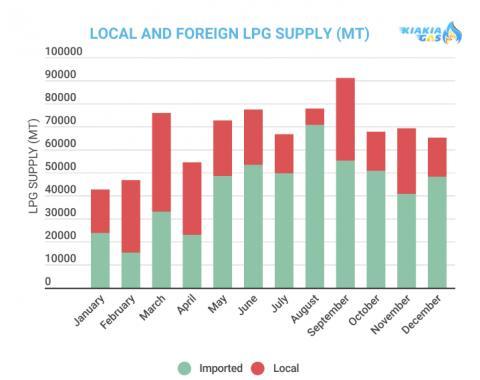
 

The figure above shows the source of LPG supplied to Nigeria in 2019. In 2019, 300,000 MT out of the 800,000 MT of LPG locally consumed was supplied locally (NLNG), while the rest was imported from various countries. This means that over 60% of the LPG used in Nigeria in 2019 was imported, placing our price dependence on our foreign suppliers. It should be noted that, from data available, just a little over 50% of LPG consumed in Nigeria in 2020 was supplied by foreign suppliers; thus showing a gradual reversal in our dependence on foreign suppliers for LPG.[O1]  From this, we can deduce that the LPG price at the depots in Nigeria is still heavily influenced by the foreign markets. LPG in Nigeria is actually priced using the Mont Belvieu (Texas) LPG spot price. Mont Belvieu is a town in Texas, hosting the major LPG hub in North America.

It should be noted that in 2019, the United States of America supplied 70% of Nigeria’s imported LPG, giving credence to why our LPG prices are hinged to the Mont Belvieu price. Generally, being a hydrocarbon product, global LPG prices also follow the trend of global oil prices such that when the price of crude oil fell in March 2020 due to the lockdowns induced by the Covid-19 pandemic, the price of LPG also experienced decline. Considering this, one might have thought that as the price of crude oil was returning to its pre-covid value, the same would occur to the price increase of LPG. One might also consider the naira lost value against the dollar over the past few months, thereby increasing the naira value of pre-covid LPG price, but that was not the case. This line of thought proves false as the price of LPG quickly recovered from the decrease in March. Also, the value of the naira has been relatively steady in the past couple of months as well. This shows the cause of the high price increase would be found elsewhere.
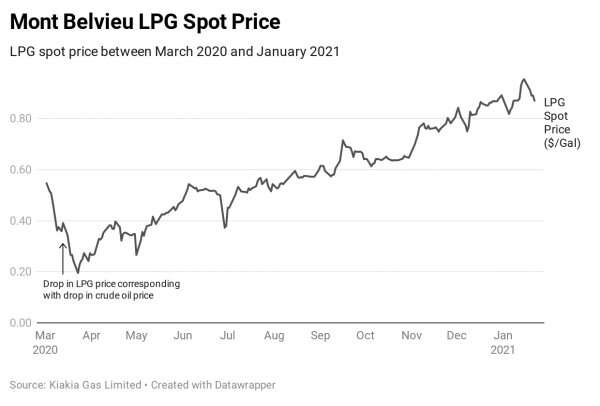
 

An examination of the journey of the Mont Belvieu LPG price shows that it has been steadily rising since through most of 2020, and was priced at $0.88/gallon on the third week of January. This translates to a value of 172 naira per kilogram of LPG. 4 months ago, it was 138 naira. This rise in price has translated to the spike in LPG prices which has been observed in Nigeria. It is clear that this spike in LPG price is from the source, not from local suppliers.

The reason Mont Belvieu prices have gone high is due to the increase in gas demand during the winter season. This price hike can be traced back to increase in demand due to winter. LPG is used as a heating fuel in a few homes (less than 10% of the United States (U.S.) population in 2011).  This increase in demand has led to a price increase in the cost of LPG. While local U.S. demand has increased, export demand has increased as well, coupled with shipping challenges in the Panama Canal. Another aspect to consider is the relatively low LPG inventories in the United States. If the winter gets colder, then demand will increase, causing a further hike in the price. These factors explain why the cost of LPG has skyrocketed in this few months. It should also be noted that suppliers in the United States would supply local demand before meeting foreign demand, which is likely to cause intermittent lack of LPG at the Nigerian depots.


Going Forward

As mentioned at the beginning of this article, LPG operators and users have not been favorably disposed to the current rise in LPG prices and that has affected the quantity purchased by some households. We may not be able to control the trend of LPG spot prices at Mont Belvieu, but we can control the trend of LPG prices in Nigeria if we can get 100% of our LPG supply from local LPG suppliers e.g. NLNG, & Bonny River Terminal. This would require investment in oil and gas field with LPG supply as a major purpose, as well as investment in maritime/pipeline infrastructure to transport the necessary quantity to different locations within the country. The NLNG, for instance, would need to increase their supply allocation to Nigeria, as well as increase their delivery fleet (the NLNG currently has only one LPG cargo vessel). It is therefore pertinent that investments are directed to develop local upstream LPG infrastructure is developed to enable Nigerian households - most of which earn low-incomes, hence are price sensitive – use LPG without having to intermittently use dirty fuels because they can’t afford LPG in that period.


KiakiaGas Limited is a leading Gas business in Lagos,Nigeria with expertise in LPG retailing, New Gas Market development, Building of Gas Plants and Gas strategy advisory
If you need a partner with hands-on local expertise in the Nigerian Gas space or any of our bespoke solutions/services, write us at gaspreneur@kiakiagas.com or call/Whatsapp: +2348085269328
 

Making a Case for Small Scale Opportunities for FSRUs

Submitted by kiakiagas on

Introduction to LNG transport and regasification

As the world continues to consider LNG as a viable alternative fuel source in meeting present and Future Energy demands worldwide, the LNG supply chain has been forced to evolve to save costs, speed up supply and boost overall efficiency with several note worthy inventions. One such innovation in the exploration and production phase is the development of floating liquefied natural gas or FLNG vessels which are designed to obtain, process ,liquefy by freezing and transfer LNG to other sea vessels with all this being done offshore.

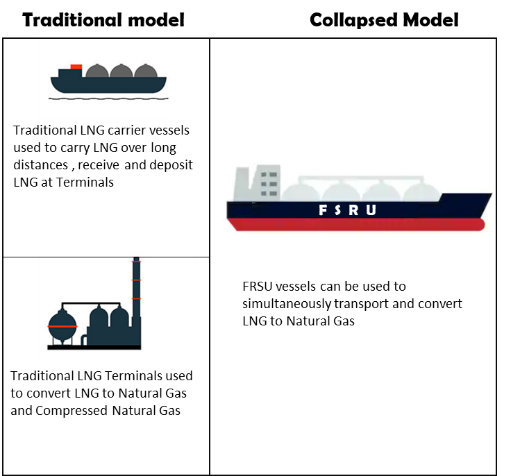
Another Great innovation is the development of FSRU (Floating Storage Regasification Unit) vessels that presents a collapsed model of operations in place of the traditional transportation phase by carrier vessels and regasification at LNG terminals.


The benefits of this technology can be realised with ease, with immense saving in both cost and time, the application of FSRU technology in LNG logistics cannot be understated and deserves a closer look.


Advantages of FSRU vessels

Speed of deployment
Generally the cost of construction of FSRU vessels are half that of traditional LNG terminals with the average construction time of under 2 years with even shorter time period if an already existing LNG carrier is converted to a FSRU vessels. For example the LNG Croatia which was converted from a 2005-built 140,000 cbm vessel named Golar Viking was completed under a year at the Chinese Huarun Dadong yard.


Flexibility

FSRU’s are mobile and this affords them flexibility in delivering Natural Gas to new and existing markets. FSRU’s are usually chartered and this allows them to be reused by multiple parties in different regions and allows them to serve markets with seasonal demands such as winter periods in the US which leads to increased demand of LNG for heating purposes.


Cheaper option
The cost differential between traditional terminals and FSRU vessels cannot be understated as FSRU vessels usually cost 50% or less that of Land based terminals. An FSRU vessel can cost anywhere from 150 million dollars depending on the size and scale, while an LNG terminal on the other hand could cost upwards of a billion dollars (also size dependent).The price of an FRSU also decreases further if converted from an existing LNG Carrier vessels. It is important to note that FSRU vessels can also be hired for a period of time and need not be purchased outrightly , further increasing payment options.


FSRU’s brief history

Historically FSRU’s first came into use in 2001 when the US company, Excelerate Energy was hired to construct the first FSRU for the Gulf Gateway project located at the Gulf of Mexico , North America. The project which had a capacity of 500 million cubic feet per day and a peak capacity of up to  690 million cubic feet per day was commissioned in 2005. Unlike previous terminals the Gulf gateway project used an FSRU for regasification of the processed LNG before reaching ports located at the coasts. The EXCELSIOR as it was named, was formerly a  138,000 m³ LNG carrier that was modified to include six vaporization trains with boiler capacity of 56 tons/hr to 71 tons/hr, a feature that provides additional steam capacity for closed-loop regasification operations, two small high-pressure LNG pumps and six large high-pressure LNG pumps.


The Excelsior also included two retractable buoys fitted within a specially designed compartment connected to the onboard regasification equipment. The buoys functioned as both a avenue for gas delivery but also as mooring for the vessels, eliminating the need to anchor ships at Deepwater ports. The system was developed, designed and tested by Excelerate Energy during crude operations in the North Sea to bring in gas supplies when other vessels were shut down by Hurricane Katrina in 2005. The vessels also pioneered LNG ship-to-ship transfer, further evolving the LNG supply chain and brought about the advent of FSRU vessels today. According to the international Gas Union (IGU) 2020 report as there are currently 25 FSRU vessels worldwide and a further 14 vessels to be deployed in by 2021, the IGU also speculates that as much as 50 FSRUs could be in operation by 2025.


Small Scale FSRU: A Case Study of Southern Asia Markets

Flexibility and mobility are the watch key criteria for the evolution of FSRU’s and nothing embodies this more than small scaled FSRU’s. They are basically smaller FSRU’s with reduced capacity and scale allowing them to travel on smaller water bodies such as inland rivers and reach isolated regions that are only reachable by boats and small water vessels and also supply areas with smaller LNG demands.

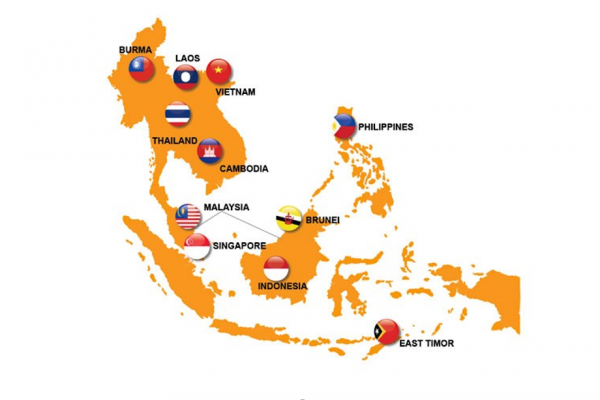
An example would be countries in  such as Indonesia and the Philippines which are made up of isolated islands with extensive waterways and varying levels of demand for LNG. These islands are isolated by extensive waterbodies and are only reachable by watercraft. Indonesia for example is made up of over seventeen thousand islands and the Philippines over Seven thousand islands all connected by waterways of varying depths which are mostly too shallow to support normal ocean faring vessels. Some estimates have put regional demand for LNG as low as 30 Million Cubic Feet (MMCF) per year. Hence due to the terrain of the region, creating an LNG supply chain between these islands using traditional methods such as pipeline or road transport vehicles would require extensive infrastructure expenditure, effort and time.

Alternatively, the use of traditional FSRU vessels to supply these islands would be hindered by the depth of the connecting waters ways not to mention the astronomical cost and the ensuing inefficiency of using vessels whose normal cargo capacity ranges upwards of 120,000 cubic meters.

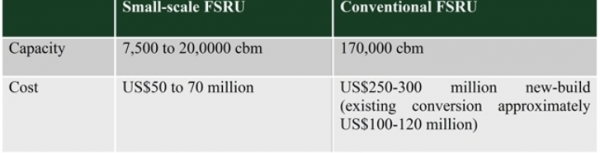
Ideally vessels with capacities as low as 7500 cubic meters would be able to cater to this regions efficiently and would cost considerably less at an analytical of about 50 -70 million dollars for 20,000 to 50,000 cubic meter FSRU vessels instead of traditional FSRU’s which would cost upwards about 250  million dollars for a 170,000 cubic meter vessel.

It is important to note that as of now no small scale FSRU has been built however the economic benefits of such an undertaking cannot be understated. Several milestones are needed to be achieved, both technical and economic to realise the creation of small scaled FSRUs. One such mile stone was achieved in 2017 with the first ship to ship transfer of LNG from a FSRU to a small scale LNG carrier. The transfer occurred in the Baltic sea between the FSRU Independence with a capacity of 170,000 m3  and the LNG tanker Coral Energy with a capacity of 15,600 m3. The operation saw the  FRSU transfer about 15,000 m3 of LNG to the smaller craft making it the first operation at this scale and proving the mechanism for transferring LNG between vessels of dissimilar capacities possible.


The Nigerian LPG Market is the next success story of the Global LPG industry, if you need a partner with a global perspective and local expertise in the Nigerian and African space, kindly book for a free session with our team of experts to help you http://www.kiakiagas.com/book-session or write us an email at advisory@kiakiagas.com or Whatsapp: +2348085269328

Comparing LNG Terminal and FSRU Vessels

Submitted by kiakiagas on
Introduction

As the world continues to clamour for a more environmentally friendly source, Liquefied natural gas (LNG) a form of Natural gas has continued to receive more and more attention due to its very low carbon emissions and energy density. LNG is natural gas cooled to extremely low temperatures as low as negative 160 degrees Celsius. At this temperature it occupies about 600 of the same volume occupied by natural gas with the same specific energy. This allows LNG to serve as a more viable method for the bulk transportation of Natural Gas over long distances usually by sea faring vessels. World demand for natural gas is on the increase as every year more and more energy is required, the, International Gas Union (IGU ) 2017 LNG Report forecasts a global 45% increase in demand for natural gas from 2015 to 2040 and expects worldwide trade of LNG to increase by a factor of 2.5 within the same time period.

LNG Value chain

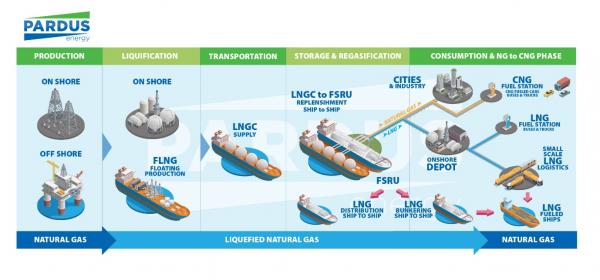
The process chain of  LNG supply includes :-

Exploration &Production : This involves all upstream activities pertaining to the survey, discovery, and extraction of natural gas, either from natural gas deposits or from other sources like shale and crude oil extraction.

Liquefaction : Here impurities such as dust, water and other heavy hydrocarbons are removed and the gas is then cooled to -160oC  at normal atmospheric pressure which condenses it to a liquid.

Transportation: Here large sea tankers or Liquefied natural gas carries or LNGC take the liquefied product over long distances for commercial purposes. The capacity of the vessels can range from as low as 40,000m3  to 172,600 m3  of LNG ( the capacity of the Christophe de Margerie a Russian ship capable of supplying the entire Natural gas consumption of Sweden for a month).

Storage and regasification: This is a midstream process where the LNG is off loaded from the LNGC’s and prepared to be transported to resale points in 3 forms, either still as LNG or is expanded and converted back to Natural Gas for pipe-line distribution or compressed as  CNG for easy transport by Tanker trucks. To accomplish this two methodologies currently exist either traditional LNG Terminals and more recently Floating storage and regasification units (FSRUs).

End use: At this stage,  the processed gas is delivered to the consumer usually as CNG (compressed natural gas) in pressurised containers for all kinds of use.

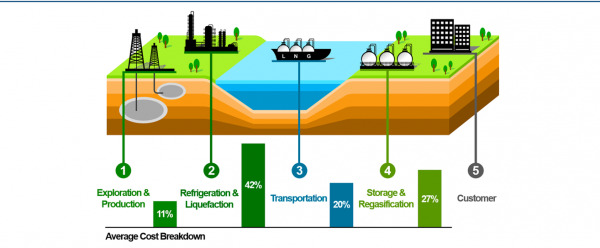
Our focus lies in the Storage and regasification stage which according to a 2017 study by  Lee, Inkyu & Park, Jinwoo & Moon Il accounts for 27% of the total cost of LNG value chain roughly a fourth hence its importance and our interest.

LNG Terminals

LNG terminals are port facilities that receive, store, convert and transport Liquified Natural gas, they are typically located ashore and are built to accommodate large LNG carrier vessels. According to the IGU 2020 report as at February 2020 ,there are currently 105 terminals currently in operation worldwide with a further 14 planned to begin operation within the next 2 years.

There are two types of LNG terminals based on their function namely Regasification & Liquefaction terminals respectively

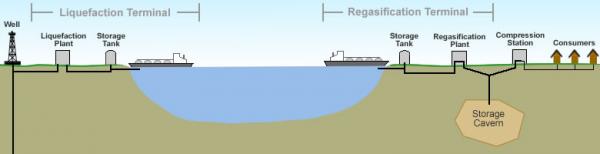
Liquefaction terminals

These refer to terminals that receive pumped Liquified Natural Gas from Liquefaction plants (which are mostly situated close to the source of gas so as to reduce complexity and cost) through pipelines after which it is then stored in specialised storage tanks while awaiting transport to ships for export.

Regasification terminals

This are terminals that receive imported natural gas from ocean tankers, store it temporarily and then send it to a Regasification facility or directly to tanker trucks for transport as LNG. At the regasification plant the LNG is then converted to CNG or natural gas and distributed using pipe-line 

networks or land based transport, any additional gas is then stored using specialised underground storage tanks.

Advantages

Some of the advantages of traditional LNG terminals include.

Immense Capacity:

Perhaps the biggest factor to consider is that Terminals are built to process large volumes of Natural gas daily and they do this effectively with small terminal capacity ranging from 100,000 m3 to large terminals that can house millions of cubic feet of natural gas conveniently.

Scalability:

Another huge advantage is that traditional terminals can be easily expanded provided the required land area is available. An example is the expansion of the Nigerian LNG project at Bonny island to add a seventh LNG processing unit to increase its total production capacity from 22 million tonnes per annum (Mtpa) to 30Mtpa, and the LNG terminal expansion by Polskie LNG in Poland  to increase regasification capacity of the terminal to 7.5 billion Nm3/year and build a second jetty  for loading and unloading of LNG Vessels.

Long Service life:

Generally Terminals are built to last at least 25 years and more with proper maintenance their service life can even be extended without risking or compromising safety standards. A notable example is the Chita LNG terminal in japan which was commissioned in 1983 and is still running today.

Disadvantages

Huge cost:

LNG terminals are not cheap as they can cost upwards of 1 billion dollars in investments, they also come with huge upfront costs and are generally considered a long term investments as they take years to breakeven or show Return on Investment.

Land requirement:

LNG terminals require huge swathes of land due to the scope of activities needed to load and offload LNG from vessels, they require a jetty or harbour, a lot of surface area for the storage tanks and regasification plants as well as proper segmentation for health and safety standards.

Time of construction:

Typically LNG terminals can take anywhere from Four to six years In construction, take for example South Hook’s LNG terminal located in Milford Haven UK,  Europe’s largest LNG terminal, construction began in 2004 with over 2500 workers and was commissioned in 2009.

FRSU vessels

Floating storage and regasification units (FSRUs) are sea vessels that offer both transportation and conversion of LNG to other forms simultaneously. First developed in 2005 by transforming an already existing LNGC vessel, FRSU’s are a smaller and cheaper method of supplying Natural to small and medium markets. FRSU’s  are made up of

Storage Tanks: usually membrane or spherical Moss type tanks

Regasification unit: which converts the LNG back to natural gas by slowly heating the liquid under atmospheric pressure. Generally sea water is used except when travelling through colder regions in which case, steam from the ships boiler is used.

LNG Unloading Arms or Hoses: These are used to receive and offload the cargo to and from the FRSU which is usually transferred ship to ship. The primary advantage of hoses over unloading arms is that its cheaper and less bulky with the latter being faster in operation and easier to manoeuvre.

FRSU’s are either newly constructed or made by refurbishing already existing LNG carries and generally consists of two types as FRSU ships or offshore installations.

FRSU ships: These are vessels that are able to transport and convert LNG simultaneously and posses their own propulsion systems. They are similar to other sea faring vessels and can dock in ports and harbours

Offshore installations: these are barge like facilities that can be moored offshore their primary advantage is greater capacity than their counterparts.

According to the IGU 2020 report as there are currently 25 FRSU vessels worldwide and a further 14 vessels to be deployed in by 2021.

Advantages

Speed of deployment:

Unlike Classical terminals which take at least 5 years of construction, FRSU’s can be built and deployed under 2 years. Case in point is the FRSU Independence  in South Korea for which construction started in 2012 and operations began operations in 2014.

Flexibility:

The mobility of FRSU vessels allow flexibility in delivering Natural Gas to new markets as well as allowing for a collapsed model of operations.

Cheaper option:

They are also cheaper to build for instance the Independence construction cost was 330 million dollars a sharp contrast to the construction cost of 1 billion pounds (1.4 billion dollars). The cost is further driven down if the FRSU is constructed from a refurbished LNGC.

Disadvantages

Limited capacity:

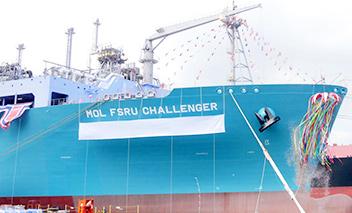
FSRU’s have a somewhat limited capacity compared to traditional terminals. For example the Korean FRSU the Challenger with a storage capacity of 263,000 cubic meters lacks in capacity when compared with traditional LNG terminals like the Arun LNG Plant, a medium sized LNG terminal in Indonesia with a storage capacity of 630,000 cubic meters. FRSU’s cant also be upgraded as easily as Traditional LNG terminals who are only limited by the available land area.


Short Life span:

FRSU generally last anywhere from 10 to 15 years of operations pending proper maintenance and overhauling repairs however this adds to the  overhead operational cost.

Comparing FRSU and LNG terminals

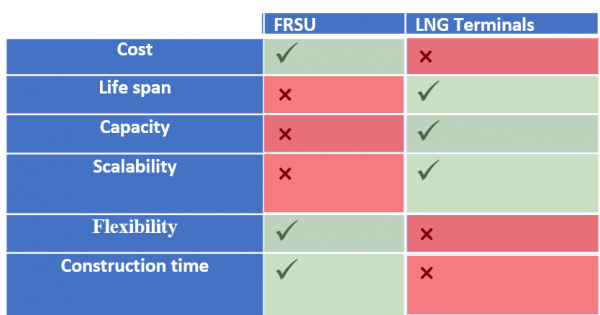
A quick recap of the benefits of the FRSU and LNG terminals

Conclusion

To say one method is better than the other would do them both injustice. Both have their place and can even be used complementarily. An example can be seen in the US where during harsh winters when demand for Natural Gas peaks , FRSU vessels where used to supplement the supply of LNG normally obtained from shale gas field.  There are several factors that influence the choice to make between adopting LNG or FRSU facilities namely life  span, capacity cost, reliability and market size. When considering large markets such as China , US and South Korea it is more economical to build Terminals when considering the market size however in smaller newer markets that aren’t LNG dependent FRSU vessels may be the viable choice.


KiakiaGas Limited is a leading Gas business in Lagos,Nigeria with expertise in LPG retailing, New Gas Market development, Building of Gas Plants and Gas strategy advisory.
If you need a partner with hands-on local expertise in the Nigerian Gas space or any of our bespoke solutions/services, write us at gaspreneur@kiakiagas.com or call/Whatsapp: +2348085269328
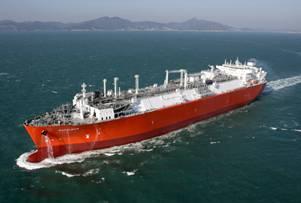
FLOATING STORAGE AND REGASIFICATION UNIT (FSRU)

Submitted by kiakiagas on

The global demand for natural gas was 3.9 trillion cubic metres (tcm) in 2018, a 4.9% increase from 2017. OECD (Organization for Economic Development) countries experienced a 4.5% increase in demand for natural gas, while non-OECD countries experienced a 5.3% increase. Global gas trade surpassed the 1.2 tcm threshold in 2018. This growth can be attributed to the increase in global Liquefied Natural Gas (LNG) trade which grew by 7.3% in 2018. The prices of LNG also continued the trend of convergence, while import prices for the USA, EU, Japan and Korea all increased.


The exact composition of natural gas mostly depends on the source. Natural gas is made up of 60 – 90% methane, about 20% ethane, propane, butane and trace amounts of other gases, such as Nitrogen. When composition is almost pure methane, it is known as ‘dry’ natural gas. The presence of heavier hydrocarbons makes it ‘wet’. The heavier hydrocarbons removed in order to increase the methane presence in natural gas are referred to as Natural Gas Liquids (NGLs).


Natural Gas Transportation

Most of the world’s natural gas is delivered through pipelines, with a large network of pipelines delivering natural gas to processing facilities, as well as end consumers. Natural gas is compressed to enable pipeline transportation. The pipeline networks can be categorised into three:

  1. Gathering pipeline systems, which transport raw natural gas to the processing facilities.
  2. Intrastate/interstate pipelines, which basically transport natural gas from the processing facility to the centres of consumption.
  3. Distribution pipelines, which deliver gas to the end consumers.


In the situation natural gas cannot be delivered on land, it can be liquefied and transported by ships. Natural gas is condensed to a liquid by cooling it to -260 °F (-162°c). Liquefied Natural Gas (LNG) occupies 600 times less volume than natural gas at atmospheric temperature; this and the liquid state enables easy storage and its transport by road, rail or ship (using methane carriers). LNG is shipped from terminals and the shipment is received at terminals, where it is regasified. There are several types of LNG terminals, differing based on technology used:

  1. Onshore LNG terminal: LNG is offloaded from the methane carriers into tanks in the port, after which it is regasified then transmitted into the gas distribution system.
  2. Gravity-based offshore LNG terminal: the terminal and the regasification plant are located on an artificial island. The natural gas is then transmitted to the onshore distribution network through underwater pipes.
  3. Regasification methane carriers: the regasification facility is on the LNG carrier, and releases natural gas directly to the onshore transmission network through underwater pipes.
  4. Offshore storage and regasification terminal: a floating platform or vessel with LNG storage and regasification facilities on board. It is also known as the Floating Storage and Regasification Unit. LNG pumped from the methane carrier to this terminal is regasified, and then transferred to the onshore gas transmission network. This unit is the focus of this article.  


The Floating Storage and Regasification Unit (FSRU)

The FSRU can be classified either as a (special kind of) ship or an offshore installation. Most FSRUs are classified as ships to enable flexibility in operating them either as a FSRU or an LNG tanker. FSRUs are to be located close to the coast, inside a port or a protected area. FSRUs can be equipped in two ways:

  1. they can be installed as a separate unit aboard the LNG carrier itself, or
  2. an old gas carrier can be converted into an independent unit and placed in a particular destination as an offshore installation.

The FSRU business began in 2001, with the first FSRU built for the Gulf Gateway Project. By 2017, 26 FSRUs were in operation, with 23 operating as terminals and 3 as LNG terminals. The International Gas Union stated that FSRUs had a total regasification capacity of 84 MTPA (million tonnes per annum) based on estimates. The number of FSRUs have grown rapidly due to their relatively low capital cost, commercial flexibility, faster schedule and reusable asset feature. Land based terminals on the other hand are regarded as sunk cost.


A 2017 report stated that the cost of a new FSRU was 60% of an onshore terminal and could be delivered at half the time. New projects cost $240 - $300 million and could be constructed in 2-3 years, while FSRUs based on LNG tanker conversions cost $105 - $130 million and take 18 months to be converted (due to long delivery times of equipment, rather than the shipyard conversion itself). An example of a fast tracked project was the second Egypt FSRU which was completed in 5 months.

Comparison Between On-shore Terminals and FSRUs

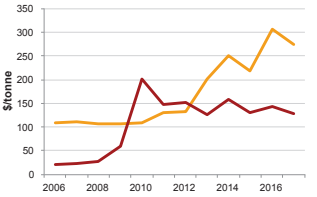
The cost of an onshore regasification has been on the rise since 2012, while that of FSRUs has remained relatively steady. The average unit cost of onshore regasification capacity that came online in 2017 was $274/tonne, while that of FSRUs was $129/tonne. It should be noted that the operating costs of FSRUs are higher than that of onshore terminals due to vessel charters associated with the project.


Figure 1. Regasification Costs Based on Project Start Dates

Source: International Gas Union. World Gas LNG Report, 2018.


Additionally, some FSRUs are used for power generation, by independent electricity companies which plan to serve developing countries. Many FSRU companies now generate power on the FSRU or on an adjacent barge, to provide a one-stop shop solution.

FSRUs consist of the following essential components:

  1. Tanks: the ‘S’ in FSRU denotes storage of the LNG, which is done in either a membrane or a spherical moss tank. The membrane tank provides better storage capacity for a ship of the same size.
  2. Regasification unit: this represents the ‘R’ in FSRU. This equipment converts the liquefied natural gas (at -162°c) back into natural gas at atmospheric temperatures.
  3. LNG Unloading Arms or Hoses: the tanker supplying LNG to the FSRU transfers the cargo either through an unloading arm fixed in the FSRU or through the use of cryogenic hoses. The arms are quicker, and easier to operate than the hoses; they also boil gas less than the hoses.      
  4. Heating medium: the regasification occurs through a heat exchange medium, where sea water is used as a heat source for warming the LNG in primary receiving terminals (except in terminals located in cold regions). Strict environmental regulations monitor this process. It is known as the open loop system. The closed loop system involves circulating pre-heated fresh water/glycol mixture.
  5. Boil-Off-Gas (BOG) Management: excess BOG is released in the FSRU (or piping ) during the loading process. This gas needs to be managed to prevent over pressurisation of the tanks. Loading or spray lines are used to reliquify the boiling gas and transfer it back to the tank.
  6. Gas Export Arms or Hoses: most inshore FSRUs export the gas via high-pressure export arms. Hoses could also be used for this job.


In 2018, the Lagos State government was in talks with Golar LNG Limited to acquire an FSRU, to provide energy security in case the gas pipeline from Delta is shut down for any reason.

It is possible that with time, the FSRUs will evolve to provide other important services and it is paramount that such innovation is used to its greatest advantage.

The number of FSRUs in operation is expected to increase as demand also increases. FSRUs might be used by some nations to act as gas terminals while onshore terminals are constructed. Other nations would use FSRUs to generate electricity. Generally, adoption of FSRUs is expected to increase over the years such that the International Gas Union (IGU) expects 50 FSRUs in operation by 2025.


The Nigerian LPG Market is the next success story of the Global LPG industry, if you need a partner with a global perspective and local expertise in the Nigerian and African space, kindly book for a free session with our team of experts to help you http://www.kiakiagas.com/book-session or write us an email at advisory@kiakiagas.com or Whatsapp: +2348085269328


Subscribe to shipping