Short Dive Into the LPG Price Hike
“People don dey reduce how much dem dey buy normally” said a gas retail shop operator in Lagos when asked about how the market had fared in recent times. He reported that this was due to the rising cost of LPG in the country. During the period between mid-2020 and October 2020, a 12.5 kg cylinder of Liquefied Petroleum Gas (LPG) could be refilled for 3,000 naira in some parts of Lagos. By December of 2020, that price had increased by 1,000 naira. According to the 2018 National Demographic and Health Survey(NDHS), the average Nigerian household size is 4.7 persons, which we would round up to 5 for the purpose of ease(since it’s not possible to have 0.7 person). Let us assume this family of 5 (2 parents and 3 children) uses only 12.5kg of gas in a month and earn a household income of 50,000 naira. This increase in LPG price would require that household to spend 8% of its income on LPG alone. Considering the fact that the average Nigerian household spends 56% of its income on food, we can say 64% of such a family’s income would be spent on food and its complementary cooking fuel, leaving just 36% (i.e. 18,000 naira) for other activities. This illustration shows why the hike in LPG price is undesirable for the average low income Nigerian household using LPG.
Why Does the Nigerian LPG Price have wings?
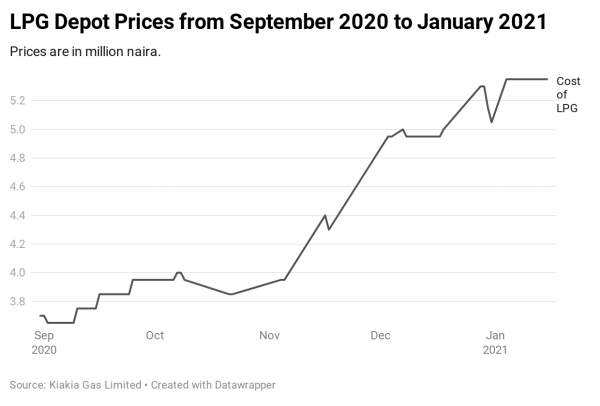
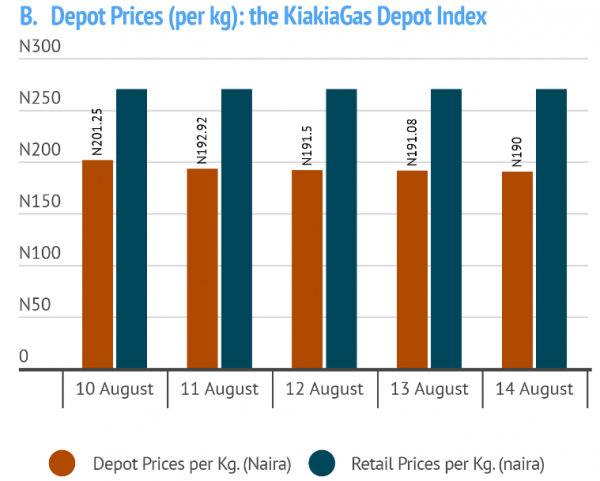
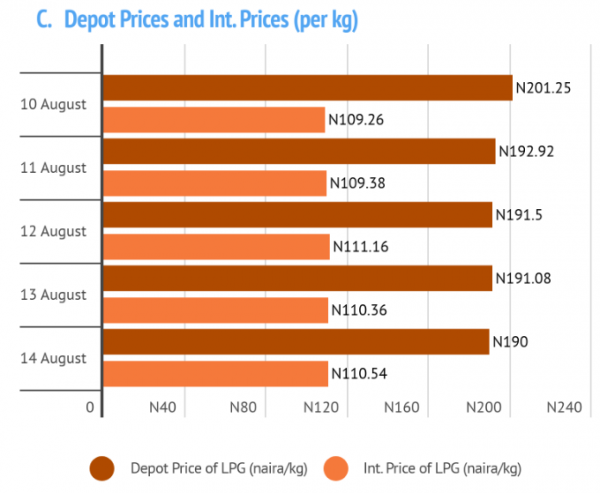
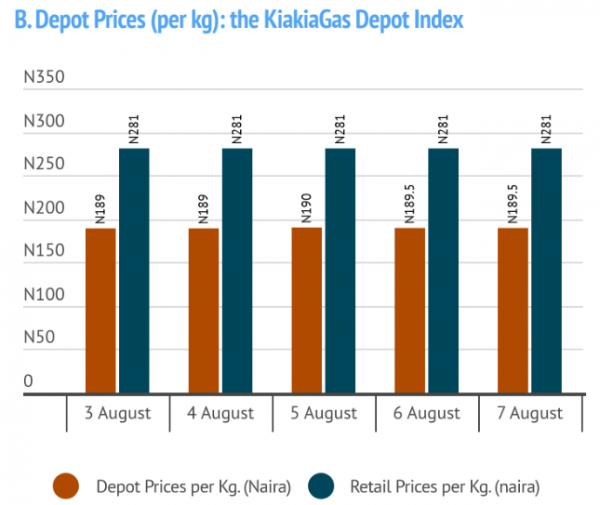
Taking a look at the Kiakia Gas Insider Report, one would see that cost of LPG at the depots in Nigeria grew from 3.7 million naira for 20 Metric Tons (MT) in September 2020 to over 5.35 million naira per 20 MT of the product in January 2021. There was a net rise between September 2020 and November 2020, but from November 2020, the price of LPG at the depot rose rapidly. In the space of three months, the cost of LPG from the depot increased by 1.5 times. And this cost is passed on to consumers such that a kilogram of LPG which cost 280 naira in November, and cost 350 naira in January, 2021. This is an experience common to LPG users due to the deregulation of the LPG industry i.e. the government does not fix the price of LPG, leaving it to rise and fall based on market forces.
In understanding why the price of LPG rose, we need to understand some factors that determine the cost of LPG in Nigeria. Firstly, we shall look at the source of LPG in Nigeria. Nigeria is a country blessed with oil and gas resources. There has been the recent realization that Nigeria is a “gas country”, which means we have considerably more natural gas reserves than crude oil reserves in Nigeria. Nigeria has the 8th largest natural gas reserves globally – but we should note that we do not produce much from our gas field. Most of the natural gas in Nigeria is derived from Associated Gas (i.e. Gas derived alongside crude oil during crude oil extraction from oil wells). To this end, Nigeria is not yet living up to her potential as a gas country.
LPG is a mixture of propane and butane, and these two gases are extracted when drilling for oil or natural gas. Therefore, LPG is a by-product of crude oil separation and distillation, as well as a product of natural gas processing. In Nigeria, most gas products – including LPG, from the upstream operations are channeled to the Nigeria Liquefied Natural Gas Limited (NLNG), which then sells the gas to its customers. The NLNG exports LPG and supplies local market operators. Here comes a challenge: the NLNG planned to allocate 350,000 MT of LPG to Nigeria in 2020, but Nigeria consumed over 1 million MT of LPG in 2020. This amount dwarves in comparison to what the country needs, hence Nigeria depends on foreign partners to supply her LPG. Simply put, although we produce LPG in Nigeria, most of the LPG used in Nigeria is imported.
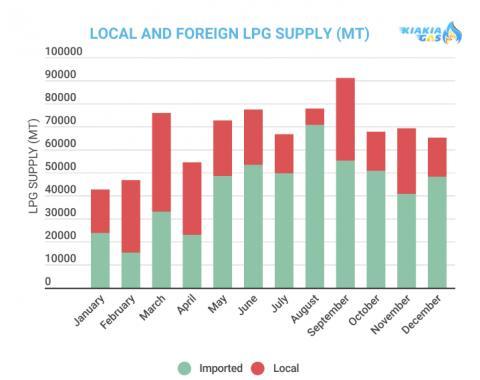
The figure above shows the source of LPG supplied to Nigeria in 2019. In 2019, 300,000 MT out of the 800,000 MT of LPG locally consumed was supplied locally (NLNG), while the rest was imported from various countries. This means that over 60% of the LPG used in Nigeria in 2019 was imported, placing our price dependence on our foreign suppliers. It should be noted that, from data available, just a little over 50% of LPG consumed in Nigeria in 2020 was supplied by foreign suppliers; thus showing a gradual reversal in our dependence on foreign suppliers for LPG.[O1] From this, we can deduce that the LPG price at the depots in Nigeria is still heavily influenced by the foreign markets. LPG in Nigeria is actually priced using the Mont Belvieu (Texas) LPG spot price. Mont Belvieu is a town in Texas, hosting the major LPG hub in North America.
It should be noted that in 2019, the United States of America supplied 70% of Nigeria’s imported LPG, giving credence to why our LPG prices are hinged to the Mont Belvieu price. Generally, being a hydrocarbon product, global LPG prices also follow the trend of global oil prices such that when the price of crude oil fell in March 2020 due to the lockdowns induced by the Covid-19 pandemic, the price of LPG also experienced decline. Considering this, one might have thought that as the price of crude oil was returning to its pre-covid value, the same would occur to the price increase of LPG. One might also consider the naira lost value against the dollar over the past few months, thereby increasing the naira value of pre-covid LPG price, but that was not the case. This line of thought proves false as the price of LPG quickly recovered from the decrease in March. Also, the value of the naira has been relatively steady in the past couple of months as well. This shows the cause of the high price increase would be found elsewhere.
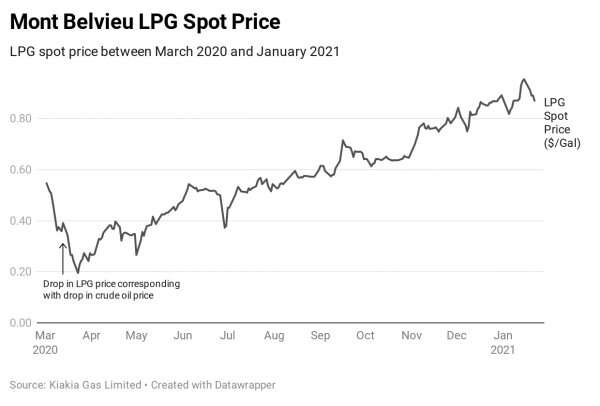
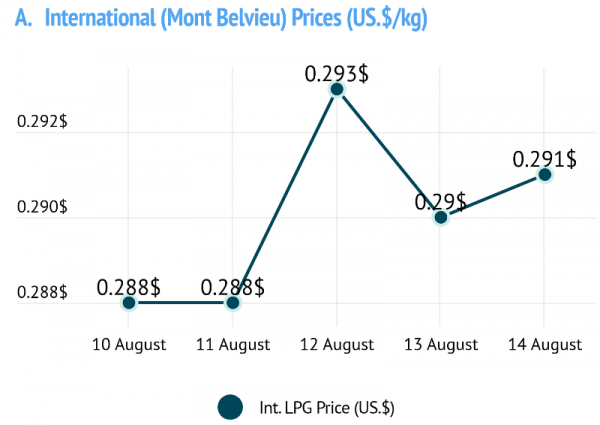
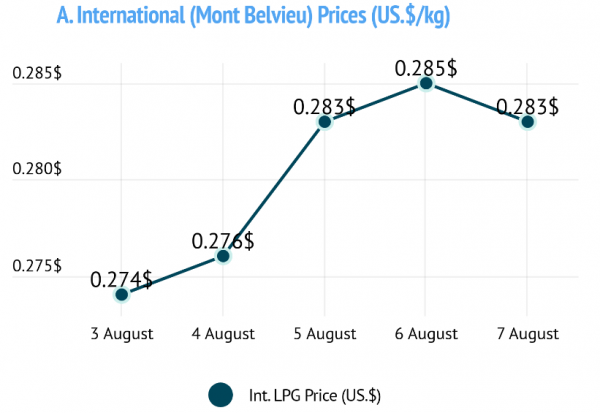
An examination of the journey of the Mont Belvieu LPG price shows that it has been steadily rising since through most of 2020, and was priced at $0.88/gallon on the third week of January. This translates to a value of 172 naira per kilogram of LPG. 4 months ago, it was 138 naira. This rise in price has translated to the spike in LPG prices which has been observed in Nigeria. It is clear that this spike in LPG price is from the source, not from local suppliers.
The reason Mont Belvieu prices have gone high is due to the increase in gas demand during the winter season. This price hike can be traced back to increase in demand due to winter. LPG is used as a heating fuel in a few homes (less than 10% of the United States (U.S.) population in 2011). This increase in demand has led to a price increase in the cost of LPG. While local U.S. demand has increased, export demand has increased as well, coupled with shipping challenges in the Panama Canal. Another aspect to consider is the relatively low LPG inventories in the United States. If the winter gets colder, then demand will increase, causing a further hike in the price. These factors explain why the cost of LPG has skyrocketed in this few months. It should also be noted that suppliers in the United States would supply local demand before meeting foreign demand, which is likely to cause intermittent lack of LPG at the Nigerian depots.
Going Forward
As mentioned at the beginning of this article, LPG operators and users have not been favorably disposed to the current rise in LPG prices and that has affected the quantity purchased by some households. We may not be able to control the trend of LPG spot prices at Mont Belvieu, but we can control the trend of LPG prices in Nigeria if we can get 100% of our LPG supply from local LPG suppliers e.g. NLNG, & Bonny River Terminal. This would require investment in oil and gas field with LPG supply as a major purpose, as well as investment in maritime/pipeline infrastructure to transport the necessary quantity to different locations within the country. The NLNG, for instance, would need to increase their supply allocation to Nigeria, as well as increase their delivery fleet (the NLNG currently has only one LPG cargo vessel). It is therefore pertinent that investments are directed to develop local upstream LPG infrastructure is developed to enable Nigerian households - most of which earn low-incomes, hence are price sensitive – use LPG without having to intermittently use dirty fuels because they can’t afford LPG in that period.
KiakiaGas Limited is a leading Gas business in Lagos,Nigeria with expertise in LPG retailing, New Gas Market development, Building of Gas Plants and Gas strategy advisory
If you need a partner with hands-on local expertise in the Nigerian Gas space or any of our bespoke solutions/services, write us at gaspreneur@kiakiagas.com or call/Whatsapp: +2348085269328