Influence of AfCFTA on Enhancing Oil and Gas Market in Africa

Submitted by kiakiagas on

The AfCFTA agreement, which commenced on January 1, 2021 was signed by 54 African Union member countries and envisages the establishment of a massive free-trade zone with the potential to generate an estimated US$3.2 trillion worth of inter-country trade across Africa. The African Union (AU) says that the AfCFTA will create the world’s largest free trade area estimating that its implementation will lead to around a 60% boost in intra-African trade by 2022. The vision and commitment of African leaders to the objectives and principles of economic cooperation, led them to create the African Continental Free Trade Area (AfCFTA) as an instrument for fostering African economic development. This commitment aims to ensure barrier-free trade in relation to gas and pipeline facilities which envisages the need to establish gas pipeline infrastructure for quick-access and easy transportation of gas from the well-endowed countries to the needy countries in the sub Saharan African countries. This increased demand will create a better job market as suppliers will need to build up their work force. Increased income then results in additional demand for consumer goods and services, thus persuading a complete round of economic stimulus.


The Oil and gas sector includes upstream, midstream and downstream. Upstream operations include searching and drilling of natural gas reserves or crude oil fields underwater and underground. Midstream operations includes oil and gas transportation, storage, and refining while downstream operations involve refining during the upstream process and the marketing and commercial distribution of natural gas, diesel oil, ethanol, petrol, lubricants, petroleum, jet fuel, asphalt, heating oil, liquefied petroleum gas (LPG) and a host of other types of petrochemicals.


Recently, there have been a series of major new gas discoveries across Africa in recent years. This includes a “significant” find off South Africa’s southern coastline earlier this year, along with new discoveries in Ghana, Nigeria and Senegal, to name but a few. In Eastern Africa, Mozambique and Tanzania are well advanced towards utilizing their natural gas reserves. In North Africa, it would appear that the latest gas discoveries in Egypt and the Eastern Mediterranean will soon be utilized to feed domestic growth. These developments could fit well with Africa’s push for industrial growth and its need for reliable electricity supply (constraining the expansion of more polluting fossil fuels). Much will depend on the price at which gas becomes available, the development of distribution networks, the financing available for infrastructure and the strength of policy efforts to displace polluting fuels.


Status of Oil and Gas in Africa before AfCFTA implementation


Just as Africa’s oil industry was recovering from the aftermath of the 2014 oil price crash, another global crisis cast a thick shadow over oil markets worldwide in 2019. The Covid-19 outbreak stalled business activity and shut down air travel globally, causing the International Energy Agency (IEA) to announce that demand would fall to its lowest rate in almost 10 years. The crisis has changed how oil producing countries across the African continent view their oil industries. Africa becomes a major player in natural gas as a producer, consumer and exporter. Gas demand in Africa doubles to 2040 in the Stated Policies Scenario. Countries like Algeria, Angola, Egypt, Libya and Nigeria who are endowed with crude oil for gas production can increase their trade volume and revenue as the world is switching to cleaner energy for commercial and domestic use. With the introduction and implementation of AfCFTA that seeks to ensure free trade in the continent, these countries will be able to trade without being subject to high tariff payments. AfCFTA is opening up Africa to African investors. The ability to transform Africa by making energy cheaper will be impressive. One main anticipated outcome of the deal, for example, is increase in industrial production, which will depend on the quality, sustainability and safety of energy sources at scale for industrial growth.


Major Oil & Gas Consuming Countries in Africa


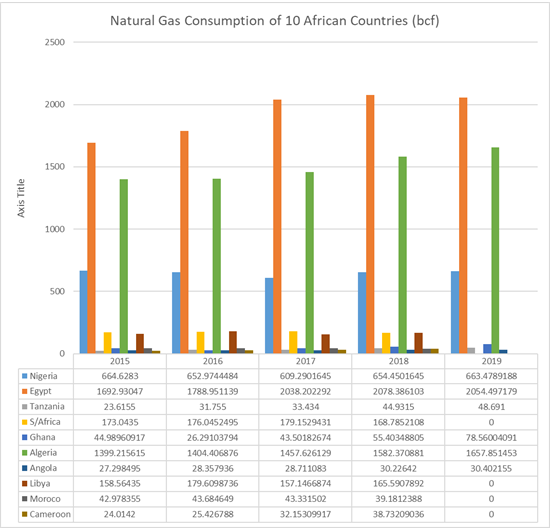
Prior to the inauguration and implementation of AfCFTA, African countries purchase their oil and gas from Singapore, Denmark, Switzerland, Maldives, South Africa and Nigeria while the largest consumer of crude petroleum in Africa include Egypt, Algeria and Nigeria (fig 1). On the other hand, the growth in Africa population is an advantage to boost Africa oil & gas sales. According to the Statista (2020) Nigeria has a population of 206. 1 Million, followed by Ethiopia (114.9 Million) Egypt (102.3 Million) Congo Republic (89.5 Million), Tanzania (59.7 Million) and South Africa (59.3 Million).


Figure 1: Natural Gas consumption of 10 African Countries (Bcf)
Source: EIA 2021


Benefit of the AfCFTA Oil and Gas Market


  • It would create the largest single market of about 1.2bn consumers of Oil and gas

This market is estimated to involve more than 1.2 billion consumer in Africa that consume oil and gas in one way or the other, domestic cooking, factory & home lighting and industrial fuel for the production of consumer products. AfCFTA oil and gas market will boost the sector workforce due to increase in human capital efficiency as a result of the incentives that will be created in the sector.


  • Increased Demand

Demand for natural gas in the region is expected to grow as population increases every year. According to the Africa Energy Outlook (2019), Africa’s population is among the fastest growing and youngest in the world. One-in-two people added to the world population between today and 2040 are set to be African, and the continent becomes the world’s most populous region by 2023, overtaking China and India. A regional approach to meeting the demand makes economic sense, if this approach to sales of oil and gas is adopted.


  • Could boost Africa’s economy to $29trn by 2050

Investors will be motivated to meet up with the increase in demand thereby causing inflow of capital from the Eastern and Western worlds to the African Continent. Large machines will be shipped in to produce large quantity of consumer product. The machineries need energy inform of oil and gas to run production. This will signal to the oil producing countries to increase their production capacity. More workers will be employed and new technology will be adopted to produce large volume of oil and gas at cheaper rate. As more goods and services are produced, the African GDP will be boosted and aim will be accomplished by 2050.


Conclusion

Influence of AfCFTA on enhancing Oil and Gas market in Africa has been examined and it is observed that Africa has the opportunity to create the largest market in the world for oil and gas than seen in many other parts of the world, or economic zones. Africa’s unique position as a major natural resource country makes this even more realizable. The AfCFTA is a tremendous opportunity to not only oil and gas market growth but also to create regional public goods, especially infrastructure, that will enable a prosperous and sustainable future for Africa oil and gas.


Nigeria's Liquefied Petroleum Gas Consumption and the Dependence on Foreign Markets

Submitted by kiakiagas on

The Nigerian LPG market has been experiencing steady increase for over a decade. Between 2007 and 2018, the Nigerian LPG market capacity was reported to have increased from 70,000 MT per annum to 600,000 MT per annum. The growth recorded was made possible through government policies, such as the deregulation of the market, and partnerships with the private sector. 


The Nigerian Liquefied Petroleum Gas Association (NLPGA) has set a new growth trajectory to increase the annual Nigerian LPG demand from 600,000 MT to 5,000,000 MT by 2029. This growth in demand must be met by an equal growth in supply. This begs the question of where the supply will originate from.


Figure 1. Source of LPG in Nigerian LPG Market

Source: PPPRA Energy Report, 2019.

Nigeria is a net exporter of LPG, with local LPG demand equalling about 23% of local LPG production.  Although Nigeria produces more than it consumes, it is dependent on foreign LPG. If this trend persists, then the growth in the Nigerian LPG market will be driven by imported LPG. It is therefore important to examine the effects of the current situation and determine whether it is sustainable based on 2019 events.


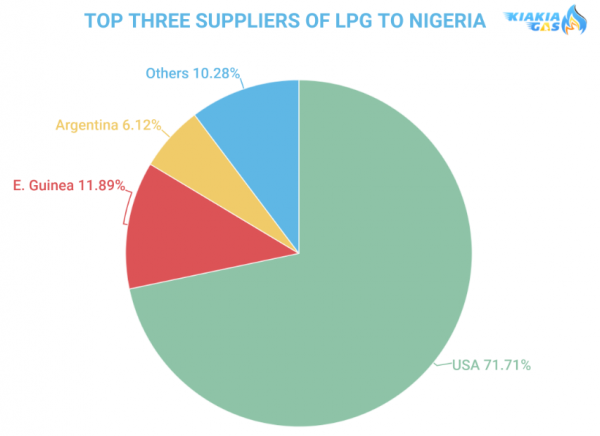
Figure 2. Top Three Suppliers of LPG into Nigeria

Source: PPPRA Energy Report, 2019


Nigeria’s Main Supplier Countries 

Out of the 500,000 MT of LPG that was imported into Nigeria in 2019, 300,000 MT came from the United States of America making 72% of total LPG imports. Equatorial Guinea came in second place, supplying 60,000 MT, which was 12% of total LPG imports. 


  1. The United States of America: the USA supplied 77% of the LPG consumed in Nigeria in 2019, making it Nigeria’s foremost gas supplier by an unmistakable margin. Globally, the US is the topmost producer of natural gas and 4th highest exporter of the same. The US has a bi-lateral trade relationship with Nigeria, which is a factor in trade volumes.


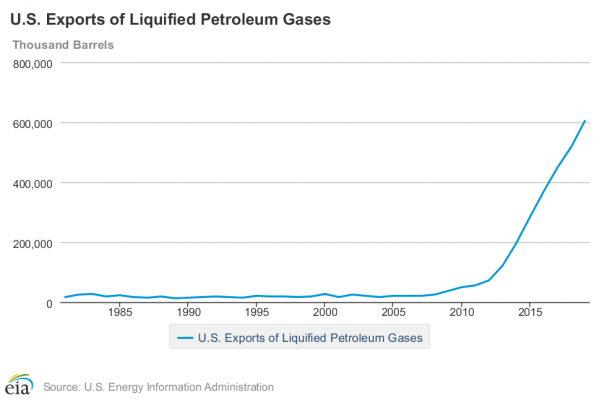
Currently, the US stands as the highest exporter of LPG, with an on-going infrastructural expansion to meet the growing global demand. The United States became a net exporter of LPG in 2012 due to the increase in the production of natural gas, and the shale oil and gas boom. Exports to Nigeria makes up a negligible 0.4% of the total amount of LPG exported from the USA. This falls back to the market size of the Nigerian LPG market. Nigeria is 10 times more populated than Netherlands, yet the Netherlands imported 1.7 million tonnes of LPG from the United States in 2019, which is more than two times the total consumption of LPG in Nigeria for the same year. 


Although the United States is the topmost exporter of LPG, it still imports LPG from a number of countries. This is probably because the quality (i.e. ratio of propane and butane) of LPG differs based in application, and a particular quality needed in the USA might not be produced in the USA. Most USA exports go to Japan while most of its imports come from Canada.


Although expansion plans have been paused due to the COVID-19 pandemic, plans will continue once the economy returns to normal, thereby increasing the US capacity to supply. Also, the trade war with China cause China to reduce LPG imports from US, and receive LPG from Saudi Arabia. These means, as the Nigerian LPG market demand increases, the United States will be able to meet the demand.


Figure 3. History of U.S. Exports of Liquefied Petroleum Gas


  1. Equatorial Guinea: Equatorial Guinea began producing LPG in 1997, using gas which would have been previously flared. By 2005, their LPG processing plant became modernized and increased in capacity (the storage capacity is now 85,000MT). The country has a population of 1.3 million people, limiting the demand capacity of the country. The local demand is low, and the government plans to increase the amount of LPG exported, using the revenue to develop their local LPG market infrastructure. 

Like Nigeria, Equatorial Guinea produces more LPG than it can consume, hence it is a net exporter of LPG. Equatorial Guinea exports to Cameroon, Ivory Coast, as well as the USA. While much information is not available on Equatorial Guinea’s LPG industry, it is clear that they have a plan to increase production to generate revenue. This will make LPG from Equatorial Guinea available to meet Nigeria’s growing demand.


  1. Argentina: Argentina is the 20th largest gas producer in the world. Argentina has the second largest shale gas reserves in the world and is investing in the oil and gas industry to increase production. This growth creates an expectation for more Argentinean gas available for supply. 


Local Production of LPG

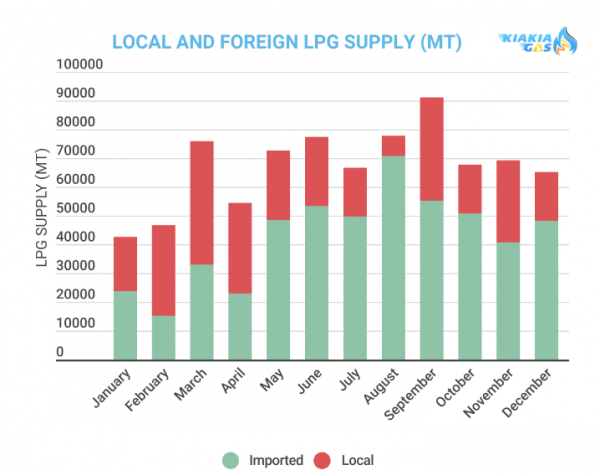
In 2019, Nigeria consumed about 800,000 MT of LPG, of which only 300,000 MT was locally sourced. The details show that for every 10 kg of LPG sold in Nigeria, 6 kg was imported. The dependence on foreign oil might seem to be due to lack of LPG availability on Nigeria’s/NLNG’s part, but that is not the case for the following reasons:

  1. in 2019, Nigeria produced 3 million MT per annum of LPG which far exceeds the current LPG consumption in Nigeria as stated above;

  2. Local supply from February to April 2019 exceeded supply from imports by 35,000 MT. Local supply was consecutively higher than foreign supply for each month.


The challenge with local supply is firstly infrastructural as the NLNG has only one ship used to meet local LPG demand. Due to the NLNG’s stunted capacity to meet demand, marketers need to import LPG from foreign suppliers. It should also be noted that the NLNG has signed a Sales and Purchase Agreement (SPA) with 15 local off-takers to sell 350,000 MT of LPG per annum to them. This agreement allocates only 350,000 MT of locally produced LPG to the local market, leaving 450,000 MT to be imported. This allocation leaves Nigeria import dependent.


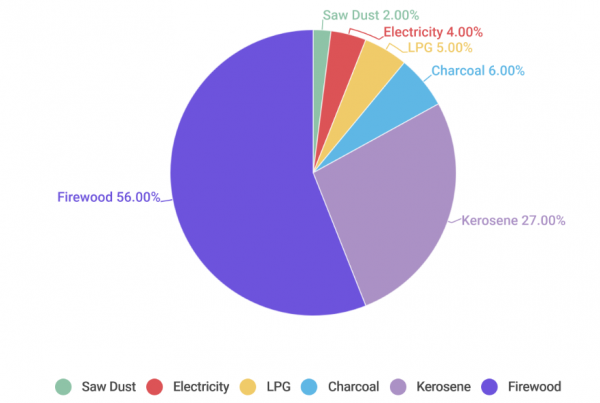
Taking cognisance of the risks attached with dependence on foreign LPG, action steps are needed to develop local production and supply capacity. The National Gas Policy revealed that only 5% of households in Nigeria used it by 2017, showing a large growth potential. Fire wood and kerosene are the most used cooking fuels in Nigeria, and while firewood is really inexpensive, kerosene has been made quite unattractive by the removal of the kerosene subsidy in 2016. About 90% of Nigerian households use the cheapest forms of cooking fuels available, It is therefore necessary to ensure LPG is affordable enough for these households.


Nigeria has the 8th largest natural gas reserves in the world, with 5.47 trillion MT of natural gas available. Local production and processing capacity can be increased comfortably to cater for local LPG demand, as well as provide revenue from the sale of other natural gas derivatives. There will also need to be investment in the maritime sector to increase the number of ships that transport LPG within Nigeria, in accordance with all necessary maritime regulations.


Figure 4. Nigerian Household Energy Mix

Source: National Gas Policy, 2017


Effect of Dependence on Foreign LPG Suppliers

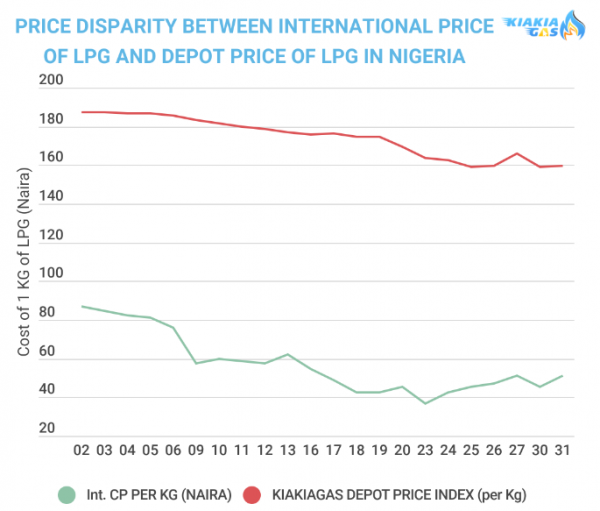
 The import of LPG increases the cost burden on the end-user. There exists a large price disparity between the cost of 1 kg of LPG in the international market (Mont Belvieu) and the cost of LPG at the Nigerian depot. This can be attributed to freight costs, and other levies. During the month of March, 2020, the average price difference between the local and international cost of 1 kg of LPG was 117 naira. The average retail price for March was 260 naira per kg, showing almost half of the cost of 1 kg of LPG will be removed if the LPG used in Nigeria was locally sourced. With 80 million Nigerians below the poverty line (measured by earning at most $2 a day), LPG will remain too expensive if it this price disparity lingers.


Figure 5. Price Disparity between Local and International LPG Market for 1kg of LPG

Source: KiakiaGas Index, 2020


The market is also dependent on the naira exchange rate against the US dollar. It is likely that the naira will continue to fall, thereby making products purchased in dollars more expensive. The naira was devalued in March but the effect was negligible on the Nigerian LPG market because of the global plummet of petroleum prices. All things being equal, a drop in the value of the naira will reduce the purchasing power of the Nigerian populace with regards to foreign sourced products. 


KiakiaGas Limited is a leading Gas business in Lagos,Nigeria with expertise in LPG retailing, New Gas Market development, Building of Gas Plants and Gas strategy advisory

If you need a partner with hands-on local expertise in the Nigerian Gas space or any of our bespoke solutions/services, write us at gaspreneur@kiakiagas.com or call/Whatsapp: +2348085269328


Subscribe to Market