Influence of AfCFTA on Enhancing Oil and Gas Market in Africa

Submitted by kiakiagas on

The AfCFTA agreement, which commenced on January 1, 2021 was signed by 54 African Union member countries and envisages the establishment of a massive free-trade zone with the potential to generate an estimated US$3.2 trillion worth of inter-country trade across Africa. The African Union (AU) says that the AfCFTA will create the world’s largest free trade area estimating that its implementation will lead to around a 60% boost in intra-African trade by 2022. The vision and commitment of African leaders to the objectives and principles of economic cooperation, led them to create the African Continental Free Trade Area (AfCFTA) as an instrument for fostering African economic development. This commitment aims to ensure barrier-free trade in relation to gas and pipeline facilities which envisages the need to establish gas pipeline infrastructure for quick-access and easy transportation of gas from the well-endowed countries to the needy countries in the sub Saharan African countries. This increased demand will create a better job market as suppliers will need to build up their work force. Increased income then results in additional demand for consumer goods and services, thus persuading a complete round of economic stimulus.


The Oil and gas sector includes upstream, midstream and downstream. Upstream operations include searching and drilling of natural gas reserves or crude oil fields underwater and underground. Midstream operations includes oil and gas transportation, storage, and refining while downstream operations involve refining during the upstream process and the marketing and commercial distribution of natural gas, diesel oil, ethanol, petrol, lubricants, petroleum, jet fuel, asphalt, heating oil, liquefied petroleum gas (LPG) and a host of other types of petrochemicals.


Recently, there have been a series of major new gas discoveries across Africa in recent years. This includes a “significant” find off South Africa’s southern coastline earlier this year, along with new discoveries in Ghana, Nigeria and Senegal, to name but a few. In Eastern Africa, Mozambique and Tanzania are well advanced towards utilizing their natural gas reserves. In North Africa, it would appear that the latest gas discoveries in Egypt and the Eastern Mediterranean will soon be utilized to feed domestic growth. These developments could fit well with Africa’s push for industrial growth and its need for reliable electricity supply (constraining the expansion of more polluting fossil fuels). Much will depend on the price at which gas becomes available, the development of distribution networks, the financing available for infrastructure and the strength of policy efforts to displace polluting fuels.


Status of Oil and Gas in Africa before AfCFTA implementation


Just as Africa’s oil industry was recovering from the aftermath of the 2014 oil price crash, another global crisis cast a thick shadow over oil markets worldwide in 2019. The Covid-19 outbreak stalled business activity and shut down air travel globally, causing the International Energy Agency (IEA) to announce that demand would fall to its lowest rate in almost 10 years. The crisis has changed how oil producing countries across the African continent view their oil industries. Africa becomes a major player in natural gas as a producer, consumer and exporter. Gas demand in Africa doubles to 2040 in the Stated Policies Scenario. Countries like Algeria, Angola, Egypt, Libya and Nigeria who are endowed with crude oil for gas production can increase their trade volume and revenue as the world is switching to cleaner energy for commercial and domestic use. With the introduction and implementation of AfCFTA that seeks to ensure free trade in the continent, these countries will be able to trade without being subject to high tariff payments. AfCFTA is opening up Africa to African investors. The ability to transform Africa by making energy cheaper will be impressive. One main anticipated outcome of the deal, for example, is increase in industrial production, which will depend on the quality, sustainability and safety of energy sources at scale for industrial growth.


Major Oil & Gas Consuming Countries in Africa


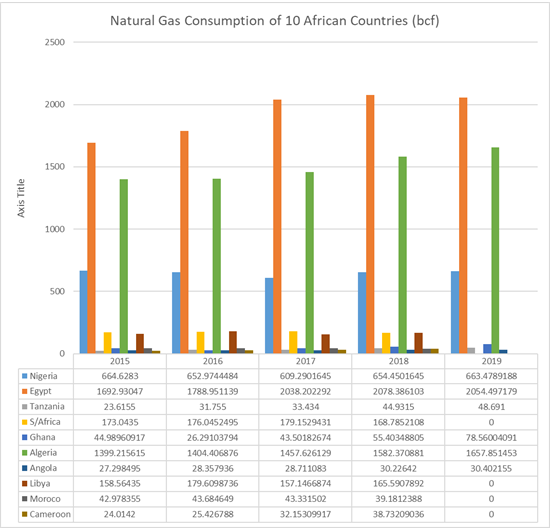
Prior to the inauguration and implementation of AfCFTA, African countries purchase their oil and gas from Singapore, Denmark, Switzerland, Maldives, South Africa and Nigeria while the largest consumer of crude petroleum in Africa include Egypt, Algeria and Nigeria (fig 1). On the other hand, the growth in Africa population is an advantage to boost Africa oil & gas sales. According to the Statista (2020) Nigeria has a population of 206. 1 Million, followed by Ethiopia (114.9 Million) Egypt (102.3 Million) Congo Republic (89.5 Million), Tanzania (59.7 Million) and South Africa (59.3 Million).


Figure 1: Natural Gas consumption of 10 African Countries (Bcf)
Source: EIA 2021


Benefit of the AfCFTA Oil and Gas Market


  • It would create the largest single market of about 1.2bn consumers of Oil and gas

This market is estimated to involve more than 1.2 billion consumer in Africa that consume oil and gas in one way or the other, domestic cooking, factory & home lighting and industrial fuel for the production of consumer products. AfCFTA oil and gas market will boost the sector workforce due to increase in human capital efficiency as a result of the incentives that will be created in the sector.


  • Increased Demand

Demand for natural gas in the region is expected to grow as population increases every year. According to the Africa Energy Outlook (2019), Africa’s population is among the fastest growing and youngest in the world. One-in-two people added to the world population between today and 2040 are set to be African, and the continent becomes the world’s most populous region by 2023, overtaking China and India. A regional approach to meeting the demand makes economic sense, if this approach to sales of oil and gas is adopted.


  • Could boost Africa’s economy to $29trn by 2050

Investors will be motivated to meet up with the increase in demand thereby causing inflow of capital from the Eastern and Western worlds to the African Continent. Large machines will be shipped in to produce large quantity of consumer product. The machineries need energy inform of oil and gas to run production. This will signal to the oil producing countries to increase their production capacity. More workers will be employed and new technology will be adopted to produce large volume of oil and gas at cheaper rate. As more goods and services are produced, the African GDP will be boosted and aim will be accomplished by 2050.


Conclusion

Influence of AfCFTA on enhancing Oil and Gas market in Africa has been examined and it is observed that Africa has the opportunity to create the largest market in the world for oil and gas than seen in many other parts of the world, or economic zones. Africa’s unique position as a major natural resource country makes this even more realizable. The AfCFTA is a tremendous opportunity to not only oil and gas market growth but also to create regional public goods, especially infrastructure, that will enable a prosperous and sustainable future for Africa oil and gas.


AfCFTA and its potential for oil and gas producing countries in Africa: The case of Nigeria, Angola, Algeria, Libya and Egypt

Submitted by kiakiagas on

Introduction


Africa is well endowed with minerals, including fossil fuels. The AfCFTA is the first step in implementing the 2063 AU Agenda: a vision for an Africa that is united, stable and peaceful. The African Continental Free Trade Agreement (AfCFTA) would encourage major extra investment in the oil and power industries of Africa. The AfCFTA envisages a single continent-wide market for products and services with free movement of individuals and investments. If successfully executed, an immense single market will be created by the AfCFTA, which today has 1.3 billion consumers. The AfCFTA seeks to increase intra-African trade by phasing out tariff and non-tariff barriers, improving competition and developing all the sectors of the economy including oil and gas sector in Africa.

The Oil and gas sector includes upstream, midstream and downstream. Upstream operations include searching and drilling of natural gas reserves or crude oil fields underwater and underground. Midstream operations includes oil and gas transportation, storage, and refining while downstream operations involve refining during the upstream process and the marketing and commercial distribution of natural gas, diesel oil, ethanol, petrol, lubricants, petroleum, jet fuel, asphalt, heating oil, liquefied petroleum gas (LPG) and a host of other types of petrochemicals.


Overview of the Top 5 Oil & Gas Producing Countries in Africa


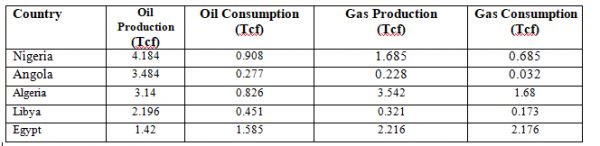
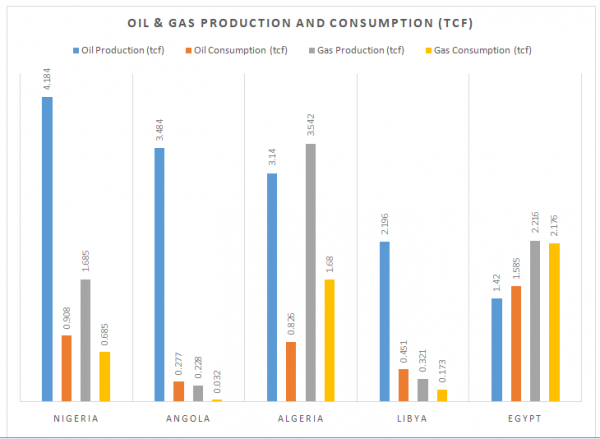
Nigeria is Africa's largest producer of oil. It holds the largest reserves of natural gas on the continent and was the world's fifth largest exporter of liquefied natural gas (LNG) in 2018. According to the Department of Petroleum Resources, Nigeria had an estimated of 203.16 trillion cubic feet (Tcf) of proven natural gas reserves by the end of 2020. Nigeria has the largest reserves of natural gas in Africa. Nigeria produced 1,685 Tcf of dry natural gas in 2019, according to the latest EIA estimates (Table 1). Nigeria exports natural gas mainly as LNG. Infrastructure and demand constraints are challenges for exports mainly by pipeline to neighboring countries.


Angola: Following Nigeria, Angola is the second-largest oil producer in Africa. The crude oil and natural gas sector accounted for about 30 percent of the country's gross domestic product (GDP), 95 percent of total exports, and about 52 percent of total fiscal revenue in 2017, according to the African Development Bank (AfDB). In 2017, around 1.55 million b/d of crude oil was exported by Angola, most of which went to the Asia-Pacific region. Angola holds an estimated 10.9 trillion cubic feet (Tcf) of proved natural gas reserves, produces 0.228 Tcf of dry natural gas in 2019 and consuming (Table 1)


Algeria: In the beginning of 2018, Algeria kept an estimated 12.2 billion barrels (b) of proved crude oil reserves. In 2017, Algeria produced an approximate average of 1.0 million b/d of crude oil and the output of other liquids averaged more than 1.6 million b/d. Algeria exported about 580,000 b/d of crude oil in 2017.France and the United Kingdom were the largest export destination countries by volume, importing 92,000 b/d and 82,000 b/d, respectively. According to the EIA, Algeria’s gross natural gas production was 3.542 Tcf in 2018. Algeria exported approximately 2.0 Tcf of natural gas in 2016, of which approximately 1.4 Tcf was transported via pipelines.


Egypt is Africa's largest non-OPEC oil producer and the third-largest producer of dry natural gas on the continent. As a result of rising domestic demand and decreasing output levels, Egypt became a net natural gas importer in 2015. Egypt has approximately 65.2 trillion cubic feet (Tcf) of proven natural gas reserves at the end of 2016, an improvement from the 2010 estimate of roughly 59 Tcf and the fourth largest in Africa.


Libya holds the largest proven reserves of crude oil in Africa, the fifth largest proven reserves of natural gas on the continent, and has been a significant contributor to the global supply of medium, sweet (low sulfur) crude oil in recent years, which Libya primarily exports to European markets. Typically, most of Libya’s crude oil is sold to European countries. In 2014, about 84% of Libya’s crude exports were sent to Europe. Libya’s dry natural gas production 0.321 trillion cubic feet (Tcf) in 2018while consuming a total volume of 0.173 Tcf.


Table 1: 2018 Oil & Gas Production and Consumption in Trillion Cubic feet (Tcf)

Source: EIA 2021


Figure 1: 2018 Oil & Gas Production and Consumption in Trillion Cubic feet (Tcf)

Source: EIA 2021


POTENTIAL OF AFCFTA FOR THE MAJOR OIL AND GAS PRODUCING COUNTRIES


Creating the largest single market of about 1.2 billion energy consumers: The establishment of the AfCFTA which has kicked off on 1st of January 2021 has the potential to open a booming market for the oil &gas producing countries in Africa. This market is estimated to involve more than 1.2 billion population in Africa who cannot do without consuming energy either for cooking, lighting and fuelling industries for the production of manufacturing products. Africa is also known as a continent that has major force work in the Agricultural sector. Providing energy to aid the large commercialization of farming, this will expand the oil and gas market to create more revenue for the oil producing countries. Households who are familiar with the use of dirty energy for cooking will be exposed and enlightened through the market established by the AfCFTA. This will increase the market demand of the LPG in the market.


Increase real wages for both skilled and unskilled workers in oil and gas sectors: Real wage is the quantity of goods and services that the amount paid to the workers in the oil and gas sector can buy at a given period of time. Expansion in the oil and gas market through AfCFTA will increase the revenue accrued to the sector. This will enable the sector to also motivate oil and gas workers by increasing the nominal wages and expand the real wages of the skilled and unskilled workers in the sector. Increase in capacity to buy more goods and services by the oil workers means that more money will be available for health care, feeding and shelter, payment of children school fees at ease and increased in saving. This will increase the standard of living of the workers and also increase the workers’ efficiency. Their morale to increase marginal product in the oil and gas sector as a result of additional wages they received will be boosted.


Increasing innovation and invention to boost oil and gas production, distribution and efficiency: The established market through the AfCFTA will result in the oil and gas producing countries in Africa to compete and divide the market share among themselves. The country that has advanced technology to deliver oil and gas with the fastest means of payment may gain larger market share. This will force other players in other countries to engage their skilled workers in research and development by devising faster way to transport large quantity of oil and gas to consumers in the market.


Conclusion

AfCFTA and its potential for oil and gas producing countries in Africa has been analysed. It is observed that with the production capacity of the countries producing oil and gas in Africa, they still export their oil and gas to the western and eastern part of the world. Such exporting volume could now be sold at AfCFTA market without spending more on transportation cost and at custom free duty. These countries will generate more revenue and more gas will be saved from flaring. However, with ever-increasing new oil and gas discoveries in Ghana, Tanzania, Mozambique and Uganda, for example and prospective fields in several countries like Sierra Leone, Mali, Kenya), the oil and gas sector still provides a unique opportunity that can be exploited.


Effects of COVID-19 Pandemic on AfCFTA and Oil & Gas in Africa.

Submitted by kiakiagas on

Introduction


The African Continental Free Trade Area (AfCFTA) agreement is made up of 54 African countries merging into a single market of 1.3 billion people. With the benefit of developing sustainable markets, this resource could create an economic bloc with a combined GDP of $3.4 trillion. Intra-African trade is projected to rise by 33 percent once in operation and Africa's overall trade deficit is expected to be halved. Furthermore, by 2030, the AfCFTA could generate $6.7 trillion in combined consumer and business spending. Trading is expected to begin on 1 January 2021 under the AfCFTA. Not only is AfCFTA a free trade agreement, it is a tool for the economic transition of Africa. It will promote the movement of individuals and labor, competition, investment and intellectual property through its different protocols. According to the World Bank, it is estimated that the AfCFTA could boost regional income by 7% or $450 billion, speed up wage growth for women, and lift 30 million people out of extreme poverty by 2035. This could be achieved through existing human and natural resources endowment in Africa, most especially the oil and gas resources that are channeled majorly to the western and eastern part of the world.


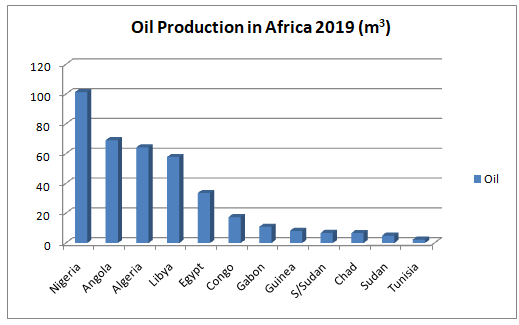
Africa has considerable oil and gas resources that can help accelerate growth on the continent if used strategically. The African continent is home to five of the world's top 30 oil producing countries. In 2019, it accounted for over 7.9 million barrels per day, which is about 9.6 percent of world production. This production level has fallen considerably from the peaks of 2005 to 2010, when African production amounted to almost 10 million barrels a day. While new resources are increasingly being found, they are not distributed equally; indeed, 38 African countries are currently net importers of oil. Since last year, Africa's share of global oil production has marginally increased by 0.3% to 8.7%, standing at 8.1 million bbl/d. Nigeria, Angola, Algeria, and Egypt continue to be significant contributors. In 2017, Libya doubled production, promoting it with an 11 percent share to the fourth largest oil producer in Africa, bringing Egypt into fifth place. At the end of 2017, Africa was estimated to have 487.8 tcf of proven gas reserves, unchanged at 7.1 percent of proven global reserves. Two major gas discoveries by Kosmos Energy added an additional 1.5 billion BOE of gas to their portfolio in the Senegal-Mauritania basin. According to Kosmos and joint venture partner BP, the Yakaar discovery, combined with the Teranga discovery in 2015, provides the basis for another LNG center in the basin. Most of the big oil production declines between 2010 and 2015 are attributed to lower global oil prices. Production between 2015 and 2019 has stabilized. However, the pandemic of the Corona virus and a production dispute between Saudi Arabia and Russia drastically lowered oil prices in early 2020. As a consequence, as of June, potential oil output trends in Africa and around the world were highly uncertain.


Source: Statista 2021


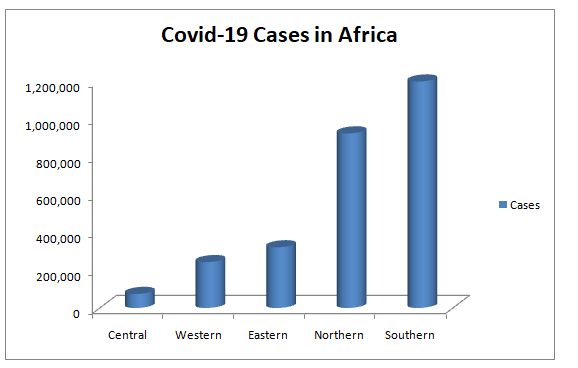
The Corona Virus Disease 2019 (COVID-19) is a communicable respiratory disease caused by a new strain of COVID-19 that causes illness in humans. Scientists are still learning about the disease, and believe that in animals, the virus originated. The disease spreads by contaminated air droplets, which are projected during sneezing or coughing, from individual to individual. It may also be transmitted when humans come into contact with hands or surfaces containing the virus, and when infected hands touch their eyes, nose, or mouth. In China, COVID-19 was first published, but it has now spread worldwide and Africa is no exception.


The novel COVID-19 strains the health systems, education, aviation, culture, commerce, and general livelihoods of Africa as well as the public and private sectors of the continent in the midst of lockdowns, stifling income streams. The International Monetary Fund has revised the continent's GDP growth projection from 5.1% before the pandemic to -1.6%. Similarly, from 2.4% in 2019 to between -2.1% and -5.1% in 2020, the World Bank has projected a similar decrease. Compared to other countries, on the one hand, mortality from the pandemic has been very low, but the economic impact would be immense. These reports signal the region's first recession in the past 25 years. In times of an unprecedented health crisis, policymakers need a stimulus package as well as trade instruments, such as the AfCFTA deal, to boost economic recovery. The benefits of liberalized trade would be granted to African countries. It can serve as an alternative stimulus package for job creation, foreign exchange, industrial development and economic growth to improve intra-African trade.


Many factories in Africa have changed production because of global shortages and have revamped to produce basic protective equipment. In Ghana, one of the largest liquor manufacturing firms shifted production to manufacturing hand sanitizer, while in Kenya, in a country that barely manufactured any before the pandemic, a factory retooled to manufacture 30,000 surgical masks a day. Similarly, the Hawassa Industrial Park started the manufacture of face masks in Ethiopia to ease the rising demand due to the pandemic. In addition, their governments also encouraged factories in Morocco, Rwanda, South Africa and several others on the continent to manufacture protective equipment to prevent the virus. In South Africa where U-Mask has redirected its production from protective masks for mining and agriculture to that for medical respiratory masks, and Nigeria where the National Agency for Science and Engineering Infrastructure produced made in Nigeria ventilators.


Source: AfricaCDC 2021


COVID-19 IMPACTS on Oil and Gas in Africa


In 2019, the African economy was set to expand at approximately 3.4 percent and is projected to rise to 3.9 percent in 2020, but COVID-19 had a very negative effect due to a major oil price crash. Given the global disruption of the supply chains in the major global trading countries, trade in the oil and gas sector has been especially affected. The deep reorganization of global supply chains has impacted African oil and gas operators. The Covid-19 crisis has revealed that global value chains centralized in a single area do not represent an ideal investment for governments in terms of protection, as well as risk for oil and gas companies.


Africa is also more vulnerable to the impact of Covid-19 because as more countries in Africa lock down their economies and apply movement controls, oil and gas demand was disrupted. Consumers of gas at home quickly switch to the alternative energy for cooking. They replace the liquefied petroleum gas (LPG) for firewood which is not far-fetched from their environment. This resulted into low demand and reduction in oil and gas revenue in Africa.


Conclusion


Africa's economic activities, especially the oil producing nations that export their oil and gas to developed countries, were disrupted by the Covid-19 crisis. But it also gives African countries an opportunity to fix them. For instance, by concentrating on goods of greatest need during the health crisis, they might accelerate intra-regional trade. In order to advance industrialization, develop infrastructure and enhance good governance, countries should also start building regional value chains. The acceleration of the AfCFTA is expected to be very significant in the long term for the reconfiguration of oil and gas supply chains, the establishment of regional value chains and the boosting of the production of critical value-added goods. Given this ability, the AfCFTA is being marketed as Africa's stimulus package to counter the devastating effect on African economies of the COVID-19 pandemic.

UNDERSTANDING PRESENT AND POSSIBLE FUTURE DIMENSIONS OF THE MARKET FOR NATURAL GAS AS A TRANSPORT FUEL GLOBALLY AND IN KEY REGIONAL/NATIONAL MARKETS

Submitted by kiakiagas on

Introduction

Since the invention of the internal combustion engine in the 1800’s, the word transportation has been synonymous with one thing - “Oil”. Without it, modern transportation as we know it would not be possible, sectors such as aviation, aerospace, automobiles, shipping needless to say would look nothing like they do today. However with the looming environmental/energy crisis coupled with an ever increasing population size, several voices have been clamouring for a redefinition of the transport sector by seeking for alternative fuel sources.

Why Natural Gas

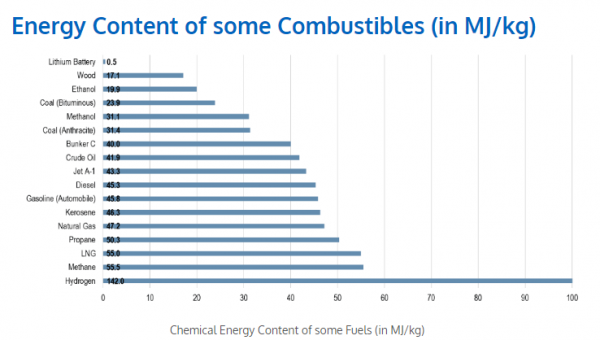
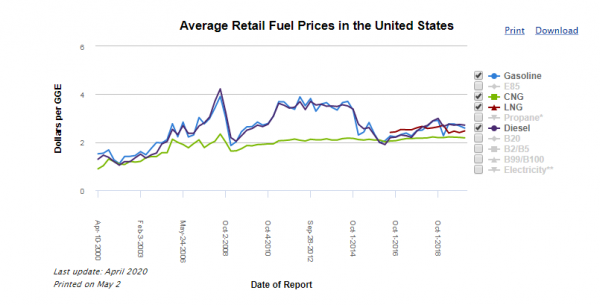
Even though natural gas is considered a fossil fuel it’s currently the cleanest fuel and most environmentally friendly fuel present today. Research shows that combustion of Liquefied Natural Gas (LNG) releases 6% to 11% CO2 less emissions than petroleum, 50% less than coal, and 20% less than diesel and while the price varies from region to region the general consensus is that natural gas is cheaper and delivers more energy per weight compared to other fossil fuels. Commercially available forms of natural gas include CNG(compressed natural gas) which is obtained by subjecting natural gas to extreme pressures of up to 3,600 psi, LNG(liquefied natural gas ) obtained by reducing the temperature to very low temperature of up to -1600c or -220 F, each with its own benefits and modes of storage. Compressed Natural Gas is the cheaper of the two fuels but occupies more space and weight than LNG..It is important to note that globally world consumption of natural gas is projected to more than doubles, from about 12 Trillion Cubic Feet in 2012 to 29 Trillion Cubic Feet in 2040 according to the US Energy Information Administration International Energy Outlook 2016 report. We now look at transportation fuelled by natural gas in different dimensions. 

Energy Content of some combustibles (in MJ/Kg)


In Private road vehicles

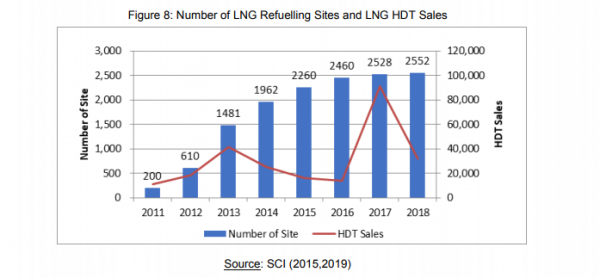
These refer to vehicles owned by individuals and are predominantly powered by Internal combustion engines (ICE’s) mostly using petrol or diesel. While recently the use of Electric and hybrid powered vehicles have recently been on the increase, the primary competitor remains petrol engines. Although Gas powered engines are also ICEs and operate the same way, the challenge lies in the cost of adapting existing vehicles to consume CNG or LNG which requires special storage. In the case of LNG the tank would have to provide the very low temperatures required and with CNG maintain and preserve pressure, the size, weight and complexity of the required tanks means additional overall costs to the consumer, bearing in mind that the primary objective for private owner is to maximise available space while minimizing cost. In addition strict safety regulations make the designing, use and even research costs further increase. Furthermore private vehicular use would require large investments in terminal and fuelling infrastructure such as LCNG (Liquefied & compressed natural gas) refuel stations which would also need underling supplychain infrastructure to be built which further increases the cost of adoption. Some countries such as In Italy due to its wide pipeline distribution has about 780,000 natural gas vehicles (According to a 2013 research paper “LNG as vehicle fuel and the problem of supply: The Italian case study”) of which less private car ownership is virtually non-existent, about 860 refuelling stations which accounts for 30% of European natural gas refuelling stations, this show that for private users adoption may not be impossible but perhaps not viable in the short term for countrieswithout the underlining infrastructure. In Heavy Road Vehicles These refer to large land vehicles such as public busses, trucks and even construction vehicles such as cranes ,Trucks, Compactors etc. which primarily run on diesel which produces more energy, mileage overall efficiency. For these category of vehicles, natural gas is a more viable option as space and weight constraints are reduced and negligible, and the reduced number of refuel stops makes natural gas a betteroption. But most importantly is the fuel saving advantage which according to the Shanghai 2019 LNG conference was $18,154 per 100000 Km for heavyduty trucks compared to diesel and $13,800 according to a 2019 Croatian study. However adoption heavily requires Government regulation and incentives, such as in china where 6.72 million metric tonnes of LNG in 2018 was consumed by the transport sector amounting to 25% of total LNG consumption. As of 2018 in China there were 343,933 LNG vehicles of which 236,265 are LNG Heavy duty trucks and the remaining107,668 where LNG buses and coaches with about 2552 LNG refuelling stations across the country, compared to Europe, where there are only4650 LNG trucks in Europe and 153 LNG refuelling stations by September 2018. This was possible due to policies such as deregulation ofthe LNG markets, massive investment in infrastructure and environmental friendly regulations such as the Three-Year Action Plan for Blue Sky issued in 2018.   In Aviation As the world becomes more and more a global village more and more attention is being paid to the fastest means of transportationAir travel. This has contributed to about 2.5% of total greenhouse gas emissions worldwide as the IATA World Air Transport Statistics (2019 WATS)confirms that 4.4 billion passengers flew in 2018 and a 10% increase in 2019 with about 61.2 million tons of cargo being moved by air.Air planes are usually fuelled by mixtures of Kerosene which are referred to as Jet fuel with major research efforts to replace this with alternate fuels such as Biofuels, Electric energy and even Natural Gas. Historically LNG has been used in the Soviet Union as far back as 1988 by theTu-155 but was discontinued after the fall of the Union, today however the challenge for commercial flights lies in the space and weight of thestorage tank as well as the low temperature requirement. Air plane fuel already occupies about 20-25% of the take-off weight and increases based on the distance to be flown, advances in technology such as super conductors and material science has convinced several parties that natural gas couldbe the next Jet fuel. For instance Boeing announced in 2012 a program to develop planes fuelled by cryogenically frozen LNG and an AIR-LNG project was sponsored by Air Bus and the German Government. In Rail transport Due to the lower costs and emissions of natural gas several countries are working to provide gas powered trains, with estimates of 20-40% reduction in fuel costs and carbon emissions in comparison with diesel engines. Proponents of LNG technology argue that gas powered locomotives eliminate harmful emissions, greatly improve air quality, while the benefits of electric trains greatly depends on the sourceoftheir generated energy which they argue is not always as green. The Florida East Coast Railway (FECR) introduced its first LNG-powered locomotive in 2015 and had converted all 24 of its locomotives to dual fuel fuelled engines by 2017. In Europe, a consortium of European companies commissioned an LNG project to develop LNG-fuelled cargo vessels and locomotives, with The European Commission providing €16.5mn of the €33mn total project costs. Similarly, the Indian Railway Corporation has also announced plans to develop its own gas- powered locomotives and even Russia has signed a contract to deploy 24 LNG fuelled trains by 2024 and plans to start operations by 2022. In Shipping Maritime transport forms the main axis of international exchange, carrying ~90% of total traded tonnage globally with an estimated trade volume of over 10 billion tons. However according to the international Maritime Organisation this industry also accounts for nearly 33% of all traderelated emissions from fossil fuel combustion, and 2%- 3% of global greenhouse emissions which is predicted to increase up to 17% with continued increase in global trade via maritime transportation if left unchecked. Sea vessels use several fuel types which include mostly diesel, LNG (predominantly preferred over CNG due to higher energy per volume densities of LNG over CNG), Hydrogen fuel, Electric powered ships and even Nuclear energy. LNG fuel engines have been in use for many years according to the International Gas Union as at 2005 there were a total of 203 LNG fuelled ships in operation by 2018 there were 525. One reason for this is that the marine industry is uniquely positioned to be easily fuelled at port with the use of LNG bunkering at seaports, where LNG is provided to the ships for its own use and consumption, Currently LNG fuel bunkering is available at seven EU sea ports and several ports in Norway, Singapore, China and other Countries. Another major driver is Government policy and regulations such as the EU Funding Support (Regulation No 1315/2013) that Specifies that LNG projects are eligible for funding from the Connection Europe Facility (CEF) Fund with 17 sources to co-fund LNG infrastructure development in the EU. Another policy is the Alternative Fuels Directive (Directive 2014/94/EU) which includes creating a network of LNG fuelling points in major ports to facilitate LNG bunkering in Coastal ports by end of 2025 and Inland ports by 2030.Japan with its extensive infrastructure for LNG is positioning the Port of Yokohama as a model for developing LNG bunkering capabilities and is also coordinating its activities with Singapore which is one of the main global bunkering hubs, and the second largest container port in the world.        Growth Outlook and Prospects for Africa So what does this all mean for Africa, well Africa was thought to house about 7% of global reserves from the top four countries namely Libya, Egypt, Nigeria and Algeria, however recent discoveries of gas deposits in Mozambique, Tanzania, Senegal and Mauritania have revealed a total of 200 Tcf of gas reserves, enough to meet close to 70% of global demand for the next two decades. According to the African Energy Outlook 2020 report, there are currently nine oil projects under construction across the region with an investment total of $60.4 billion and in light of the recent discoveries, the East African countries could see $60 billion worth of investments. However it’s important to note that as far as consumption is concerned the figures aren’t encouraging while Sub Saharan Africa supplied 12% of global LNG production in 2018(over 250 Million Tons) approximately 70% of African Consumption was accounted for by Egypt and Algeria alone. According to the International Gas Union 2019 Report, no African Country is currently investing in Natural Gas as fuel for Heavy duty vehicles. The focus lies rather on increasing production, processing and bunkering facilities such as the Seventh Train expansion project at the Nigerian LNG facility in Bonny Island to increase production from 22 million tonnes per annum (Mtpa) to 30Mtpa per annum last year December and the planned $20 billion Natural gas liquefaction and export terminal in Anadarko Mozambique, the largest single LNG project ever sanctioned in Africa. On the marine scene however bunkering stations for LNG vessels are being built for instance in South Africa, LNG bunkering services have been licensed to begin in the Algoa bay this year by an 8,000 tonne LNG bunker barge, the largest built African vessel by weight. Egypt Also seeks to start LPG bunkering at the Damietta port but was halted due to complications legal and domestic issues. The path to LNG use for transportation on the African Continent is long but not impossible. The first hurdle being, how to increase the underlining local production and processing infrastructure something all governments are striving to do with plans such as Nigerian Gas Policy of 2017 developed by the Ministry of petroleum resources or Egypt’s Sustainable Development Strategy (SDS) Vision 2030 with regulations like a policy where no more than a third of the national gas reserves can be exported at any time to ensure domestic demands are met.   Conclusion That Natural Gas is a visible alternative transport fuel across board isn’t in doubt. However it is not a viable option in every sphere. Scientific evidence shows that the bigger the vehicle the more viable it becomes. For personal vehicles it remains a Niche market and for aviation mostly a theoretical one at this point. However for Heavy road and Marine vehicles, Natural Gas has been established as a dominant option for fuel and is rapidly growing especially in the EU, Americas and Asian markets such as China and little patronage from African Countries such as South Africa and Egypt. It is interesting to note that the more natural gas is made available the faster the rate of adoption as seen in china, Simply put as more investments are made in supply the rational choice is adoption for safer, cheaper and greener transportation.     Thank you.


The Nigerian LPG Market is the next success story of the Global LPG industry, if you need a partner with a global perspective and local expertise in the Nigerian and African space, kindly book for a free session with our team of experts to help you http://www.kiakiagas.com/book-session Or write us an email at advisory@kiakiagas.com or Whatsapp: +4915210247560, +2348085269328

KiakiaGas Daily LPG (Cooking Gas) Depot Price Index

Submitted by kiakiagas on

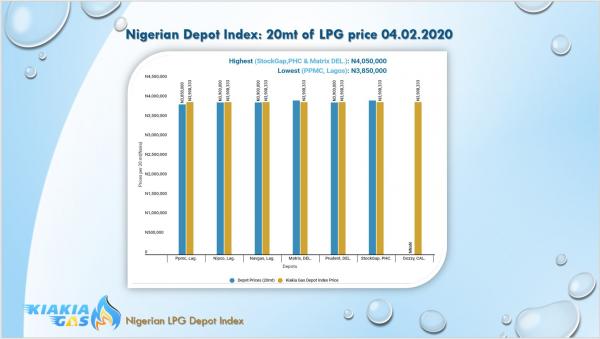
This data offers insights into price of LPG (cooking gas) at the Bulk storage level benchamarked to the kiakiagas depot index. 


This daily updates offers real time information about the price of LPG across all the terminals in Nigeria. The prices are stated in volumes of 20mt. The insights offers unique advantage to Gas business owners and managers to know the price of Gas in real time.


You can also contact us at data@kiakiagas.com or write on whatsapp/call +2348085269328 for more information or additional options about historical market data..

KiakiaGas Daily LPG (Cooking Gas) Price Index

Submitted by kiakiagas on

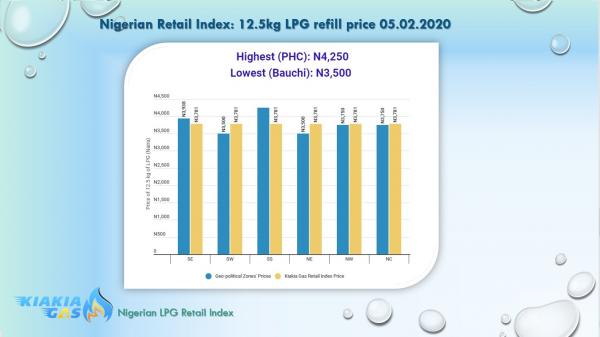
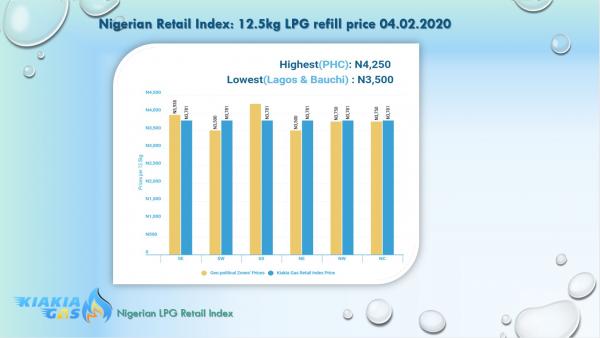
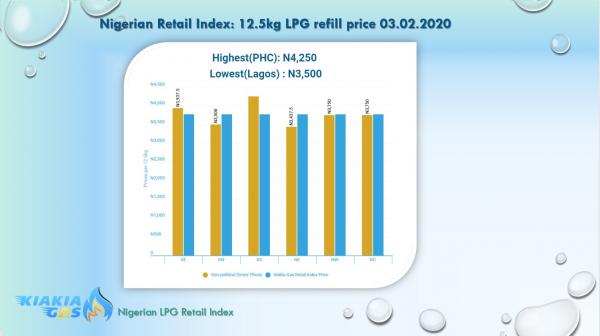
This data offers insights into price of LPG (cooking gas) from the six (6) geo-political zones in Nigeria benchamarked to the kiakiagas retail index. 


This daily updates offers real time information about the price of LPG across the biggest markets across the 6 zones in Nigeria. The prices are stated in 12.5kg retail cylinders.

The insights offers unique advantage to Gas business owners and managers to know the price of LPG (Cooking Gas) in real time.


You can also contact us at data@kiakiagas.com or write on whatsapp/call +2348085269328 for more information or additional options about historical market data..

Subscribe to Africa