Effects of COVID-19 Pandemic on AfCFTA and Oil & Gas in Africa.

Submitted by kiakiagas on

Introduction


The African Continental Free Trade Area (AfCFTA) agreement is made up of 54 African countries merging into a single market of 1.3 billion people. With the benefit of developing sustainable markets, this resource could create an economic bloc with a combined GDP of $3.4 trillion. Intra-African trade is projected to rise by 33 percent once in operation and Africa's overall trade deficit is expected to be halved. Furthermore, by 2030, the AfCFTA could generate $6.7 trillion in combined consumer and business spending. Trading is expected to begin on 1 January 2021 under the AfCFTA. Not only is AfCFTA a free trade agreement, it is a tool for the economic transition of Africa. It will promote the movement of individuals and labor, competition, investment and intellectual property through its different protocols. According to the World Bank, it is estimated that the AfCFTA could boost regional income by 7% or $450 billion, speed up wage growth for women, and lift 30 million people out of extreme poverty by 2035. This could be achieved through existing human and natural resources endowment in Africa, most especially the oil and gas resources that are channeled majorly to the western and eastern part of the world.


Africa has considerable oil and gas resources that can help accelerate growth on the continent if used strategically. The African continent is home to five of the world's top 30 oil producing countries. In 2019, it accounted for over 7.9 million barrels per day, which is about 9.6 percent of world production. This production level has fallen considerably from the peaks of 2005 to 2010, when African production amounted to almost 10 million barrels a day. While new resources are increasingly being found, they are not distributed equally; indeed, 38 African countries are currently net importers of oil. Since last year, Africa's share of global oil production has marginally increased by 0.3% to 8.7%, standing at 8.1 million bbl/d. Nigeria, Angola, Algeria, and Egypt continue to be significant contributors. In 2017, Libya doubled production, promoting it with an 11 percent share to the fourth largest oil producer in Africa, bringing Egypt into fifth place. At the end of 2017, Africa was estimated to have 487.8 tcf of proven gas reserves, unchanged at 7.1 percent of proven global reserves. Two major gas discoveries by Kosmos Energy added an additional 1.5 billion BOE of gas to their portfolio in the Senegal-Mauritania basin. According to Kosmos and joint venture partner BP, the Yakaar discovery, combined with the Teranga discovery in 2015, provides the basis for another LNG center in the basin. Most of the big oil production declines between 2010 and 2015 are attributed to lower global oil prices. Production between 2015 and 2019 has stabilized. However, the pandemic of the Corona virus and a production dispute between Saudi Arabia and Russia drastically lowered oil prices in early 2020. As a consequence, as of June, potential oil output trends in Africa and around the world were highly uncertain.
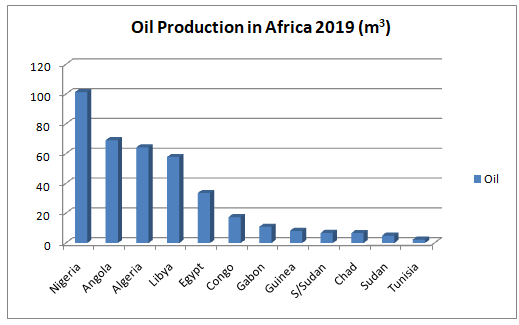
 

Source: Statista 2021


The Corona Virus Disease 2019 (COVID-19) is a communicable respiratory disease caused by a new strain of COVID-19 that causes illness in humans. Scientists are still learning about the disease, and believe that in animals, the virus originated. The disease spreads by contaminated air droplets, which are projected during sneezing or coughing, from individual to individual. It may also be transmitted when humans come into contact with hands or surfaces containing the virus, and when infected hands touch their eyes, nose, or mouth. In China, COVID-19 was first published, but it has now spread worldwide and Africa is no exception.


The novel COVID-19 strains the health systems, education, aviation, culture, commerce, and general livelihoods of Africa as well as the public and private sectors of the continent in the midst of lockdowns, stifling income streams. The International Monetary Fund has revised the continent's GDP growth projection from 5.1% before the pandemic to -1.6%. Similarly, from 2.4% in 2019 to between -2.1% and -5.1% in 2020, the World Bank has projected a similar decrease. Compared to other countries, on the one hand, mortality from the pandemic has been very low, but the economic impact would be immense. These reports signal the region's first recession in the past 25 years. In times of an unprecedented health crisis, policymakers need a stimulus package as well as trade instruments, such as the AfCFTA deal, to boost economic recovery. The benefits of liberalized trade would be granted to African countries. It can serve as an alternative stimulus package for job creation, foreign exchange, industrial development and economic growth to improve intra-African trade.


Many factories in Africa have changed production because of global shortages and have revamped to produce basic protective equipment. In Ghana, one of the largest liquor manufacturing firms shifted production to manufacturing hand sanitizer, while in Kenya, in a country that barely manufactured any before the pandemic, a factory retooled to manufacture 30,000 surgical masks a day. Similarly, the Hawassa Industrial Park started the manufacture of face masks in Ethiopia to ease the rising demand due to the pandemic. In addition, their governments also encouraged factories in Morocco, Rwanda, South Africa and several others on the continent to manufacture protective equipment to prevent the virus. In South Africa where U-Mask has redirected its production from protective masks for mining and agriculture to that for medical respiratory masks, and Nigeria where the National Agency for Science and Engineering Infrastructure produced made in Nigeria ventilators.
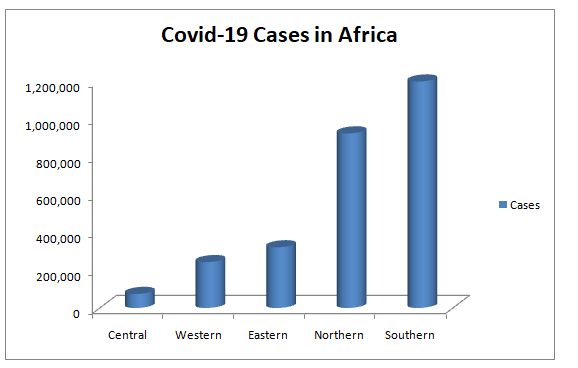
 

Source: AfricaCDC 2021


COVID-19 IMPACTS on Oil and Gas in Africa


In 2019, the African economy was set to expand at approximately 3.4 percent and is projected to rise to 3.9 percent in 2020, but COVID-19 had a very negative effect due to a major oil price crash. Given the global disruption of the supply chains in the major global trading countries, trade in the oil and gas sector has been especially affected. The deep reorganization of global supply chains has impacted African oil and gas operators. The Covid-19 crisis has revealed that global value chains centralized in a single area do not represent an ideal investment for governments in terms of protection, as well as risk for oil and gas companies.


Africa is also more vulnerable to the impact of Covid-19 because as more countries in Africa lock down their economies and apply movement controls, oil and gas demand was disrupted. Consumers of gas at home quickly switch to the alternative energy for cooking. They replace the liquefied petroleum gas (LPG) for firewood which is not far-fetched from their environment. This resulted into low demand and reduction in oil and gas revenue in Africa.


Conclusion


Africa's economic activities, especially the oil producing nations that export their oil and gas to developed countries, were disrupted by the Covid-19 crisis. But it also gives African countries an opportunity to fix them. For instance, by concentrating on goods of greatest need during the health crisis, they might accelerate intra-regional trade. In order to advance industrialization, develop infrastructure and enhance good governance, countries should also start building regional value chains. The acceleration of the AfCFTA is expected to be very significant in the long term for the reconfiguration of oil and gas supply chains, the establishment of regional value chains and the boosting of the production of critical value-added goods. Given this ability, the AfCFTA is being marketed as Africa's stimulus package to counter the devastating effect on African economies of the COVID-19 pandemic.

WEEKLY LPG INSIDER REPORT

Submitted by kiakiagas on


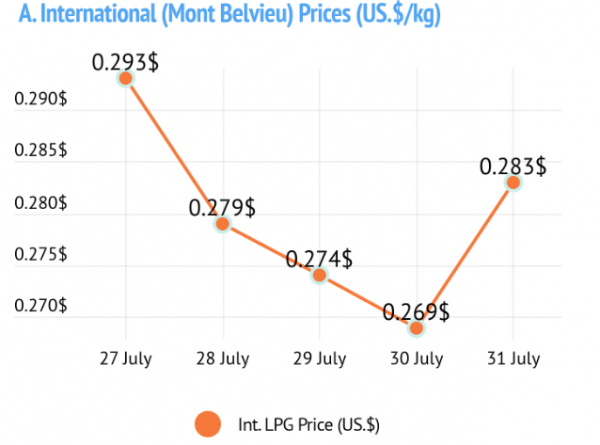
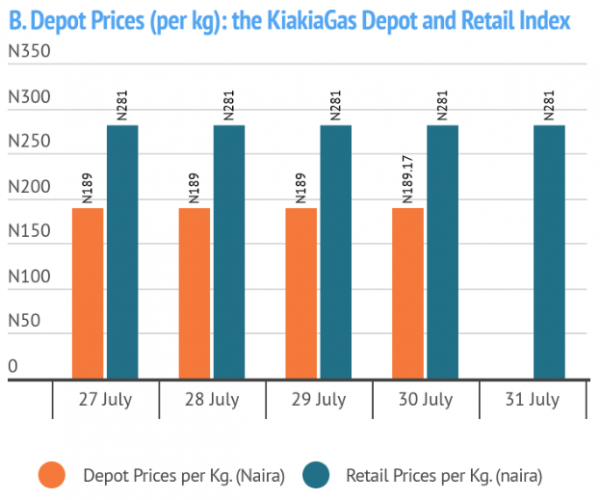
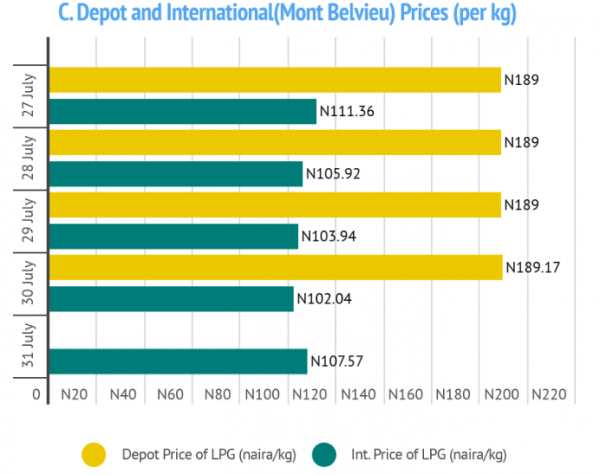
Prices are beginning to rise in the international market and has remained stable in the domestic market for LPG in the immediately preceding week


  • Prices of LPG in the international market fell for the most part of the week under review. Prices only began to rise towards the of the week.
  • Week-on-week differences in the price of LPG at the depot level have not changed much in the week under review.
  • The difference between prices per kg of LPG at the depots in Nigeria and prices at the international market are becoming narrower compared to several weeks ago.
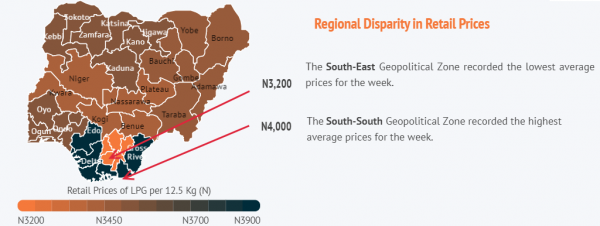
  • Regional disparities in the retail prices of LPG within the country continue to persist.


Regional disparity in the prices of LPG across the country has been a regular feature of the Nigerian LPG market. Though the South-south geopolitical zone hosts the great majority of depots in the country due to its proximity to the ocean, prices have been highest in the region.


  • The exchange value of the naira to the US. $ has remained at the pegged price of N380 to US.$1 throughout the week (Figure D).
  • For the gas market, the Purchasing Managers Index(PMI) of the CBN report growing Business Activities, and New Orders but declining employment and inventory for the month of July 2020 compared to June. The growing Business Activities, and New Orders come from the recently relaxed lock-down due to the COVID-19 while declining inventory and New Employment seem to reflect a strategy to avoid risks.
  • Inflation remains high. The persistent rise in inflation in the past nearly 11 months (in June at 12.6% from the 12.4% recorded in May 2020) has implications for the price of LPG across the country.
  • The Monetary Policy Committee (MPC) of the Central Bank of Nigeria (CBN) maintained its monetary policy rate at 12.50%. The apex regulatory body is adopting a "stand-aloof" approach so as to observe the array of liquidity facilities that have been deployed since the COVID-19 pandemic to cushion Covid-19’s shock.
  • Prices of crude oil in the international market in the week under review showed an erratic pattern but ending on a lower note (Figure E).

  • We maintain our previous outlook expectation that demand may slightly drop as the lockdown progressively eases movement and allows people to spend more time at outside of the home. While the drop in household consumption might be offset by consumption by business entities, this may not be a perfect off-set.

THE LPG MARKET IN THE MIDST OF GLOBAL CRISES

Submitted by kiakiagas on

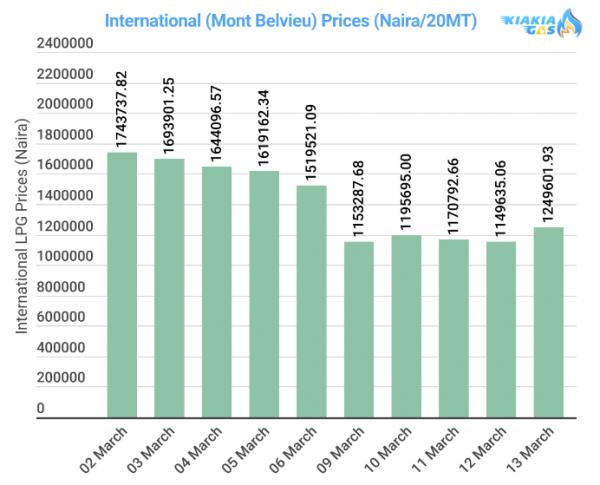
In the past week, the global LPG market suffered a sharp decline in price; with a fall from 1.5 million naira to 1.25 million naira per 20MT. The ongoing decline in LPG price is the result of the current unease in the global atmosphere, with countries working effortlessly to combat a pandemic that has shocked the world with its bullish nature. The COVID-19 virus had infected well over a hundred thousand people and had killed almost 4,500, as of the 11th March 2020. The spread is causing global panic, and is affecting global markets – stocks, commodities, clothing, energies, etc. The oil and gas market is taking an indirect hit due to this. In the heat of this pandemic, the ongoing rift between Saudi Arabia and Russia has also led to a notable drop in oil and gas prices. Saudi’s price cuts have caused other traders to follow suite, causing a global reduction in oil and gas prices. These two events have directly and indirectly led to a bearish trend in the global and local Liquified Petroleum Gas (LPG) market.

One Virus, Multiple Effects

The COVID-19 virus, first discovered in China, has spread to 87countries of the world, with a 4% mortality rate. A common response to a national or global health crisis is the reduction of public interactions; this is a form of self-preservation. Tourist centres, and usually busy areas have been abandoned e.g. Disneyland. The effect is less people are travelling or moving about in their countries. This has led to a significant drop in flight prices to increase demand, showing the effect of this crisis on a seemingly unrelated, but interconnected industry. The oil and gas industry has also been affected by this crisis. In China, a country with the second biggest demand for oil, the reduction in mobility has reduced the demand for the fuel. In the words of Cailin Birch, “The main reason why corona virus is a threat to oil prices is that China is the main new consumer of oil in the world”. This caused the price of oil to trickle down in mid-February, and it has kept trickling down as more people around the world are going into quarantine (the price of a barrel of crude oil fell by $15 between the 6th of January,2020 and the 6th of March,2020 – based on WTI Crude prices). This effect of the virus could have been predicted, but the virus has had another effect on the oil and gas market, which shall be described next.

The second major event that has affected the LPG market this week is the Saudi price cut. Saudi Arabia and Russia – two of the biggest players in the global oil and gas market – have been having a rift based on compliance to OPEC agreements. Russia, a non-OPEC member, has a relationship with OPEC that accords it the expectation of complying with OPEC agreements, but Russia usually ignores these. The most recent was the OPEC agreement to reduce production due to Saudi Arabia’s drop in demand. China is a major buyer of Saudi oil, and the COVID-19 pandemic has reduced the demand for oil, by at least 500,000 barrels per day. The goal of the drop in production was to stabilize the market and prevent a plummet in the prices due to excess supply. OPEC nations agreed to cut production by 1 million barrels per day, while non-OPEC nations cut theirs by 500,000 barrels per day. Russia decided to go ahead with their normal production rates, causing Saudi to respond with the price cuts.

FIGURE 1 BI-WEEKLY TREND OF 20MT LPG PRICE IN THE INTERNATIONAL MARKET

Source: Kiakia Gas Datapitch Research Group computations from: https://www.barchart.com/futures/quotes/J8J*1/price-history/historical.


Market Analysis

The international LPG market closed at 1.5 million naira on the 6th of March, and one week after, on the 13th of March, it closed by 1.25 million naira, which was a 17% drop. This price drop has negatively affected other economies, particularly those whose revenues depend on oil sales. Saudi hopes to make up for the loss in profit (although, they can profitably sell at low prices) by increasing the quantity they produce. While this might be convenient for the Saudis, because they have the largest spare capacity, other OPEC and non-OPEC nations are not going to be able to cushion the effect of the price cut by increasing production. Another consideration to the increase in production quantity is the fact that this situation was caused by the crippling effect of the COVID-19 virus, which is still spreading across the globe. The continued spread of the virus will gradually reduce economic activities, which in turn reduce the demand for oil. The increase in supply will not be commensurate with the global demand, which will probably lead to excess crude stockpiled. This will once again, lead to a necessary drop in production rates.

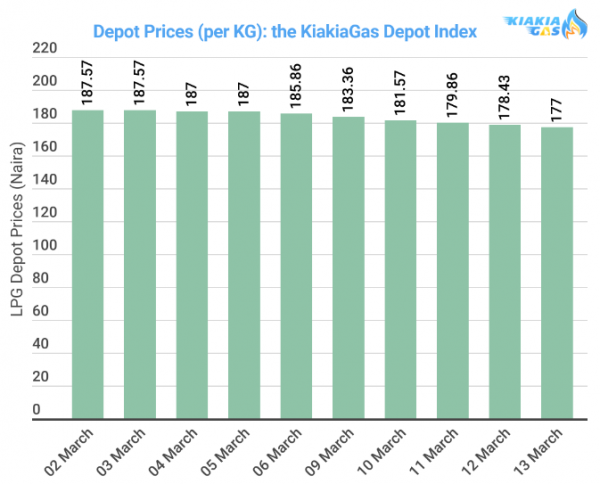
Another angle to look at this week’s events from is that cooking gas is now cheaper to purchase. The average landing cost of 20 MT of LPG into Nigeria, based on the KiaKia Gas Depot Price Index, was 3.7 million naira at the close of last week, and it was 3.54 million naira at the close of this week. To put it in better context, the cost of a kilogram fell from 185 naira to 177 naira. This will find expression in the retail outlets (although prices differ based on retailer).


FIGURE 2 BI-WEEKLY TREND OF LANDING COST OF 20MT LPG INTO NIGERIA

Source: Kiakia Gas Datapitch Research Group computations from: https://www.facebook.com/LPGinNigeria/


What Comes Next?

The price war does not seem to be such that will stay around for long. First, the Saudis will be pressured by the other OPEC nations to end the price war. Russia on the other hand will not receive pressures from any organizations. Russia can also hold out for long, as President Putin and the Russian Energy Minister Alexander Novak are known to make tough decisions concerning the energy sector, while the Saudi government cannot be said to do same. The Saudi government is also under internal pressure to end the price war. This is from their citizens, of which 20% bought stocks in Saudi Aramco (Saudi Arabia’s national oil company), after the government encouraged them to do so. Aramco stocks are currently worth less than they were at the time of the initial offering and seem to be plummeting further. The government will have to take steps to appease the 20% of the population who invested, and that will not be achieved while oil sells for such low prices.

 If the already existing trend and the recent events are anything to go by, prices are expected to continue this downward trend till the causative factors are resolved. A major question to be asked is whether Saudi will return to normal prices if Russia remains adamant against the production cut agreement. Also, the resolution of the Saudi-Russia rift will not stop the downward trend, but it will prop up the prices noticeably. The downward trend of the prices will be stopped when economic activities return to normalcy, i.e. when the COVID-19 virus has been defeated.

The Nigerian economy is heavily dependent on then revenue received from crude oil sales. The National budget was drawn up with oil sales pegged at $60 per barrel, hence the there will be a deficit if the oil is sold for less than $60 per barrel. This will result in the National Assembly revisiting the budget to make it reflective of the current oil price, if this price cut lingers. If the budget will not be revisited, then the government will have to apply for more loans which is unadvisable. This budget cut is expected to have a ripple effect across the economy. Therefore, the government has planned to cut the budget, because the oil price might dip further. The effects of this will be seen in the coming weeks.


KiakiaGas Limited is a leading Gas business in Lagos,Nigeria with expertise in LPG retailing, New Gas Market development, Building of Gas Plants and Gas strategy advisory
If you need a partner with hands-on local expertise in the Nigerian Gas space or any of our bespoke solutions/services, write us at gaspreneur@kiakiagas.com or call/Whatsapp: +2348085269328


References

Carter, S., 2020. CORONAVIRUS UPDATES: 1039 infected and 32 death in U.S.. [Online]
Available at: https://saraacarter.com/coronavirus-updates-latest-reports-and-number-of-infected-and-death/
[Accessed 12 03 2020].

Lastoe, S., 2020. Attractions closed and events canceled amid coronavirus outbreak. [Online]
Available at: https://edition.cnn.com/2020/03/02/news/coronavirus-closures-tourist-attractions-and-events/index.html
[Accessed 12 03 2020].

Laud, G., 2020. Coronavirus MAPPED: How many countries have coronavirus?. [Online]
Available at: https://www.express.co.uk/news/world/1251319/coronavirus-map-how-many-countries-have-coronavirus-china-Italy-UK-covid-19
[Accessed 12 03 2020].

OilPrice.com, 2020. Oil Price Chart. [Online]
Available at: https://oilprice.com/oil-price-charts
[Accessed 16 03 2020].

Velshi, S. S. a. A., 2020. Russia-Saudi price war sends oil prices plummeting amid coronavirus anxiety. [Online]
Available at: https://www.nbcnews.com/news/world/russian-saudi-price-war-sends-oil-prices-plummeting-amid-coronavirus-n1153001
[Accessed 12 03 2020].

Wald, E. R., 2020. Russia Will Beat Saudi Arabia In This Oil Price War. [Online]
Available at: Russia Will Beat Saudi Arabia In This Oil Price War
[Accessed 12 03 2020].


Subscribe to COVID-19