Influence of AfCFTA on Enhancing Oil and Gas Market in Africa

Submitted by kiakiagas on

The AfCFTA agreement, which commenced on January 1, 2021 was signed by 54 African Union member countries and envisages the establishment of a massive free-trade zone with the potential to generate an estimated US$3.2 trillion worth of inter-country trade across Africa. The African Union (AU) says that the AfCFTA will create the world’s largest free trade area estimating that its implementation will lead to around a 60% boost in intra-African trade by 2022. The vision and commitment of African leaders to the objectives and principles of economic cooperation, led them to create the African Continental Free Trade Area (AfCFTA) as an instrument for fostering African economic development. This commitment aims to ensure barrier-free trade in relation to gas and pipeline facilities which envisages the need to establish gas pipeline infrastructure for quick-access and easy transportation of gas from the well-endowed countries to the needy countries in the sub Saharan African countries. This increased demand will create a better job market as suppliers will need to build up their work force. Increased income then results in additional demand for consumer goods and services, thus persuading a complete round of economic stimulus.


The Oil and gas sector includes upstream, midstream and downstream. Upstream operations include searching and drilling of natural gas reserves or crude oil fields underwater and underground. Midstream operations includes oil and gas transportation, storage, and refining while downstream operations involve refining during the upstream process and the marketing and commercial distribution of natural gas, diesel oil, ethanol, petrol, lubricants, petroleum, jet fuel, asphalt, heating oil, liquefied petroleum gas (LPG) and a host of other types of petrochemicals.


Recently, there have been a series of major new gas discoveries across Africa in recent years. This includes a “significant” find off South Africa’s southern coastline earlier this year, along with new discoveries in Ghana, Nigeria and Senegal, to name but a few. In Eastern Africa, Mozambique and Tanzania are well advanced towards utilizing their natural gas reserves. In North Africa, it would appear that the latest gas discoveries in Egypt and the Eastern Mediterranean will soon be utilized to feed domestic growth. These developments could fit well with Africa’s push for industrial growth and its need for reliable electricity supply (constraining the expansion of more polluting fossil fuels). Much will depend on the price at which gas becomes available, the development of distribution networks, the financing available for infrastructure and the strength of policy efforts to displace polluting fuels.


Status of Oil and Gas in Africa before AfCFTA implementation


Just as Africa’s oil industry was recovering from the aftermath of the 2014 oil price crash, another global crisis cast a thick shadow over oil markets worldwide in 2019. The Covid-19 outbreak stalled business activity and shut down air travel globally, causing the International Energy Agency (IEA) to announce that demand would fall to its lowest rate in almost 10 years. The crisis has changed how oil producing countries across the African continent view their oil industries. Africa becomes a major player in natural gas as a producer, consumer and exporter. Gas demand in Africa doubles to 2040 in the Stated Policies Scenario. Countries like Algeria, Angola, Egypt, Libya and Nigeria who are endowed with crude oil for gas production can increase their trade volume and revenue as the world is switching to cleaner energy for commercial and domestic use. With the introduction and implementation of AfCFTA that seeks to ensure free trade in the continent, these countries will be able to trade without being subject to high tariff payments. AfCFTA is opening up Africa to African investors. The ability to transform Africa by making energy cheaper will be impressive. One main anticipated outcome of the deal, for example, is increase in industrial production, which will depend on the quality, sustainability and safety of energy sources at scale for industrial growth.


Major Oil & Gas Consuming Countries in Africa


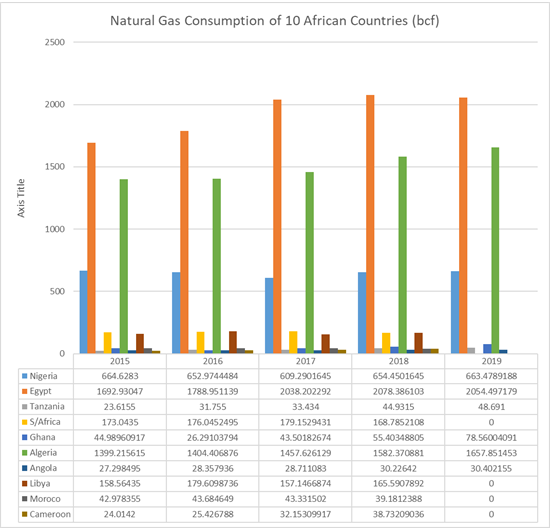
Prior to the inauguration and implementation of AfCFTA, African countries purchase their oil and gas from Singapore, Denmark, Switzerland, Maldives, South Africa and Nigeria while the largest consumer of crude petroleum in Africa include Egypt, Algeria and Nigeria (fig 1). On the other hand, the growth in Africa population is an advantage to boost Africa oil & gas sales. According to the Statista (2020) Nigeria has a population of 206. 1 Million, followed by Ethiopia (114.9 Million) Egypt (102.3 Million) Congo Republic (89.5 Million), Tanzania (59.7 Million) and South Africa (59.3 Million).


Figure 1: Natural Gas consumption of 10 African Countries (Bcf)
Source: EIA 2021


Benefit of the AfCFTA Oil and Gas Market


  • It would create the largest single market of about 1.2bn consumers of Oil and gas

This market is estimated to involve more than 1.2 billion consumer in Africa that consume oil and gas in one way or the other, domestic cooking, factory & home lighting and industrial fuel for the production of consumer products. AfCFTA oil and gas market will boost the sector workforce due to increase in human capital efficiency as a result of the incentives that will be created in the sector.


  • Increased Demand

Demand for natural gas in the region is expected to grow as population increases every year. According to the Africa Energy Outlook (2019), Africa’s population is among the fastest growing and youngest in the world. One-in-two people added to the world population between today and 2040 are set to be African, and the continent becomes the world’s most populous region by 2023, overtaking China and India. A regional approach to meeting the demand makes economic sense, if this approach to sales of oil and gas is adopted.


  • Could boost Africa’s economy to $29trn by 2050

Investors will be motivated to meet up with the increase in demand thereby causing inflow of capital from the Eastern and Western worlds to the African Continent. Large machines will be shipped in to produce large quantity of consumer product. The machineries need energy inform of oil and gas to run production. This will signal to the oil producing countries to increase their production capacity. More workers will be employed and new technology will be adopted to produce large volume of oil and gas at cheaper rate. As more goods and services are produced, the African GDP will be boosted and aim will be accomplished by 2050.


Conclusion

Influence of AfCFTA on enhancing Oil and Gas market in Africa has been examined and it is observed that Africa has the opportunity to create the largest market in the world for oil and gas than seen in many other parts of the world, or economic zones. Africa’s unique position as a major natural resource country makes this even more realizable. The AfCFTA is a tremendous opportunity to not only oil and gas market growth but also to create regional public goods, especially infrastructure, that will enable a prosperous and sustainable future for Africa oil and gas.


AfCFTA and its potential for oil and gas producing countries in Africa: The case of Nigeria, Angola, Algeria, Libya and Egypt

Submitted by kiakiagas on

Introduction


Africa is well endowed with minerals, including fossil fuels. The AfCFTA is the first step in implementing the 2063 AU Agenda: a vision for an Africa that is united, stable and peaceful. The African Continental Free Trade Agreement (AfCFTA) would encourage major extra investment in the oil and power industries of Africa. The AfCFTA envisages a single continent-wide market for products and services with free movement of individuals and investments. If successfully executed, an immense single market will be created by the AfCFTA, which today has 1.3 billion consumers. The AfCFTA seeks to increase intra-African trade by phasing out tariff and non-tariff barriers, improving competition and developing all the sectors of the economy including oil and gas sector in Africa.

The Oil and gas sector includes upstream, midstream and downstream. Upstream operations include searching and drilling of natural gas reserves or crude oil fields underwater and underground. Midstream operations includes oil and gas transportation, storage, and refining while downstream operations involve refining during the upstream process and the marketing and commercial distribution of natural gas, diesel oil, ethanol, petrol, lubricants, petroleum, jet fuel, asphalt, heating oil, liquefied petroleum gas (LPG) and a host of other types of petrochemicals.


Overview of the Top 5 Oil & Gas Producing Countries in Africa


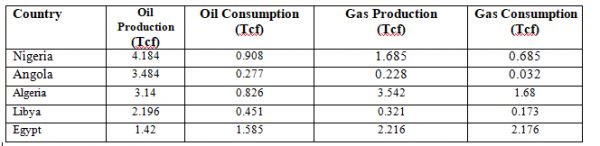
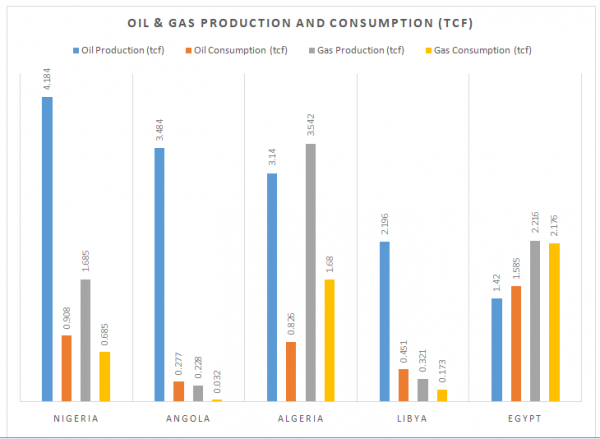
Nigeria is Africa's largest producer of oil. It holds the largest reserves of natural gas on the continent and was the world's fifth largest exporter of liquefied natural gas (LNG) in 2018. According to the Department of Petroleum Resources, Nigeria had an estimated of 203.16 trillion cubic feet (Tcf) of proven natural gas reserves by the end of 2020. Nigeria has the largest reserves of natural gas in Africa. Nigeria produced 1,685 Tcf of dry natural gas in 2019, according to the latest EIA estimates (Table 1). Nigeria exports natural gas mainly as LNG. Infrastructure and demand constraints are challenges for exports mainly by pipeline to neighboring countries.


Angola: Following Nigeria, Angola is the second-largest oil producer in Africa. The crude oil and natural gas sector accounted for about 30 percent of the country's gross domestic product (GDP), 95 percent of total exports, and about 52 percent of total fiscal revenue in 2017, according to the African Development Bank (AfDB). In 2017, around 1.55 million b/d of crude oil was exported by Angola, most of which went to the Asia-Pacific region. Angola holds an estimated 10.9 trillion cubic feet (Tcf) of proved natural gas reserves, produces 0.228 Tcf of dry natural gas in 2019 and consuming (Table 1)


Algeria: In the beginning of 2018, Algeria kept an estimated 12.2 billion barrels (b) of proved crude oil reserves. In 2017, Algeria produced an approximate average of 1.0 million b/d of crude oil and the output of other liquids averaged more than 1.6 million b/d. Algeria exported about 580,000 b/d of crude oil in 2017.France and the United Kingdom were the largest export destination countries by volume, importing 92,000 b/d and 82,000 b/d, respectively. According to the EIA, Algeria’s gross natural gas production was 3.542 Tcf in 2018. Algeria exported approximately 2.0 Tcf of natural gas in 2016, of which approximately 1.4 Tcf was transported via pipelines.


Egypt is Africa's largest non-OPEC oil producer and the third-largest producer of dry natural gas on the continent. As a result of rising domestic demand and decreasing output levels, Egypt became a net natural gas importer in 2015. Egypt has approximately 65.2 trillion cubic feet (Tcf) of proven natural gas reserves at the end of 2016, an improvement from the 2010 estimate of roughly 59 Tcf and the fourth largest in Africa.


Libya holds the largest proven reserves of crude oil in Africa, the fifth largest proven reserves of natural gas on the continent, and has been a significant contributor to the global supply of medium, sweet (low sulfur) crude oil in recent years, which Libya primarily exports to European markets. Typically, most of Libya’s crude oil is sold to European countries. In 2014, about 84% of Libya’s crude exports were sent to Europe. Libya’s dry natural gas production 0.321 trillion cubic feet (Tcf) in 2018while consuming a total volume of 0.173 Tcf.


Table 1: 2018 Oil & Gas Production and Consumption in Trillion Cubic feet (Tcf)

Source: EIA 2021


Figure 1: 2018 Oil & Gas Production and Consumption in Trillion Cubic feet (Tcf)

Source: EIA 2021


POTENTIAL OF AFCFTA FOR THE MAJOR OIL AND GAS PRODUCING COUNTRIES


Creating the largest single market of about 1.2 billion energy consumers: The establishment of the AfCFTA which has kicked off on 1st of January 2021 has the potential to open a booming market for the oil &gas producing countries in Africa. This market is estimated to involve more than 1.2 billion population in Africa who cannot do without consuming energy either for cooking, lighting and fuelling industries for the production of manufacturing products. Africa is also known as a continent that has major force work in the Agricultural sector. Providing energy to aid the large commercialization of farming, this will expand the oil and gas market to create more revenue for the oil producing countries. Households who are familiar with the use of dirty energy for cooking will be exposed and enlightened through the market established by the AfCFTA. This will increase the market demand of the LPG in the market.


Increase real wages for both skilled and unskilled workers in oil and gas sectors: Real wage is the quantity of goods and services that the amount paid to the workers in the oil and gas sector can buy at a given period of time. Expansion in the oil and gas market through AfCFTA will increase the revenue accrued to the sector. This will enable the sector to also motivate oil and gas workers by increasing the nominal wages and expand the real wages of the skilled and unskilled workers in the sector. Increase in capacity to buy more goods and services by the oil workers means that more money will be available for health care, feeding and shelter, payment of children school fees at ease and increased in saving. This will increase the standard of living of the workers and also increase the workers’ efficiency. Their morale to increase marginal product in the oil and gas sector as a result of additional wages they received will be boosted.


Increasing innovation and invention to boost oil and gas production, distribution and efficiency: The established market through the AfCFTA will result in the oil and gas producing countries in Africa to compete and divide the market share among themselves. The country that has advanced technology to deliver oil and gas with the fastest means of payment may gain larger market share. This will force other players in other countries to engage their skilled workers in research and development by devising faster way to transport large quantity of oil and gas to consumers in the market.


Conclusion

AfCFTA and its potential for oil and gas producing countries in Africa has been analysed. It is observed that with the production capacity of the countries producing oil and gas in Africa, they still export their oil and gas to the western and eastern part of the world. Such exporting volume could now be sold at AfCFTA market without spending more on transportation cost and at custom free duty. These countries will generate more revenue and more gas will be saved from flaring. However, with ever-increasing new oil and gas discoveries in Ghana, Tanzania, Mozambique and Uganda, for example and prospective fields in several countries like Sierra Leone, Mali, Kenya), the oil and gas sector still provides a unique opportunity that can be exploited.


Effects of COVID-19 Pandemic on AfCFTA and Oil & Gas in Africa.

Submitted by kiakiagas on

Introduction


The African Continental Free Trade Area (AfCFTA) agreement is made up of 54 African countries merging into a single market of 1.3 billion people. With the benefit of developing sustainable markets, this resource could create an economic bloc with a combined GDP of $3.4 trillion. Intra-African trade is projected to rise by 33 percent once in operation and Africa's overall trade deficit is expected to be halved. Furthermore, by 2030, the AfCFTA could generate $6.7 trillion in combined consumer and business spending. Trading is expected to begin on 1 January 2021 under the AfCFTA. Not only is AfCFTA a free trade agreement, it is a tool for the economic transition of Africa. It will promote the movement of individuals and labor, competition, investment and intellectual property through its different protocols. According to the World Bank, it is estimated that the AfCFTA could boost regional income by 7% or $450 billion, speed up wage growth for women, and lift 30 million people out of extreme poverty by 2035. This could be achieved through existing human and natural resources endowment in Africa, most especially the oil and gas resources that are channeled majorly to the western and eastern part of the world.


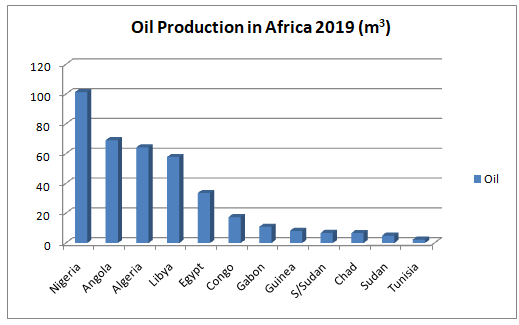
Africa has considerable oil and gas resources that can help accelerate growth on the continent if used strategically. The African continent is home to five of the world's top 30 oil producing countries. In 2019, it accounted for over 7.9 million barrels per day, which is about 9.6 percent of world production. This production level has fallen considerably from the peaks of 2005 to 2010, when African production amounted to almost 10 million barrels a day. While new resources are increasingly being found, they are not distributed equally; indeed, 38 African countries are currently net importers of oil. Since last year, Africa's share of global oil production has marginally increased by 0.3% to 8.7%, standing at 8.1 million bbl/d. Nigeria, Angola, Algeria, and Egypt continue to be significant contributors. In 2017, Libya doubled production, promoting it with an 11 percent share to the fourth largest oil producer in Africa, bringing Egypt into fifth place. At the end of 2017, Africa was estimated to have 487.8 tcf of proven gas reserves, unchanged at 7.1 percent of proven global reserves. Two major gas discoveries by Kosmos Energy added an additional 1.5 billion BOE of gas to their portfolio in the Senegal-Mauritania basin. According to Kosmos and joint venture partner BP, the Yakaar discovery, combined with the Teranga discovery in 2015, provides the basis for another LNG center in the basin. Most of the big oil production declines between 2010 and 2015 are attributed to lower global oil prices. Production between 2015 and 2019 has stabilized. However, the pandemic of the Corona virus and a production dispute between Saudi Arabia and Russia drastically lowered oil prices in early 2020. As a consequence, as of June, potential oil output trends in Africa and around the world were highly uncertain.


Source: Statista 2021


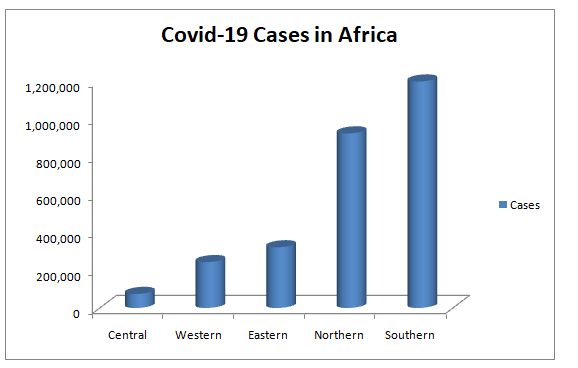
The Corona Virus Disease 2019 (COVID-19) is a communicable respiratory disease caused by a new strain of COVID-19 that causes illness in humans. Scientists are still learning about the disease, and believe that in animals, the virus originated. The disease spreads by contaminated air droplets, which are projected during sneezing or coughing, from individual to individual. It may also be transmitted when humans come into contact with hands or surfaces containing the virus, and when infected hands touch their eyes, nose, or mouth. In China, COVID-19 was first published, but it has now spread worldwide and Africa is no exception.


The novel COVID-19 strains the health systems, education, aviation, culture, commerce, and general livelihoods of Africa as well as the public and private sectors of the continent in the midst of lockdowns, stifling income streams. The International Monetary Fund has revised the continent's GDP growth projection from 5.1% before the pandemic to -1.6%. Similarly, from 2.4% in 2019 to between -2.1% and -5.1% in 2020, the World Bank has projected a similar decrease. Compared to other countries, on the one hand, mortality from the pandemic has been very low, but the economic impact would be immense. These reports signal the region's first recession in the past 25 years. In times of an unprecedented health crisis, policymakers need a stimulus package as well as trade instruments, such as the AfCFTA deal, to boost economic recovery. The benefits of liberalized trade would be granted to African countries. It can serve as an alternative stimulus package for job creation, foreign exchange, industrial development and economic growth to improve intra-African trade.


Many factories in Africa have changed production because of global shortages and have revamped to produce basic protective equipment. In Ghana, one of the largest liquor manufacturing firms shifted production to manufacturing hand sanitizer, while in Kenya, in a country that barely manufactured any before the pandemic, a factory retooled to manufacture 30,000 surgical masks a day. Similarly, the Hawassa Industrial Park started the manufacture of face masks in Ethiopia to ease the rising demand due to the pandemic. In addition, their governments also encouraged factories in Morocco, Rwanda, South Africa and several others on the continent to manufacture protective equipment to prevent the virus. In South Africa where U-Mask has redirected its production from protective masks for mining and agriculture to that for medical respiratory masks, and Nigeria where the National Agency for Science and Engineering Infrastructure produced made in Nigeria ventilators.


Source: AfricaCDC 2021


COVID-19 IMPACTS on Oil and Gas in Africa


In 2019, the African economy was set to expand at approximately 3.4 percent and is projected to rise to 3.9 percent in 2020, but COVID-19 had a very negative effect due to a major oil price crash. Given the global disruption of the supply chains in the major global trading countries, trade in the oil and gas sector has been especially affected. The deep reorganization of global supply chains has impacted African oil and gas operators. The Covid-19 crisis has revealed that global value chains centralized in a single area do not represent an ideal investment for governments in terms of protection, as well as risk for oil and gas companies.


Africa is also more vulnerable to the impact of Covid-19 because as more countries in Africa lock down their economies and apply movement controls, oil and gas demand was disrupted. Consumers of gas at home quickly switch to the alternative energy for cooking. They replace the liquefied petroleum gas (LPG) for firewood which is not far-fetched from their environment. This resulted into low demand and reduction in oil and gas revenue in Africa.


Conclusion


Africa's economic activities, especially the oil producing nations that export their oil and gas to developed countries, were disrupted by the Covid-19 crisis. But it also gives African countries an opportunity to fix them. For instance, by concentrating on goods of greatest need during the health crisis, they might accelerate intra-regional trade. In order to advance industrialization, develop infrastructure and enhance good governance, countries should also start building regional value chains. The acceleration of the AfCFTA is expected to be very significant in the long term for the reconfiguration of oil and gas supply chains, the establishment of regional value chains and the boosting of the production of critical value-added goods. Given this ability, the AfCFTA is being marketed as Africa's stimulus package to counter the devastating effect on African economies of the COVID-19 pandemic.

Impact of AfCFTA on Human Capital Development in the Nigeria oil and gas sector

Submitted by kiakiagas on

INTRODUCTION

The African Continental Free Trade Area (AfCFTA) is being established by the fifty-four Member States of the African Union (AU) to create a single continent-wide market for goods and services and to facilitate the movement of capital and persons. The African Continental Free Trade Area Agreement (AfCFTA) will create the world's largest free trade area, based on the number of participating countries. The deal ties 1.3 billion individuals with a cumulative Gross Domestic Product (GDP) estimated at US$3.4 trillion across 55 countries. It has the potential to lift 30 million people out of extreme poverty, but attaining its full potential would depend on major economic changes and trade facilitation initiatives put in place. The AfCFTA has the potential to boost intra-Africa trade, promote industrialization, trade, job creation, and unleash regional value chains to facilitate Africa’s meaningful integration into the global economy. The AfCFTA will also improve the prospects of Africa as an attractive investment destination. It will help advance the empowerment of human resources, by improving access to trade opportunities.


On July 7, 2019, Nigeria signed the AfCFTA agreement in Niamey during the 12th extraordinary session of the Assembly of the African Union. Having consulted various trade groups, the country observed that there is more to gain from increasing access to its goods and services to a wider African market. Nigeria is the world's sixth biggest producer of crude oil. The bulk of crude oil exploration and production is concentrated in the Niger Delta. Over 95% of the country's foreign revenue and about 80% of its government revenue is generated by its oil and gas industry. According to the International Labour Organisation over 65,000 direct jobs are generated in Nigeria by the oil and gas industry alone, and more than 250,000 in non-direct employment. The 61 Operating companies in the Nigerian Oil & Gas Industry Content Joint Qualification System (NOGICJQS) have a combined staff strength of 11,057 comprising 10,393 (94%) Nigerians and 664 (6%) expatriates. Out of the 61 operating companies the top 4 companies in terms of staff strength account for 86% and have a total workforce as shown below:


  1. Mobil Producing Nigeria Unlimited: 3,253; comprising Nigerians 3,029, expatriates 224
  2. Chevron: 2,961; comprising Nigerians 2,736, Expatriate 225
  3. Shell Petroleum Development Company: 2,178; comprising Nigerians 2,100 and Expatriate 78
  4. Nigeria Agip: 1,088; comprising Nigerians 1,043 Expatriate 45

In line with the report provided by the Nigerian Content Development & Monitoring Board (NCDMB), between 2015 and 2019, the human capital training in the oil and gas sector involved 1,612 youths covering the following skill areas:

• 1,000 youths in Oil Spill Management and Environmental Remediation Training (OSMERT)

• 15 youths in Machinist

• 10 youths in underwater welding

• 80 in Geosciences

• 22 in pipe mill operations

• 90 in artisanal trades

• 145 in poultry agribusiness

• 250 in Teachers’ curriculum Development

NCDMB funds and promotes trainings and human capital development across the oil and gas value chain in Nigeria. Oil and gas sector has three main key areas that include upstream, midstream and downstream

  • Upstream operations include searching for natural gas reserves or crude oil fields underwater and underground and the drilling of exploration wells and drilling into proven oil and gas recovery wells.
  • Midstream operations includes oil and gas transportation, storage, and refining. When resources have been extracted, they have to be transported to a refinery, which, compared to oil and gas reserves, is often in a completely different geographical area. From tanker ships to pipelines and trucking fleets, transport can involve everything.
  • Downstream operations involve refining during the upstream process of the raw materials produced. This means crude oil refining and natural gas purification. Marketing and commercial distribution to customers and end users of these goods in a range of forms, including, though not limited to, natural gas, diesel oil, ethanol, petrol, lubricants, petroleum, jet fuel, asphalt, heating oil, liquefied petroleum gas (LPG) and a host of other types of petrochemicals.


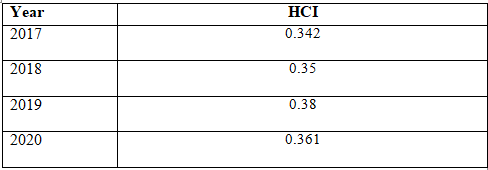
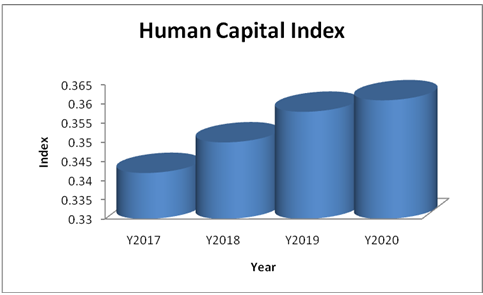
According to the Organisation for Economic Co-operation and Development, human capital is the knowledge, skills, competencies and other attributes embodied in individuals or groups of individuals acquired during their life and used to produce goods, services or ideas in market circumstances. Nigeria as a nation is immensely blessed with human, oil and gas resources. The availability of these resources from one end to the other is sufficient in such a way that economic growth might have been accomplished in the late 20th century, given dynamic leadership. Investment in human capital plays an important role in increasing competition in oil and gas industry, improving quality of life and in generating Nigeria economic growth. According to Anyanwu et al., (2015), Nigeria envisaged to be among twenty most developed countries in the world by year 2020. It is a glaring fact that the country has failed to realize its full growth potential, amid all the abundant human and natural resources. This is not unconnected to the inability to invest in human resources and develop human capital to attain a full employment and sustainable economic growth at the end of the year. The establishment of AfCFTA therefore presents an opportunity in Africa to engage and develop their human resources in the area where they have competitive advantage over others. Table 1 below shows the index for Nigeria human capital development which helps to point to the reasons for the current situation.


Nigeria Human Capital Index

Source: World Bank 2020


Effect of AfCFTA on Human Capital Development in Oil and Gas Sector

Eradicate Structural Unemployment: AfCFTA has the potential to bridge the gap of structural unemployment in the oil and gas industry. A major issue in modern economies is that rapid deindustrialization has left many manual workers, struggling to thrive in a very different labour market. But AfCFTA will create a viable market that will be competitive for the oil and gas products. This will result to investing in education, research and human capital development to create a competitive means of producing petroleum products and use a cost effective means to transport it to the AfCFTA market.


Reduce Human capital flight: the era of globalisation has enabled skilled workers to move from African countries to the developed countries. This has had adverse effects on the African economy that lose its best human capital to the western and eastern countries. The establishment of AfCFTA will reduce export of skilled labour not only in the oil and gas sector but also in other sectors of the economy. Africa possessed high-skilled, innovative workforce that are ever ready to add value to raw materials in the exploiting, mining and manufacturing process.


Employment creation in the industry: The African Continental Free Trade Area (AfCFTA) presents a major opportunity to engage human resources that are idle most especially in the Nigeria oil and gas sector. The establishment of AfCFTA will bring millions of Nigerians out of extreme poverty and raise the incomes of existing labour in the sector. With the implementation of AfCFTA, trade in petroleum products and facilitation measures that cut red tape and simplify customs procedures would boost human morale to engage the market. This will make it possible for Nigerians to be interacting with over 1.2 billion population who are keen and ready to purchase petroleum products in the AfCFTA market.


Conclusion

Impact of AfCFTA on human capital development in the Nigeria oil and gas sector has been examined. The establishment of the African Continental Free Trade Area (AfCFTA) is expected to reduce structural unemployment, human capital flight and create more employment opportunity in the Nigeria oil and gas. Human capital is an important factor used in converting specific natural resources to oil and gas for human use and benefit. The viable market opportunity of 1.3 billion population and competition among the oil and gas producing countries in Africa will trigger investment in human resources to achieve the best output at lower cost from the industry. It is high time for the actors in the Nigeria oil and gas sector to increase investment in human resources in order to stay highly competitive in the market when AfCFTA is launched in January 2021.


Challenges and Opportunities of Common Currency for sustainable natural gas market in AfCFTA

Submitted by kiakiagas on

Introduction


The African Continental Free Trade Agreement (AfCFTA) entered into force on May 30, 2019 to promote industrialization, economic development and stability in Africa. The AfCFTA seeks to bring together all 55 Member States of the African Union, representing a population of over 1.3 billion, with a growing middle class and a combined gross domestic product (GDP) of over US$ 3.4 trillion. Undoubtedly, the African Continental Free Trade Agreement (AfCFTA) is wonderful news for Africa. Connection to new markets strengthened trading ties and enhanced integration are just a few of the advantages of the new continent-wide FTA. For a continent of 55 African Union nations with a combined gross domestic product of more than US$3 trillion and a young, rising population, the African Continental Free Trade Agreement (AfCFTA) has the potential to improve economic development. Members are ironing out specific details around rules of origin, intellectual property and dispute mechanisms in a process that could take about three years. AfCFTA is meant to eliminate 90 percent of tariffs and create a single market with free movement of goods and services.


The AfCFTA aims at eliminating tariffs on 90% of goods and ensuring the free movement of labor in the region. The process of increasing international trade in Africa and reducing barriers to growth resembles the objectives and policies successfully introduced in Europe. In the near future, as the new Continental Free Trade Agreement enters into force in January 2021, Africa will take a major step towards tackling entrenched economic problems, including a dearth of intra-regional trade. It is worth examining concerns about how an Africa-wide single currency could face similar challenges, following the 15-nation ECOWAS currency model and European experience, and analyzing the potential benefits of the adoption of the African single currency in the natural gas market.


Natural gas according to the IEA (2020) is a fossil energy source that forms deep beneath the earth's surface. Natural gas contains many different compounds. The largest component of natural gas is methane, a compound with one carbon atom and four hydrogen atoms (CH4). Natural gas is used as a fuel in the manufacturing companies, by vehicles and in chemical industry, for lighting at home and for cooking. The establishment of a common market in Africa, however will ensure an adequate distribution of gas from surplus areas to areas in need. As a result, to ensure equal redistribution of gas, there is a need to create an enabling environment for the natural gas market. In order to facilitate the natural gas trade in the African market, a common currency is envisaged.. These steps are similar to the process of European integration and to the agreements that were drawn up decades ago. By 1999, many countries had joined the European Union, and the link between economies was strengthened by creating a common currency, the euro. The euro was adopted by more and more countries over the decade.


Europe's leaders, who hailed a new era of closer integration, easier trade and faster growth, were united by the euro, as a currency with which to compete against the dollar. In the same futile fashion, ECOWAS countries agreed to adopt a single currency called eco in 2021. Joint currency negotiations have been in operation for 30 years. Due to the fear of economic domination, this took so many years to be implemented. Many countries believe that Nigeria, Africa's largest economy, will take a leading role in the monetary union and will put a stop to the projected benefits. Nevertheless, when the AfCFTA starts in January 2021, there are opportunities and challenges associated with using the common currency in the natural gas market.


Opportunities for Adopting Common Currency


The single currency will facilitate trade in natural gas, lower transaction costs and make payments easier for Africa's population of over 1.3 billion people. This will also eliminate the delay in payment that made Africans require a day or more to receive money transferred to them. It might be a cause for concern to create a common currency, particularly when considering its impact on Africa's two largest economies Nigeria and South Africa, and most dynamic business hubs. There is a need for a common currency in order for the natural gas market to take full advantage of the AfCFTA, allowing for a fast and reliable flow of funds for transactions across the continent.


The envisaged creation of common currency should be supported because the role of international donors will be crucial. The Western and Eastern countries that import natural gas from African countries may see the need to purchase gas via African common currency if the use of Dollar is not favourable in African natural gas common market. An example is when President Buhari of Nigeria opined that ‘we trade with China and China trade with us, so we do not need Dollar as a means of exchange. This is due to the appreciating value of Dollar against Naira in the past, present and most likely in the future. The Central Bank of Nigeria at one point made Yen the medium of exchange for China –Nigeria trade.


Challenges


The adoption of a single currency allows each participating country to give up its monetary policy to the continental central bank, thus denying domestic monetary authorities the right to tweak interest and exchange rates in order to achieve macroeconomic goals such as price stability and economic development. This can be problematic if and when countries are not at similar stages on key macroeconomic variable, as a general response will be unsuccessful because of cross-country heterogeneity. The latest Eurozone crisis, which has had various consequences on European countries, is a case in point, making it difficult for the European Central Bank (ECB) to save some countries, such as Greece and Spain, from a serious economic downturn by cutting interest rates. The dilemma is that while some countries may need expansionary monetary policy to boost growth, others may demand tighter policies to tame inflation, rendering all monetary policy ineffective in a one-size-fits-all way.


For African countries linked to the CFA, a colonial-era currency that is still used in Francophone countries, the envisaged AfCFTA common currency is also an issue. In the late 1940s, France developed the CFA franc to act as a legal tender in its then African colonies, and it is one of the most prominent indicators of the continued control of France over those former colonies. With the financial backing of the French treasury, the CFA franc is pegged to the euro. Today, the CFA connected to the euro means that not only Europe but also Africa are affected by decisions to create a single currency, which is insane. Certain economies were sheltered from inflation and instability by this colonial relic, but they have no monetary policy independence and the use of the AfCFTA common currency will create a problem for the Francophone countries.


Conclusion


Challenges and opportunities of common currency for sustainable natural gas market in AfCFTA have been discussed and it is very important to note that coming up with a currency is crucial to sustain not only natural gas market but for every other products and services that will be exchanged for money in the AfCFTA market. The idea of an organized platform through AU and ADB where African local currencies of each country will be converted against each other and used as the medium of exchange in the AfCFTA market may lead to importing cost-push inflation. This may not go down well with the receiving countries. In time, as envisaged by the AU leaders, it is recommended to come up with a common currency that will be of African origin so as to create a robust market for natural gas and other products & services in AfCFTA market.

AfCFTA Policy and the Role of E-Commerce in Natural Gas Distribution in Africa Countries

Submitted by kiakiagas on

Introduction


On the 30th of May 2019, African leaders in the African Union (UN) saw the need to facilitate industrialization, economic growth and prosperity in Africa. In order to accelerate this, the African Continental Free Trade Agreement (AfCFTA) entered into force. Estimates from the United Nations Economic Commission for Africa (UNECA, 2020) showed that the AfCFTA can raise intra-African trade by 52.3 per cent by reducing import tariffs, and that the removal of non-tariff barriers could double trade if .Businesses currently pay an average higher tariff of 6.1% when exporting within Africa than when exporting outside Africa. AfCFTA would eventually reduce intra-African trade tariffs, making it easier for African businesses to trade within the continent and cater to the rising African demand.The establishment of the AfCFTA aims to put together all 55 African Union Member States, representing a population of more than 1.2 billion people, with a rising middle class, and a total gross domestic product (GDP) of US$ 2.5 trillion. In view of this, AfCFTA is creating a highly dynamic market with a projected 2.5 billion population by 2050. Merging the continent of Africa into one market hubpaves the way for greater opportunities for trading enterprises to support sustainable developmentgoals in the continent since AfCFTA envisages trade liberalization to actualize its goals.


However, to actualize the opportunities of trading enterprises to support sustainable development goals in Africa, there is need for vibrant logistics – transport and products distribution. The degree of growth in Africa logistics services may be a critical element to pave the way foritscountries to trade without many restrictions and at lower prices. An improved logistics services in general may be a significant step in shaping trade within the continent in the long run.The transport and distribution of goods and services makes international trade simpler and plays an important role in the local economy's growth and development. Logistics links the foreign economy to the domestic economy. The interconnectivity of different interdependent sectors of the domestic economy, Oil & gas, agriculture, manufacturing, tourism and mining among others, is strengthened through efficient transport and distribution systems.


Businesses in Africa may be concerned about the quality and efficiency of logistics services, as inadequate logistics infrastructures and operational processes can be a major barrier to Africa international trade integration. On the contrary, improved logistics related to trade, combined with a liberalized economic environment as envisaged by the AfCFTA, will increase the amount of trade, economies of scale and scope of distribution and development activities. It is against this background that there is need to make use of E-commerce for quality and efficient logistics servicesthat will facilitate trading between buyers and suppliers when the African Continental Free Trade Area (AfCFTA) agreement starts by January 1, 2020.In addition to enhancing cross-border trade, the business-to-business e-commerce platform can also efficiently provide businesses with quality goods from confirmed African suppliers at reduced average trading costs, based on AfCFTA regulations. Based on the AfCFTA rules, e-commerce would provide a marketplace for buyers and suppliers to be able to exchange and purchase high quality goods from the continent.


Digitalization of Natural Gas Trade

According to the US Energy Information Administration (2020), Natural gas derived from natural gas or crude oil wells is referred to as wet natural gas because it usually includes methane, propane, butanes, and pentanes and water vapor along with methane. Non-hydrocarbons such as sulfur, helium, nitrogen, hydrogen sulfide, and carbon dioxide can also be present in Wellhead natural gas, much of which must be separated from natural gas before it is sold to end users. Across industries, consumers expect increased engagement, personalization and speed. To facilitate the transportation and quick transaction of natural gas for free trade barrier as embedded in the AfCFTA policy there is need to also embark on the use of digital platform.


Through a vibrant digital payment platform, there is no need for natural gas sellers and buyers to see face to face before transaction is done. Digital technologies eventually allow greater profit margins in natural gas trade, enabling cost savings through intelligent maintenance, automation of workflows, enhanced jobs, and increased standardization and simplification of templates, techniques, and machinery. Digital platform implementation will promote greater sustainability of trade in natural gas and customer interaction by being connected to multiple digital platforms.


Protocols of AfCFTA and E-Commerce Market for Natural Gas Distribution

An agreement and three protocols on goods, services and the resolution of disputes form the Treaty establishing the AfCFTA. The protocols are in essence, the tools that outline the priorities, state the guiding principles and set out the modalities for trade liberalization in thematic areas.


E-commerce can aid the Article 7 of the AfCFTA protocol on trade in goods that obligates State Parties to progressively eliminate import duties or charges of equivalent effect on natural gas. This can be achieved by establishing a sophisticated digital platforms, as well as natural gas mobility, surveillance, connectivity and storage technologies, coupled with the ability to process and analyse gas data rapidly, enhance agility and support real-time decision making and implementation.  


E-commerce can help to actualize Article 3 of the AfCFTA protocol on trade in services states the objectives of liberalisation, which include the fostering of domestic and foreign investment, progressive liberalization of trade in services across the African continent on the basis of equity, balance and mutual benefit, by eliminating barriers to trade in services. This can be accomplished by creating a system of interrelated computing devices, mechanical and digital machines, objects, or people that are provided with unique identifiers and the ability to transfer data over a network without human to-human or human-to-computer interaction.


Article 13 protocol on the preferential treatment on goods originating in State Parties that will lead to schedules of tariff concessions from AfCFTA State Parties could be achieved by creating a digital platform that will shield non-state parties from products that are accorded preferential treatment.


Potential Threats to E-Commerce Natural Gas Market in Africa

In comparison to the products, services and dispute resolution protocols that combine elements of multilateral and regional agreements, there is no global e-commerce agreement to be used as a benchmark. This serves as a setback to E-Commerce in the Natural Gas Market in Africa.


Directly addressing the infrastructural challenges that affect cross-border e-commerce natural gas trade within Africa is beyond the scope of the e-commerce protocol.


In addition, there are numerous e-commerce outlets, including social media, marketplaces, software, websites and platforms run by companies or third parties. In the scope of e-commerce in the e-commerce protocol, these different types of channels and exchange would need to be accounted for.


Conclusion

In conclusion, the AfCFTA protocol will endorse the formulation of an African stance on e-commerce rules and potentially contribute to the actualization of the e-commerce goals already set out in the AU Digital Transformation Strategy. The AfCFTA e-commerce protocol will serve as an essential instrument for the digital protection of the consolidated African market for natural gas and prevent other structures that could theoretically hinder the agenda for liberalization and E-commerce market integration for natural gas trade in the continent.

AfCFTA Policy Implications and Effects of Gas Pipeline Infrastructure On Economic Development of Sub-saharan African Countries

Submitted by kiakiagas on

Introduction

The Africa vision of the accelerated economic and industrial development was established by the Heads of State and Governments of the African Union in 2015 and is incorporated in the national planning framework of over 30 countries. In this case, faster economic expansion is accompanied by the full achievement of access to electricity and clean cooking, in line with Sustainable Development Goal. It is against this background that leaders in Africa reached an agreement to actualize the Sustainable Development Goal by fostering economic expansion through a stable energy supply in African countries. On 30th May 2019, the Agreement established the African Continental Free Trade Area (AfCFTA). The general objectives of AfCFTA include the creation of a single and liberalized market, free movement of capital goods and people, eliminate tariff and non-tariff barriers and many more. Trading under the AfCFTA Agreement was expected to begin on 1 July 2020, but due to the global pandemic of COVID-19, this date has been postponed till 1 January 2021.

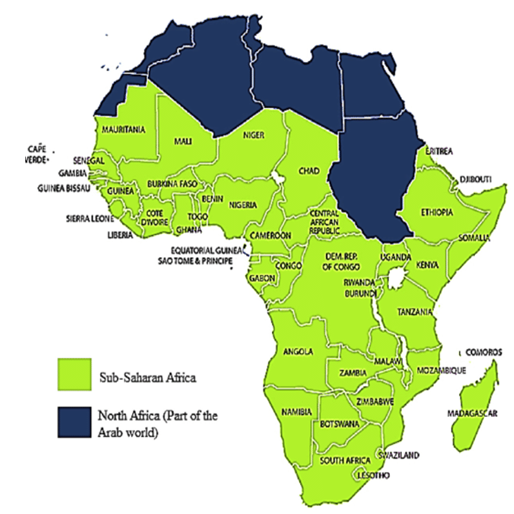
The stated objectives of the AfCFTA will ensure equal resources distribution, both human and natural resources in the continent, especially in the sub-Saharan region where demand is high compared to North Africa. This is so because of the number of countries that made up the region. These countries include Angola, Benin, Botswana, Burkina Faso, Burundi, Cameroon, Central African Republic, Chad, Congo, Cote d'Ivoire, Eritrea, Ethiopia, Gabon, Gambia, Ghana, Guinea, Guinea-Bissau, Kenya, Lesotho, Liberia, Madagascar, Malawi, Mali, Mauritania, Mauritius, Mozambique, Namibia, Niger, Nigeria, Rwanda, Senegal, Sierra Leone, Somalia, South Africa, United Republic of Tanzania, Togo, Uganda, Zaire, Zambia, Zimbabwe. As evidenced in figure 1 below, the most populous country and the biggest economy in Africa, Nigeria, is located in sub-Saharan Africa. Sub-Saharan Africa will therefore experience an increased demand for electricity and clean energy to meet their basic needs.

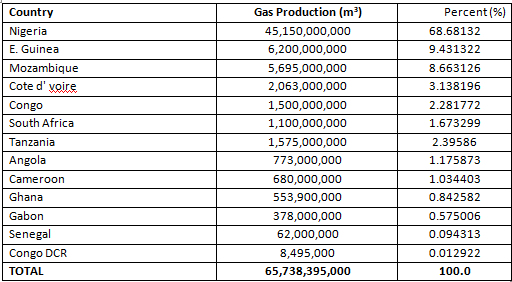
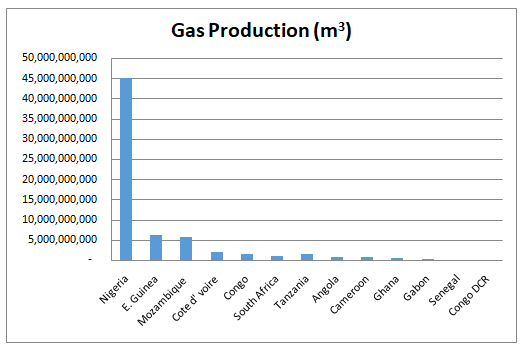
The region is endowed with dirty and clean energy; however, as the world is switching to cleaner energy, Natural gas to be specific, there is the need to transport clean energy from the endowed countries to the needy countries within sub-Saharan Africa. This will also help in actualizing the objective of the AfCFTA to foster economic expansion through a stable energy supply in not only in the region but to Africa as a whole. Natural Gas deposits have been discovered in 14 countries Sub-Saharan Africa, with Nigeria’s gas reserves accounting for 68 per cent of proven reserves. Several undeveloped fields in other parts of Africa account for 32 per cent of total gas resources. The gas producing countries are listed in table 1 below in accordance to the World Factbook (2020):

Table 1: Gas Producing Sub-Saharan Africa Countries World Factbook (2020)

Figure 2: Gas Producing Sub-Saharan Africa Countries

Source: World Factbook (2020)

In order to ensure equitable distribution of the gas resources, it is important to develop infrastructure for the importation of natural gas to support local demand in other sub-Saharan countries with no gas reserves. This will require sufficient investment in upstream natural gas infrastructure. With increased demand from household, commercial and industrial users, the lack of infrastructure is becoming a constraint. Extensive pipeline installations from collection, refining and storage facilities to end-user facilities are pivotal to steady market performance.


Some regional economic communities have done a great deal to liberalize trade with their neighbours, by permitting the free movement of people and building cross-border infrastructural links. An example of such regional initiatives/projects is the West African Gas Pipeline (WAGP). Nigeria, Benin, Togo and Ghana built the first regional pipeline in 1982 known as the WAGP. It is a natural gas pipeline to supply gas from Nigeria's Escravos region of Niger Delta area to Benin, Togo and Ghana.

The Trans- Saharan Gas pipeline initiative to run from Nigeria through Niger Republic to Algeria and Europe was the second attempt to build a regional gas pipeline infrastructure. However, this project was marred by Niger Delta Militant activities and high cost that was involved. While Africa's network of gas transportation infrastructure and services is still disjointed, the gas sector is showing signs of greater integration, particularly in the less endowed sub-Saharan Africa countries. The AfCFTA policy and framework should serve as a tool to establish a gas pipeline in the sub-Saharan region because of the potential benefits it holds.


Potential Benefit of Pipeline Infrastructure to Economic Development in Sub Saharan Africa

A well-structured gas pipeline network will ensure fast and reliable transportation of gas from the endowed countries to the needy countries. This will give quick access to clean energy for lighting, and power industrial machines for mass production of goods and services. Investors and entrepreneurs will grab the opportunity to increase their capacity to produce more quality goods and services, thereby leading to economic development in sub-Saharan Africa. Below are some of the potential benefits of pipeline infrastructure:


Increasing Economic Efficiency

There is a greater awareness of the role of pipeline infrastructure in socio-economic development. If countries endowed with natural gas in sub-Saharan Africa exploit it at daily maximum capacity and supply to other countries that are not endowed with natural gas, this will improve the Africa per capita income. The transition from traditional means of transport to modern gas pipeline infrastructure carries the greatest hope for millions of people in the sub-Saharan Africa countries for quick access at a lower cost.


Macro productivity

A sub-Saharan Africa-led approach to gas pipeline infrastructure development will help leverage private investment through expanded market size, allowing investors to reduce road transportation risks. In the longer-term, the interconnections of gas pipeline infrastructure will lower supply costs by replacing the traditional means of transporting gas in the region. This has a very important implication for the debt burden of many Africa economies that have been trading electricity across borders.


Increased Demand

Demand for natural gas in the region is expected to grow as the population increases every year. According to the Africa Energy Outlook (2019), Africa’s population is among the fastest-growing and youngest in the world. One-in-two people added to the world population between today and 2040 are set to be African, and the continent becomes the world’s most populous region by 2023, overtaking China and India. A regional approach to meeting the demand makes economic sense if this approach to gas pipeline construction to convey gas throughout the region is adopted.


Cost Efficiency

Sub-Saharan gas pipeline infrastructure cooperation and integration offer one of the most promising and cost-efficient options for the countries. Building gas pipeline infrastructure will keep the environment safety as well as social and economic benefits from more efficient use of resources.


Security of the Gas

Security of the gas supplied will be ensured with gas pipeline facilities in the region and gas flaring will be minimal and this will also enhance environmental quality.

It is the negative environmental “externalities” associated with energy supply and use but not energy itself that can lead to economic failures.

Conclusion

The vision and commitment of African leaders to the objectives and principles of economic cooperation led them to create the African Continental Free Trade Area (AfCFTA) as an instrument for fostering African economic development. This commitment aims to ensure barrier-free trade in relation to gas and pipeline facilities which envisages the need to establish gas pipeline infrastructure for quick-access and easy transportation of gas from the well-endowed countries to the needy countries in the sub-Saharan African countries. This increased demand will create a better job market as suppliers will need to build up their workforce. Increased income then results in additional demand of consumer goods and services, thus persuading a complete round of economic stimulus. This establishment can be achieved if the principles embodied in the AfCFTA are fully implemented. African leaders are therefore implored to fully implement the AfCFTA policies for speedy economic emancipation and growth in the Sub-Saharan region.


AfCFTA Tariff Barrier Removal in Energy Market and the Growth of African Economy

Submitted by kiakiagas on

Introduction

Prior to the modern-day national economies, African cities and empires have been dynamic, driven by vast trading channels between cities and kingdoms. Some of the trading routes were overland, others included river navigation, while some were established across coastal cities. Powerful African empires were prosperous economically because of their trading networks, such as Ancient Egypt, Nubia, Mali, Ashanti, and the Oyo Empire. These empires increased the quantity of goods and services through vibrant trade as their empires were expanding and population was growing with minimum or no tariff barrier. In the modern days, various countries in Africa that are endowed with essential natural resources such as crude oil to produce non-renewable energy see opportunity in increasing their capacity to produce more goods and services. The excess of what is produced are traded to other regional countries in exchange for revenue.

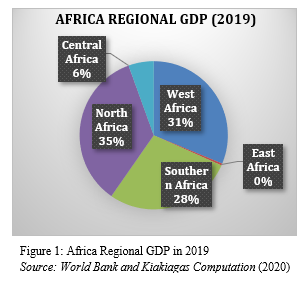
The United Nations predicted Africa's economic growth was 3.5% in 2018 amounting to $2.5 trillion and 3.7% in 2019amounting to $2.6 trillion. During the year, the Africa GDP amounted to US$2.6 trillion with the sub Saharan Africa GDP which was US$629.8 billion, East Africa US$8.7 billion, Southern Africa US$564.8 billion, North Africa US$701.6 billion and Central Africa US$111.2 billion. The largest percentage was recorded in the North Africa 35% followed by the West Africa 31%, Southern Africa 28%, Central Africa 8% while the Eastern part of the continent recorded the least percentage (see figure 1).

These values are expected to improve as the AfCFTA envisage removal of tariff barrier. The oil producing countries will increase the volume of trade to non-oil producing countries within the continent. This will bring about cheaper energy generated from the oil because of the tariff relief. Consequently, cost of producing other goods and services in the continent will reduce. According to the law of demand, consumers will be willing to buy more if the price is cheaper. Inventories will be cleared and production will flow. Innovations to produce goods and services at cheaper rate will set-in as a result of competition. This will also trigger the need for clean energy to power industrial machine to produce and increase the volume of production in the continent.

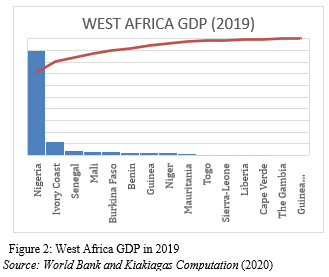
Data suggest parts of the continent are now experiencing fast growth. This is not unconnected to the energy resources available and political stability that ensured and sustained economic policy since 2007. Nigeria has the highest percentage of GDP in West Africa (71%) while Cape Verde and some other countries have the lowest percentage level of GDP (See figure 2).

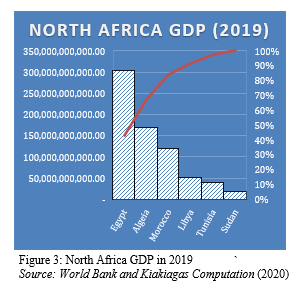
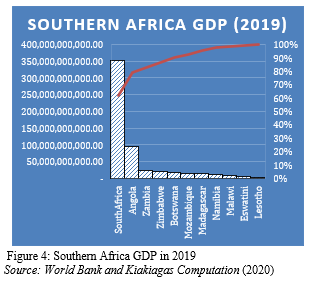
A World Bank (2018) reports the economy of Sub-Saharan African countries grew at rates that match or surpass global rates. The report says economic activity has rebounded across Africa. However, the pace of recovery was uneven among groups of countries and subregions. Oil-exporting countries generally expanded more strongly than oil-importing countries. According to the United Nations Department of Economic and Social Affairs, the improvement in the Africa aggregate growth is largely attributable to a recovery in Egypt, Nigeria and South Africa, three of Africa's largest economies (see figure 2, 3 & 4).

Africa has significant resources for generating energy in several forms (hydroelectric, reserves of petroleum and gas, coal production, uranium production, renewable energy such as solar, wind and geothermal). The lack of development and infrastructure means that little of this potential is actually in use today.

The largest consumers of electric power in Africa are South Africa, Libya, Namibia, Egypt, Tunisia, and Zimbabwe, with each consuming between 1000 and 5000 KWh/m2 per person, in contrast toeast African states such as Ethiopia, Eritrea, and Tanzania, where electricity consumption per person is negligible. Petroleum and petroleum products accounted for a 46.6% share of Africa's total exports in 2010; the second largest export of Africa as a whole is natural gas, in its gaseous state and as liquified natural gas, accounting for a 6.3% share of Africa's exports.


Energy Trade Integration and AfCFTA

Energy trade integration in Africa especially crude oil, has long been seen by African policymakers as a mechanism for fostering industrial prosperity. Energy both renewable and non-renewable are used to power light and heavy machines in the industrial sectors for productivity. Several trade and regional economic integration groups have been formed over the years. These include Southern African Customs Union (SACU), East African Community (EAC) and the Economic community of West African States (ECOWAS) to ensure flow of goods and services with little or no tariff among the countries.

These organizations aim to ease the trade barrier among themselves but this has not yielded the expected result in the respective regions, because no African region can act in isolation. There is the need for continental trade integration that will ensure tariff barrier removal to promote economic growth in Africa. The AfCFTA is the most ambitious initiative in this vein. It can support the realization of the continent’s economic promise by helping raise productivity and investment, and thereby increase income levels and reduce poverty. Assessment of income and welfare gains from trade liberalization under the AfCFTA and potential transitional costs for countries participating in the agreement is noted. The discussion focuses on the potential effects of the AfCFTA on income, welfare, trade flows, employment and tax revenues.


Economic Growth and Removal of Tariff Barrier in AfCFTA Agreement

It was earlier stated that no African region can trade in isolation to increase the continental productivity. Economic growth is ensured if there is increase in the capacity of African countries to produce more goods and services. This can only be realized when the non-renewable energy such as crude oil and natural gas  to power industrial machines are readily available with no tariff barrier. The AfCFTA has the potential to increase income and welfare significantly for its member countries.

Previous studies have estimated that African countries could reap long-term income gains of up to 5 percent from the removal in trade barriers in the context of the AfCFTA. The implementation of the AfCFTA could result in transitional costs for member countries. These may include tax revenue losses from no import tariffs, higher income inequality and higher unemployment. These could occur especially where trade liberalization is not accompanied by reforms to make labor markets more flexible and workers more mobile to grasp new opportunities.

Given the gradual nature of tariff barrier removal envisaged by the agreement, countries should have time to mitigate these potential costs. For the continent as a whole, tax revenue losses from the elimination of import tariff are estimated to be modest. Because any tariff revenue losses are likely to be offset eventually by higher tax revenue from increased consumption and income, as a result of removing tariff barrier. Limiting negative employment effects will require increasing formal labor market flexibility. Addressing adverse income distribution effects calls for broader and more efficient social safety nets.

Training and retraining programs to adapt worker skills to new needs may also be necessary. Improving revenue mobilization will be important. Given that income gains may take time to materialize, the corresponding revenue increases may not compensate for tariff revenue losses in the short term. In addition, higher revenues will also be needed to help finance infrastructure improvements and upgrade social safety nets to mitigate transitional costs from removing tariff barriers.

Furthermore, an enabling business environment, access to credit, and adequate human capital are critical to support energy trade. A more fully developed regional financial infrastructure can also help facilitate further intraregional trade.


Conclusion

Maximizing potential welfare and income gains from the AfCFTA would require member countries to substantially and strategically reduce tariff barrier. It is important first to remove the tariff barrier that impose the highest trade costs. In this regard, customs and administrative entry procedures, technical barriers to crude oil trade and other forms of energy tradeable should be tackled up-front. It would also be important to improve the quality of trade logistics and close Africa’s infrastructure gap, particularly in the areas of ports and road networks. Conclusively, upholding the provisions of the AfCFTA agreement will be crucial to ensure economic growth of the continent. An institutionally strong and effective AfCFTA secretariat, with the capacity to implement trade rules in line with the text of the agreement, will help build credibility and reduce trade-in-energy policy uncertainty.


PROSPECT AND IMPACT OF AFRICAN CONTINENTAL FREE TRADE AREA(AfCFTA) ON THE ENERGY MARKET

Submitted by kiakiagas on

PROSPECT AND IMPACT OF AFRICAN CONTINENTAL FREE TRADE AREA ON THE ENERGY MARKET

Introduction

The African Continental Free Trade Agreement (AfCFTA) entered into force on 30th May 2019 to facilitate industrialization, economic growth and prosperity in Africa. The AfCFTA aims to put together all 55 African Union Member States, representing a population of more than 1.2 billion people, with a rising middle class, and a total gross domestic product (GDP) of more than US$ 3.4 trillion. Estimates from the United Nations Economic Commission for Africa (UNECA, 2020) asserted that the AfCFTA can raise intra-African trade by 52.3 per cent by reducing import tariffs and to double the trade if non-tariff barriers are also eliminated. Originally, the main objectives of the AfCFTA are:


(i)   to create a single continental market for goods and services, with free movement of business persons and investments, and thus pave the way for accelerating the establishment of the Customs Union;

(ii) to expand intra-African trade through better harmonization and coordination of trade liberalization;

(iii) to enhance competitiveness at the industry and enterprise level through exploitation of opportunities for scale production, continental market access and better reallocation of resources;

(iv) to aid the movement of capital and people in the continent and;

(v) to enhance the competitiveness of member states within Africa and in the global market.


The continent boasts of countries that are endowed with energy resources which include renewable and non-renewable energy resources to boost industrial outputs. According to Tulane University (2015), energy resource is something that can produce heat, power life, move objects, or produce electricity. Renewable energy comes from natural sources or processes that are constantly replenished. For example, sunlight or wind keep shining and blowing, even if their availability depends on time and weather while non-renewable energy sources include fossil fuels such as oil, gas, and coal which take a longer time to replenish. Countries that are endowed with non-renewable energy sources include Algeria, Angola, Egypt, Libya and Nigeria. Nigeria is Africa largest oil producer and with the second-largest proven oil reserves in Africa, produced more than 2.5 million barrels per day between 2015 and 2019. There are other countries on the other hand that are blessed with other natural resources and cannot boast of having energy in the form of fossil fuel that are necessary for industrial operation. It is against this background that African leaders deemed it fit to come together to sign an agreement that will ensure free trade of energy, goods and services without any form of restriction from the abundant countries to the needy countries. Hence the formation of African Continental Free Trade Agreement (AfCFTA).


This article will examine the effect of AfCFTA on the energy market in Africa and to create public enlightenment on the potential benefits and threats to the Africa energy market. According to the international energy agency (IEA Outlook, 2019), Africa’s population is among the fastest-growing and youngest in the world. One-in-two people added to the world population between today and 2040 are set to be African, and the continent would become the world’s most populous region by 2023, overtaking China and India. Growing urban populations mean rapid growth in energy demand for industrial production, cooling and mobility. With the growing appetite for modern and efficient energy sources, Africa also emerges as a major force in global oil and gas markets.


Potential Benefits of AfCFTA to the Energy Market in Africa

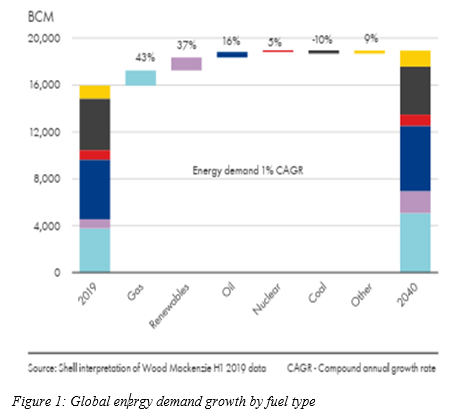
There is an increase in global demand of fuel as forecasted by the Shell LNG Outlook (2020) between renewable and non-renewable energy as renewable energy and gas are expected to replace coal in the global energy mix by 2040. Records show that demand for gas is growing by 43%, renewable energy by 37%, oil and nuclear by 16% and 5% respectively while coal declines by 10% and other nonrenewable energy are growing by 9% (see figure 1).

There are potential benefits for the African countries to also participate in the use of cleaner energy to limit the harmful emission from dirty energy. Countries like Algeria, Angola, Egypt, Libya and Nigeria who are endowed with crude oil for gas production can increase their trade volume and revenue as the world is switching to cleaner energy for commercial and domestic use. With the introduction and implementation of AfCFTA that seek to ensure free trade in the continent, these countries will be able to trade without being subject to high tariff payments. Also, against this context, AfCFTA is planned to be a continental instrument that would facilitate economic integration by establishing a single energy market, ensuring the removal of tariff barriers (TBs) and non-tariff barriers (NTBs) and allow for national trade and investment security policies.


Another potential advantage of AfCFTA is to enable cleaner energy producers to benefit from economies of scale, to access lower transmission costs and to improve the conditions for regional energy value chains. This would accelerate the transition of African economies towards greater technology and information use (Saygili, Petrs and Knebel, 2018).

AfCFTA is opening up Africa to African investors. The ability to transform Africa by making energy cheaper will be impressive. One main anticipated outcome of the deal, for example, is the increase of industrial production, which will depend on the quality, sustainability and safety of the energy sources on a scale for industrial growth. The AfCFTA will not only raise inter-regional trade in energy in Africa but will also increase the rate of trade in manufactured products, machinery, equipment and services around the African markets. The target market for AfCFTA is projected to be 1.27 billion people, predicted to grow to 1.7 billion by 2030, of which around 600 million people will be middle-class (Bramdeo, 2018). In terms of gross GDP, this would range from $2.1 trillion to $3.4 trillion or $6.7 trillion in Purchasing Power Parity terms. As a result, the demand for energy used in the industrial sector and in cooking gas will increase, thereby expanding the energy market size.


Potential Threats of AfCFTA to the Energy Market in Africa

Tariff barrier and non-tariff barrier are mostly considered to automatically facilitate free trade in the African energy market without giving more attention to the infrastructure that is not built for intra-Africa energy trade. The infrastructural facility plays a major role in the value-chain of energy. The transmission and transportation of energy within the continent require reliable infrastructure.  So there are still other challenges to overcome and they need time.


Since not all goods and services would be liberalized, it goes without saying that the effect of the AfCFTA on the energy market will depend on the outcome of the ongoing negotiations. For example, the liberalization of such goods might instantly break the current monopoly of the OPEC cartel. The driving force behind this result might not be the abolition of tariffs (which will still be sequential and may not have an immediate effect on trade patterns) but the removal of non-tariff barrier.


The key challenge is to provide universal access to secure, new, affordable and renewable energy. How to do this is a core component of Africa's Agenda 2063 Strategic Vision for the Future of the Continent and of the Global Sustainable Development Goals.


Conclusion

Rising urban populations mean a rapid increase in energy demand for industrial development, heating and accessibility. With an increasing demand for new and reliable energy sources, Africa is also emerging as a major force on global oil and gas markets. Studies showed that the estimated rise in oil demand in Africa is higher than that of China and second only to that of India. This is due to the size of the car fleet that is more than double, most of which have poor fuel efficiency, while liquefied petroleum gas (LPG) is increasingly used for clean cooking. Africa's rising weight is also felt in natural gas markets as the continent becomes the third-largest source of global demand for gas over the same period. However, the forum for the removal of tariff barrier and non-tariff barrier in Africa is always a sweetener, which certainly has the potential to find alternatives for the energy market in Africa. AfCFTA's crucial mission is to address the hindrances of transmission and transportation mechanism for intra-Africa energy trade, chronic poor networking and communication.


Kindly book for a free session with our team of experts to help you http://www.kiakiagas.com/book-session or write us an email at advisory@kiakiagas.com or Whatsapp: +2348085269328

Subscribe to AfCFTA